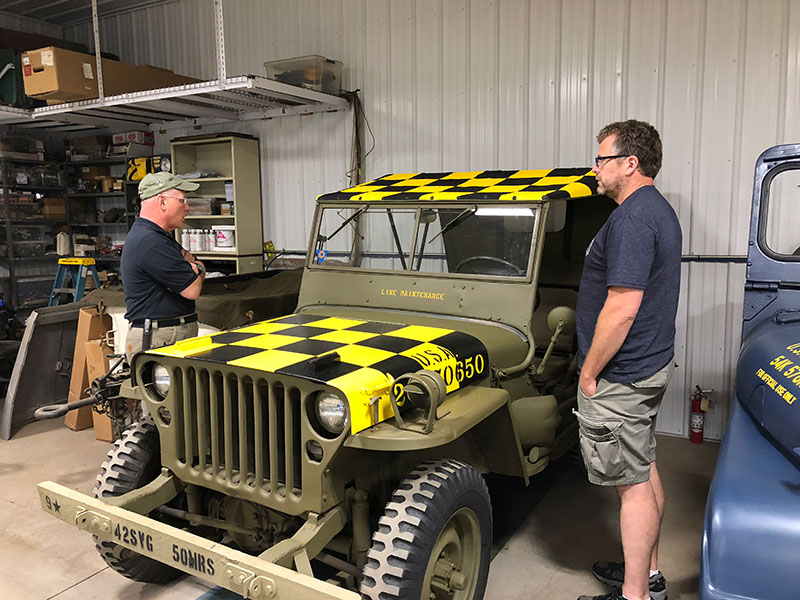
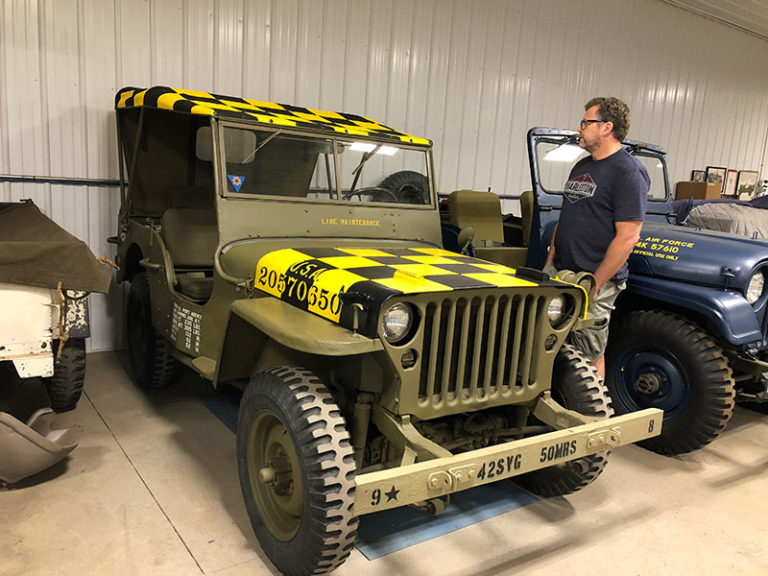
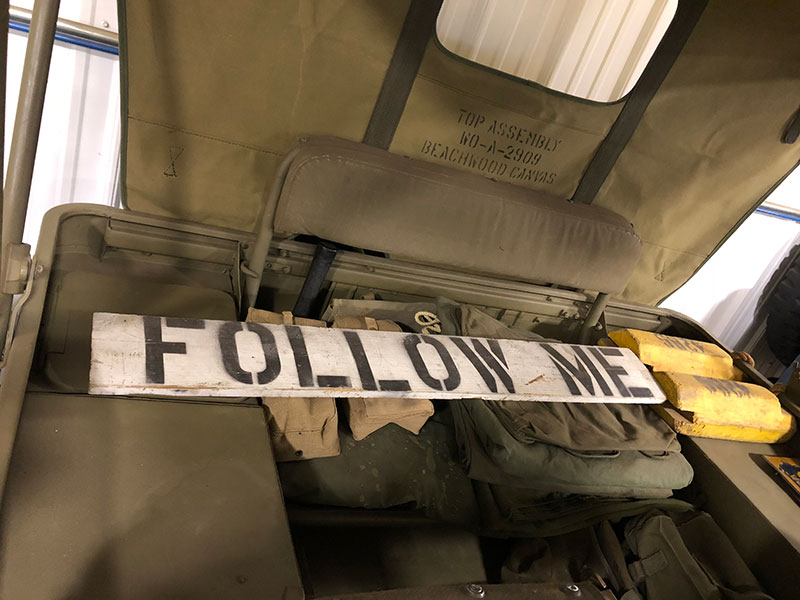
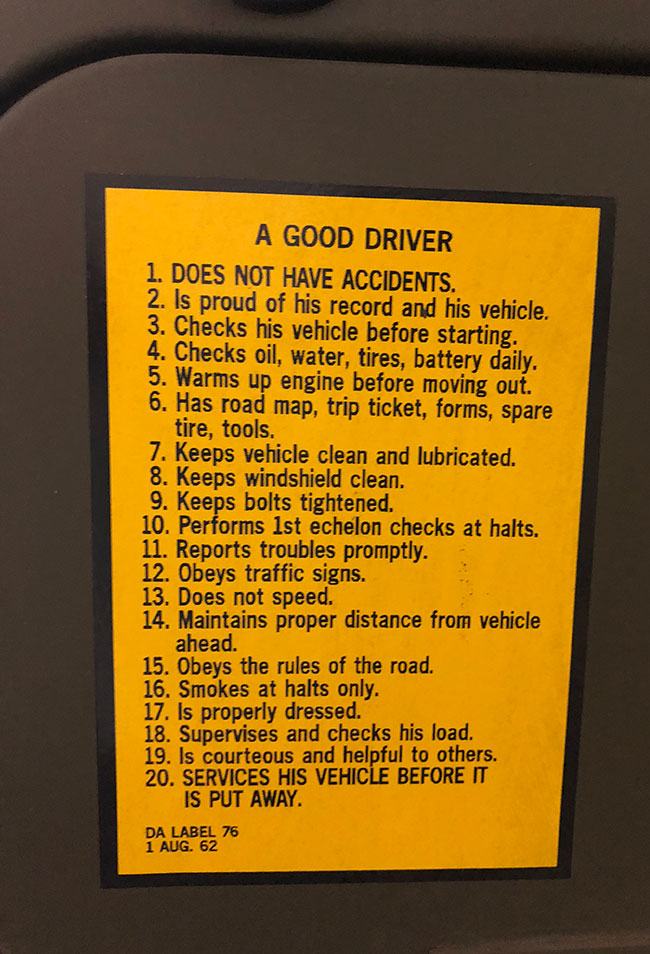
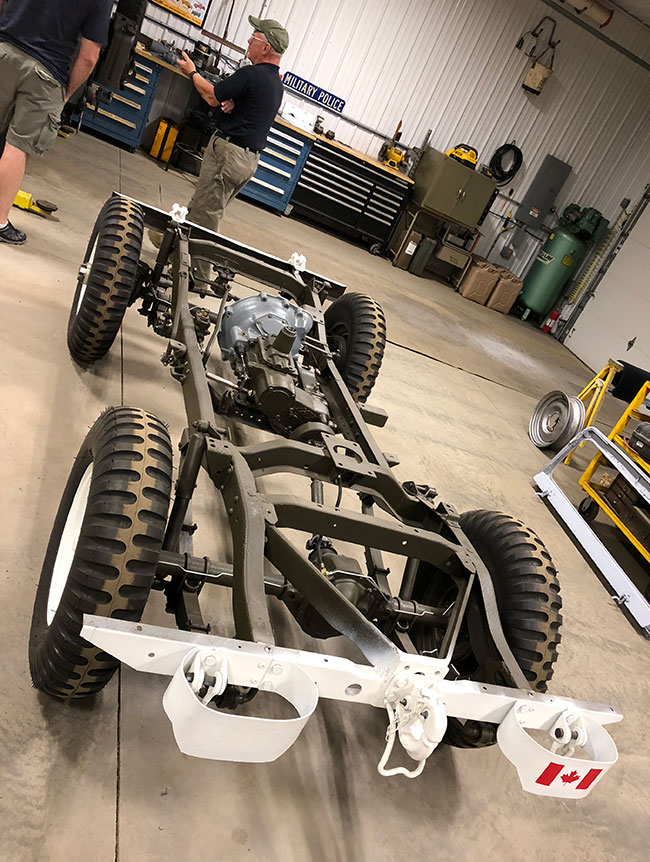
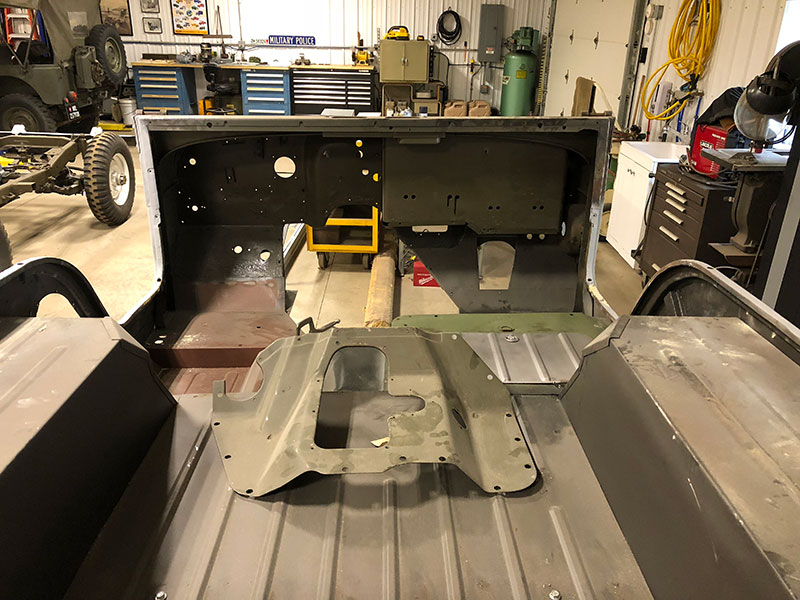
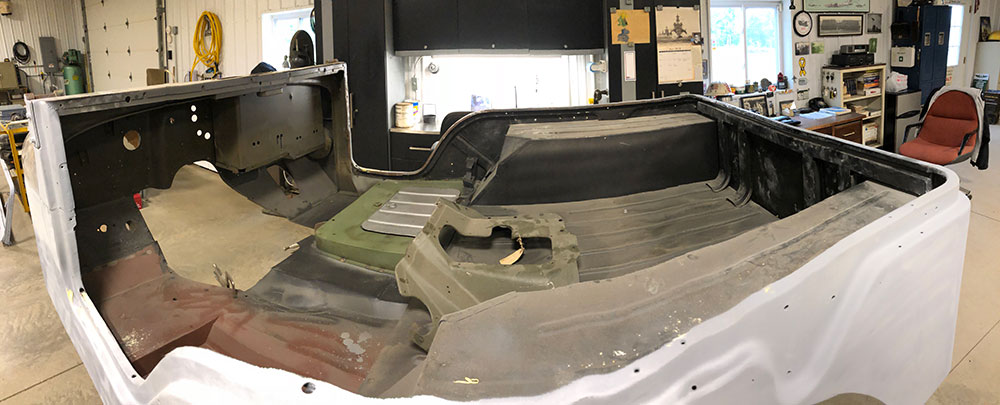
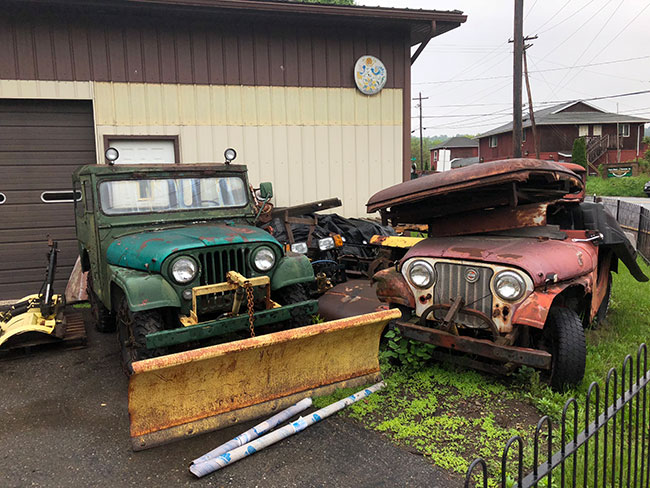
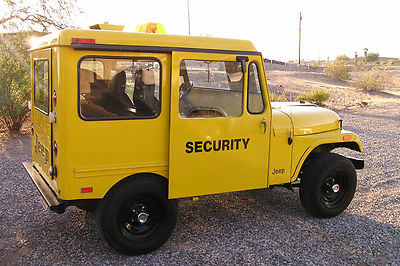
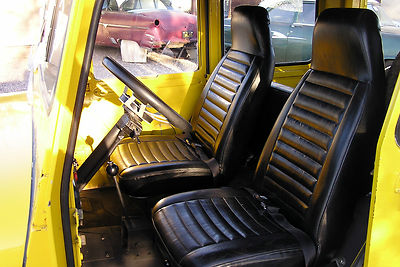
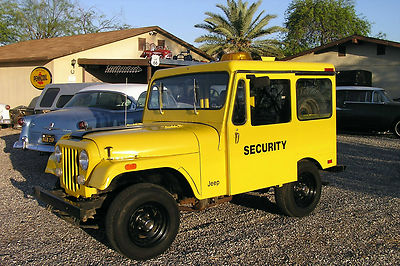
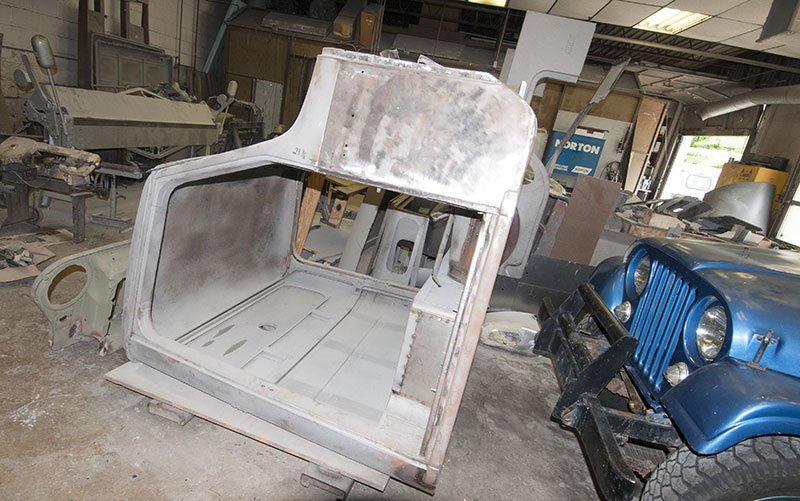
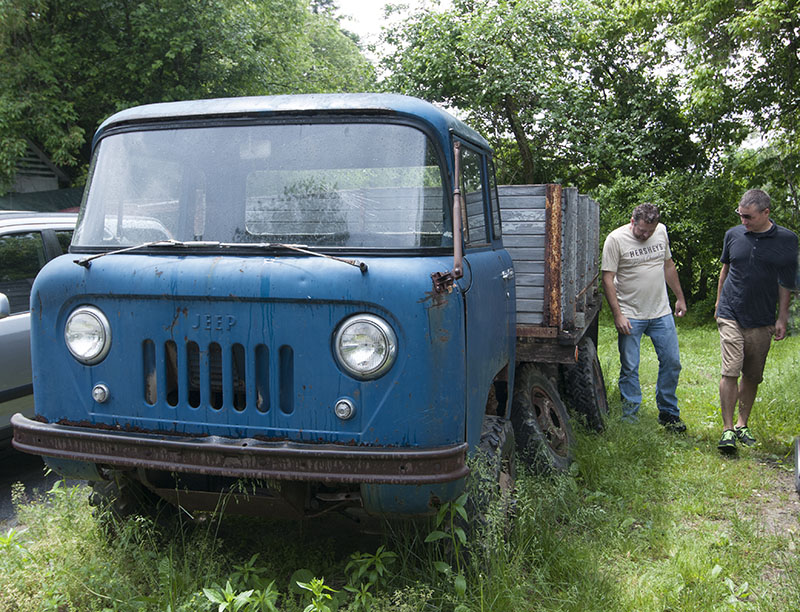
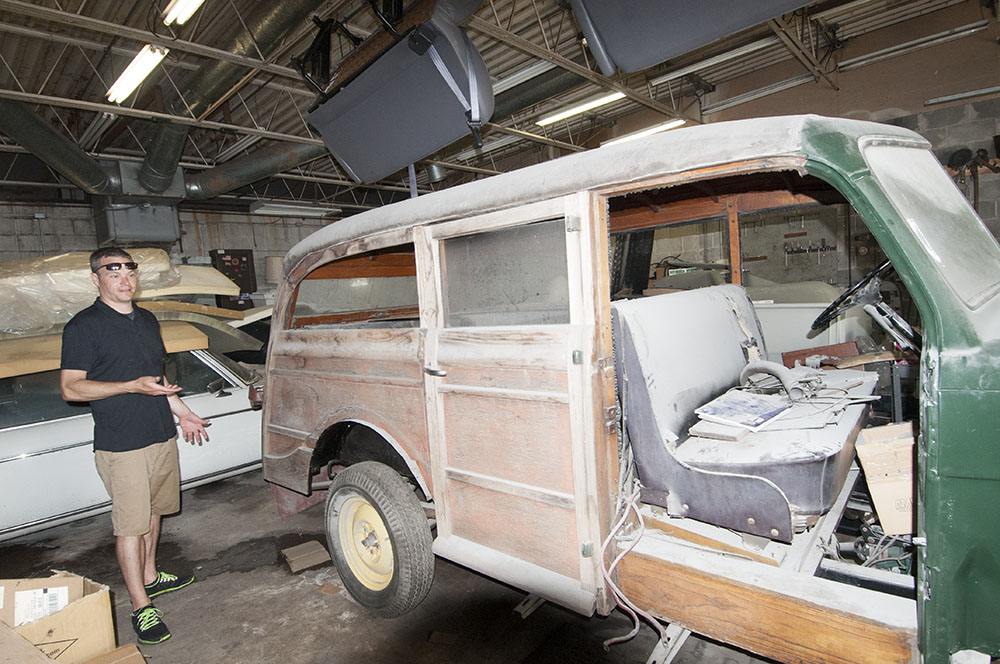
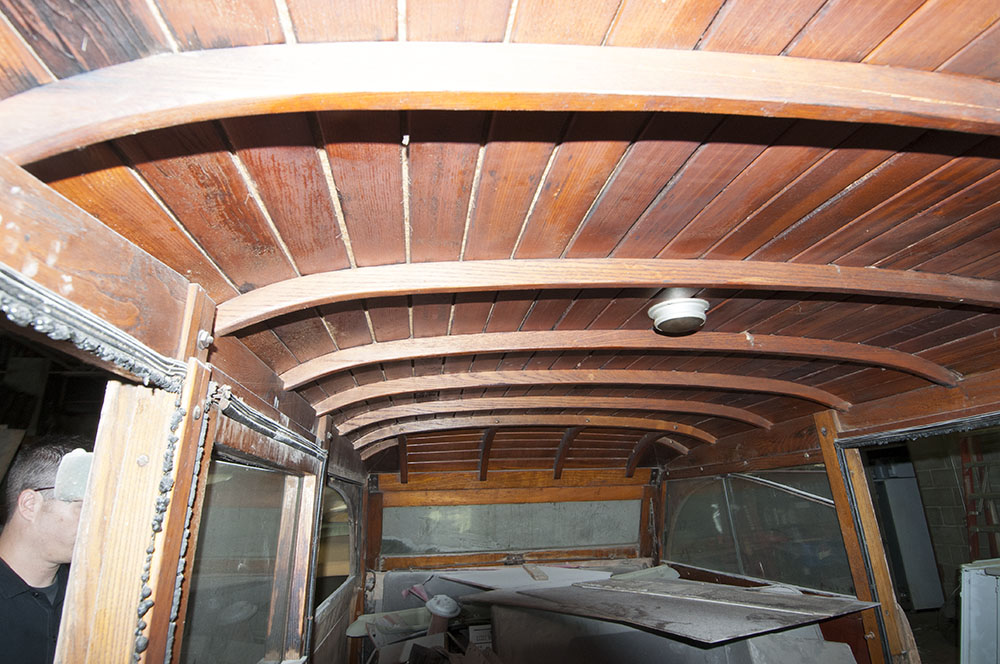
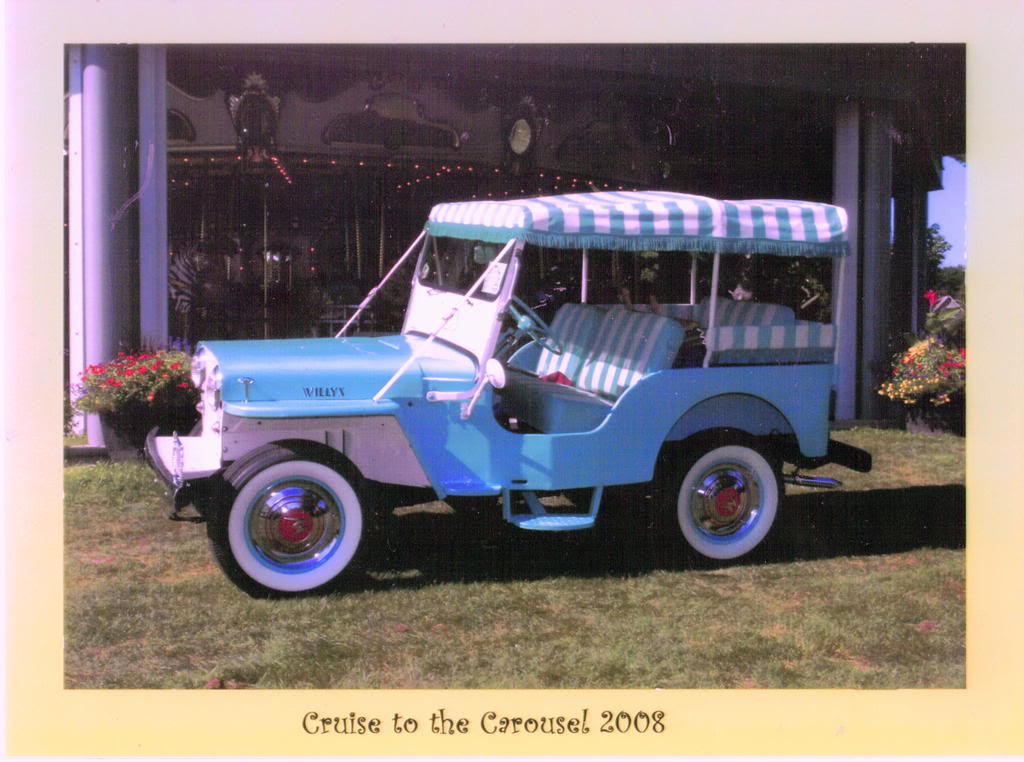
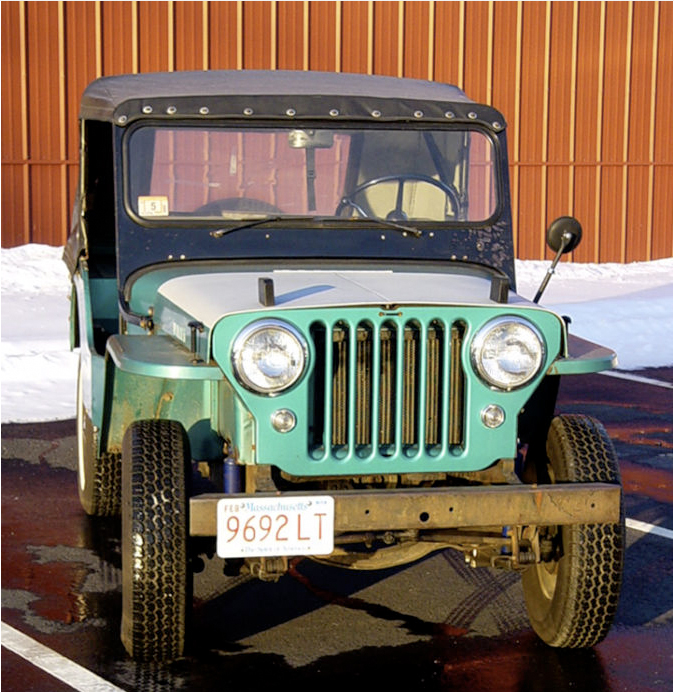
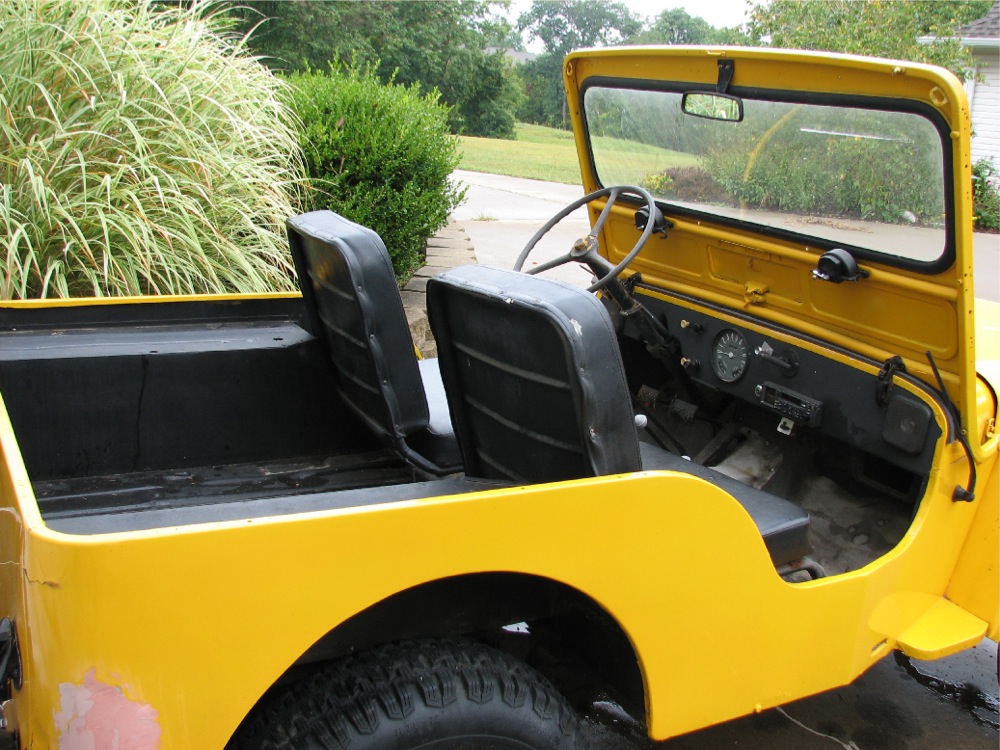
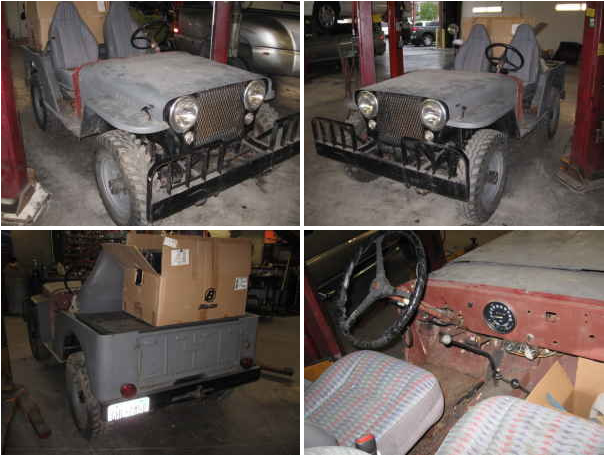
Jerry and the MB he turned into a Follow Me Jeep years ago.
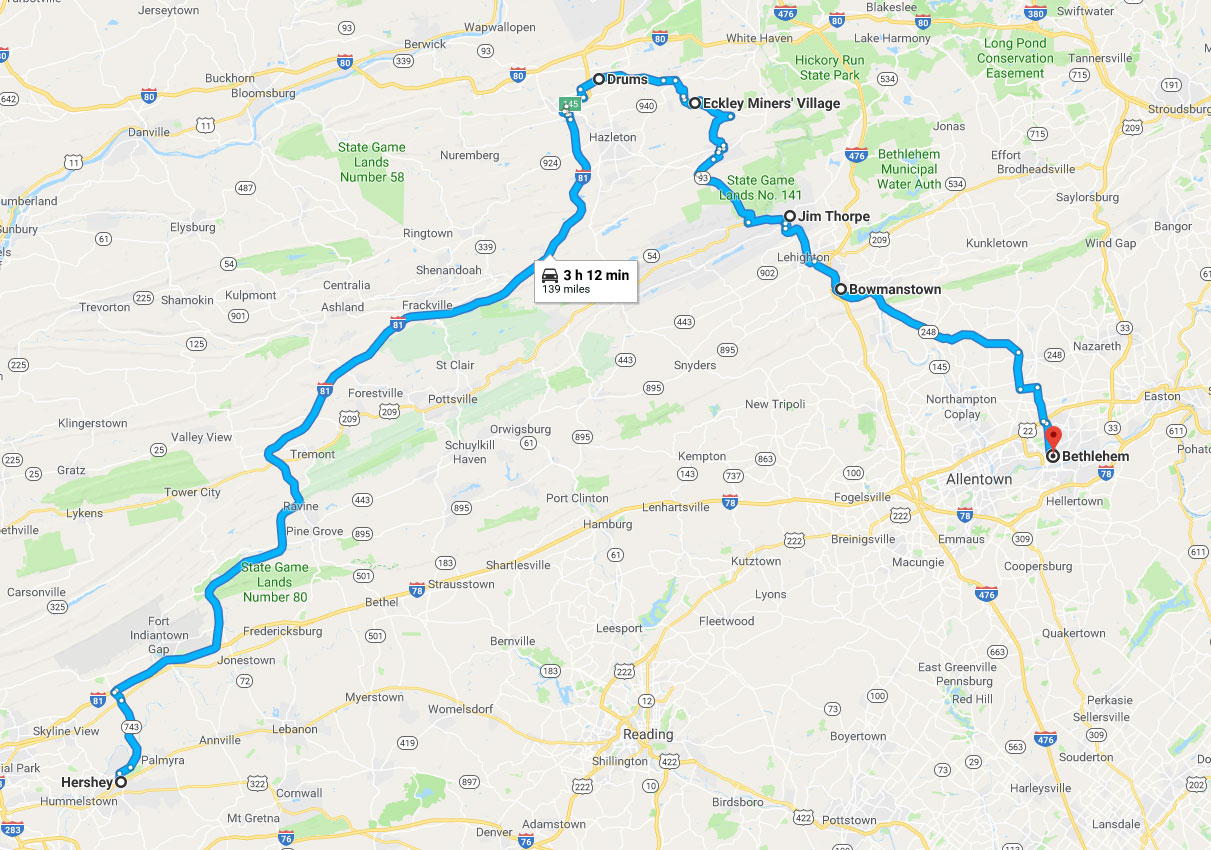
Day 24: Tuesday we drove from Hershey to Drum, then south to Bethlehem.
On Tuesday we drove from Hershey to Bethlehem.
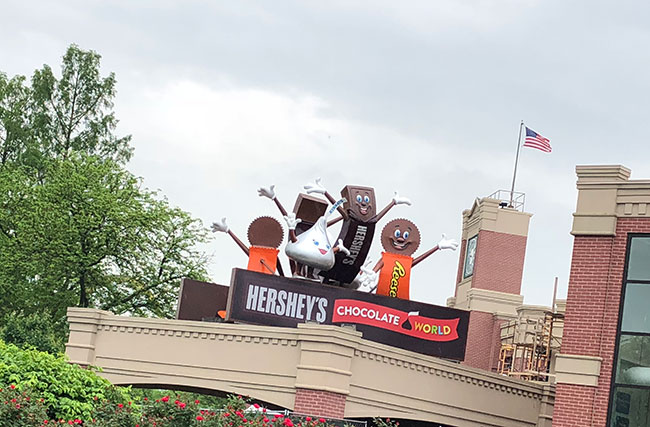
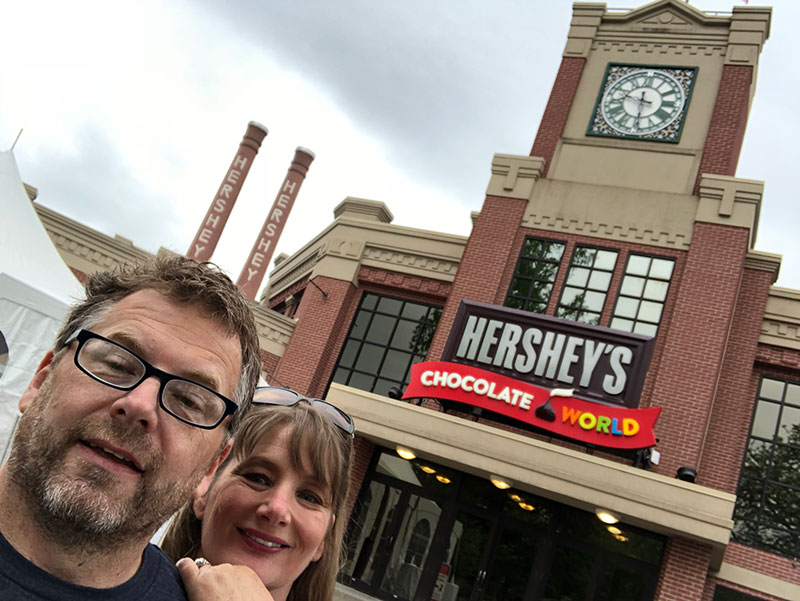
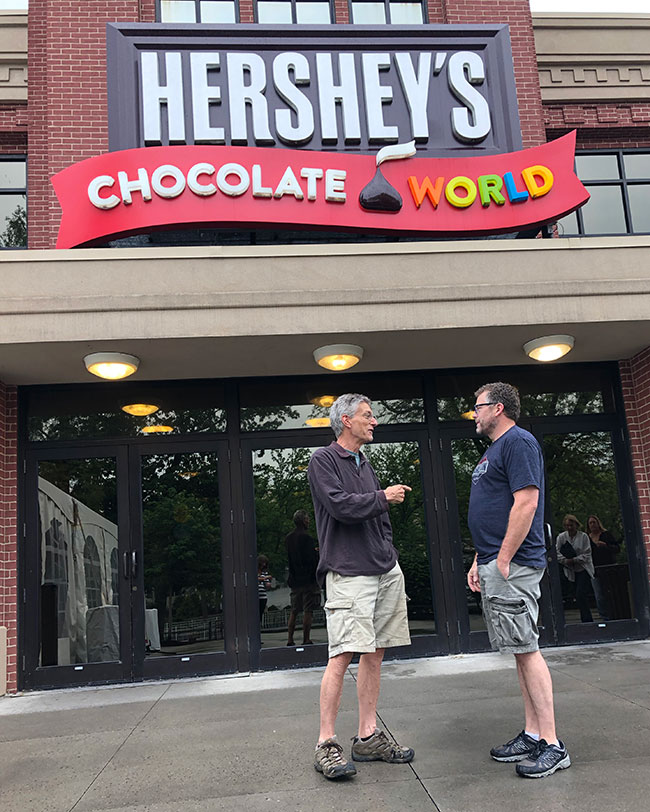
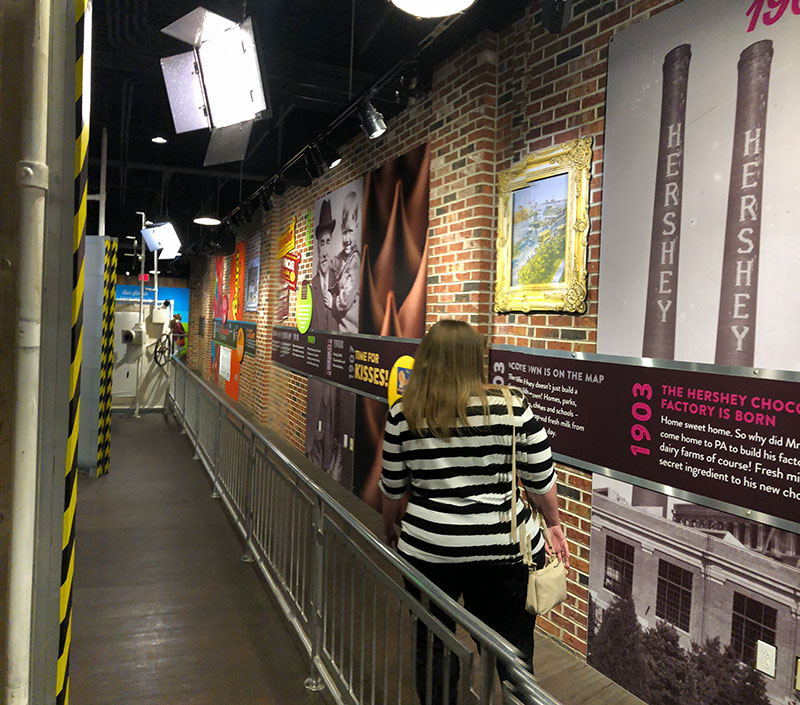
We began the day with a visit to Hershey's Chocolate World. It's a place we'd tried to visit back in 2013, but it had closed in anticipation of the construction of a new and improved(?) Chocolate World. Ann spoke fondly of the the place and her disappointment at not sharing it with me in 2013. So, you can imagine that she was pumped to finally be getting to see it again, something she hadn't experienced since she was a kid. What could possibly go wrong with that scenario??
With entrance photos taken, perhaps the best part of our adventure was about to take place. As Ann walked toward the front doors, one of them suddenly opened, followed by a voice, "Ann, it's so nice to meet you."
Now, it's important to know that one of the things damaged when Ann suffered her TBI (Traumatic Brain Injury) is her ability to recognize faces. So, she has a really hard time remembering faces. Thus, when confronted with an unexpected welcome, she quickly get's confused, wondering if she should know the person or not. And, given we'd just come from the reunion, she wasn't sure if she should know who this stranger was.
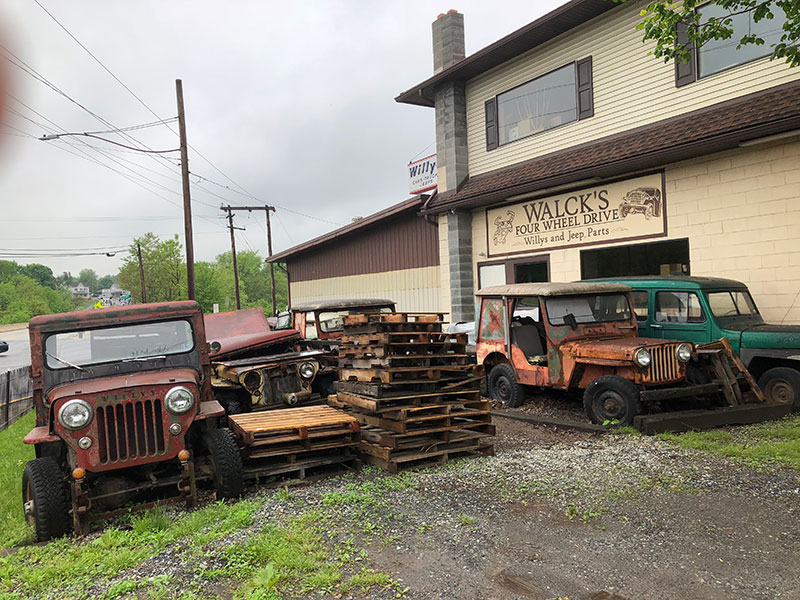
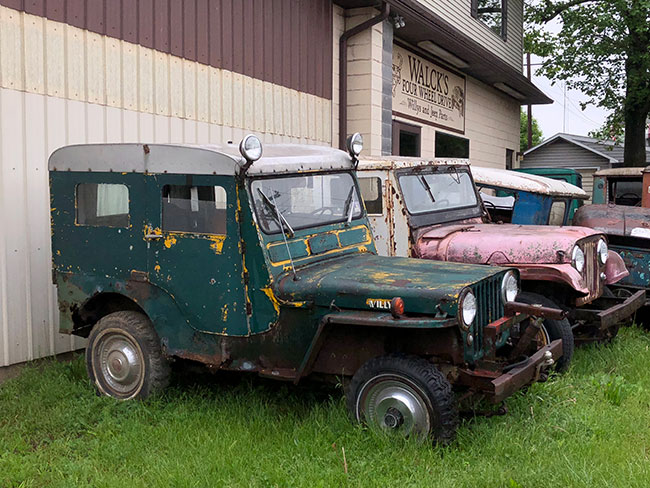
In this case, she wouldn't have, as the stranger introduced himself to me as Gordon. According to Gordon, he hadn't realized we were going to be in town (he's from Carlisle and is a fan of John's Restaurant as well). Since he'd read that we'd planned to stop at Chocolate World, he thought it would be fun to stop and say a quick hello while on his way to Walck's in Bowmanstown, Pennsylvania, to pick up some parts for his CJ-5. Ann and I were both humored by the gesture.
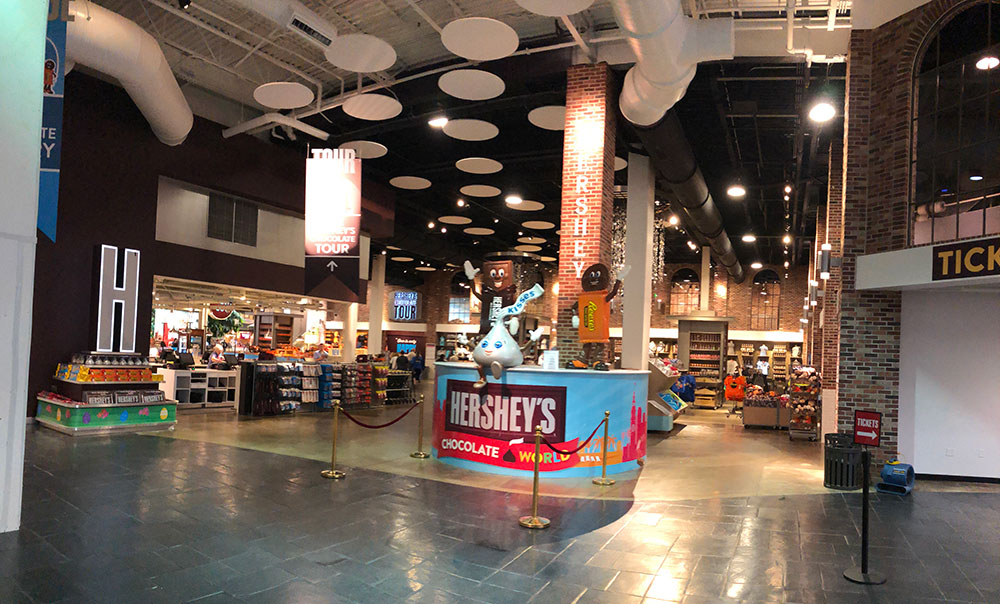
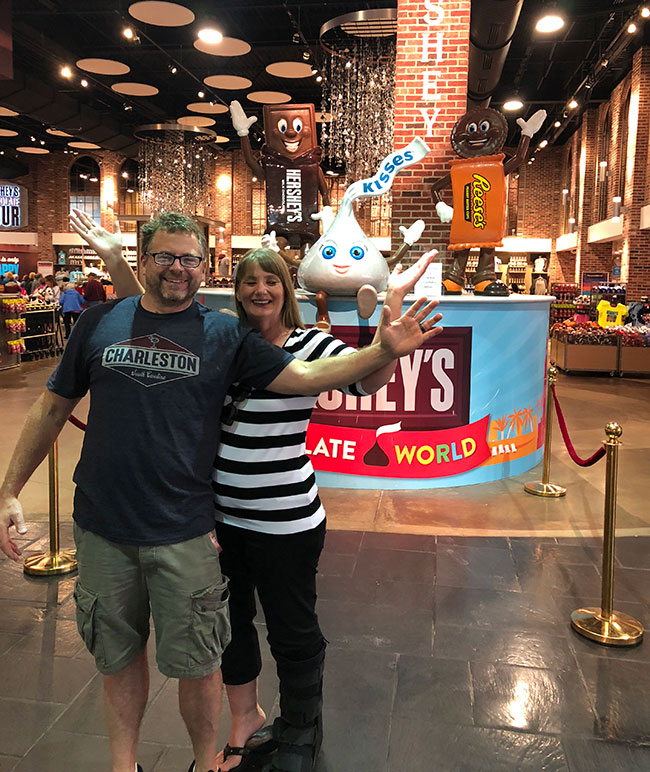
With Gordon on his way, we went inside to explore.
Chocolate World has several different things visitors can see that require tickets, but the "Chocolate Tour" ride is free. We decided to go straight for that.
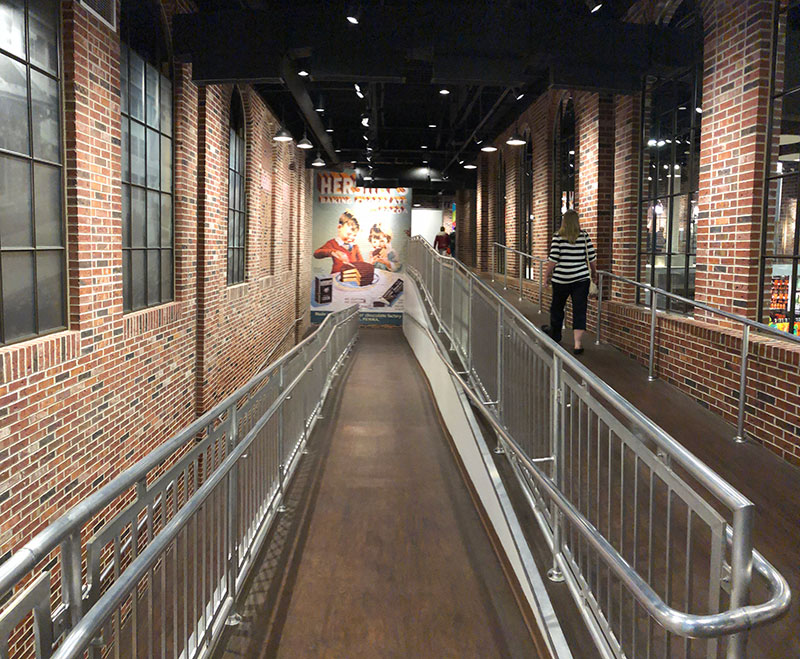
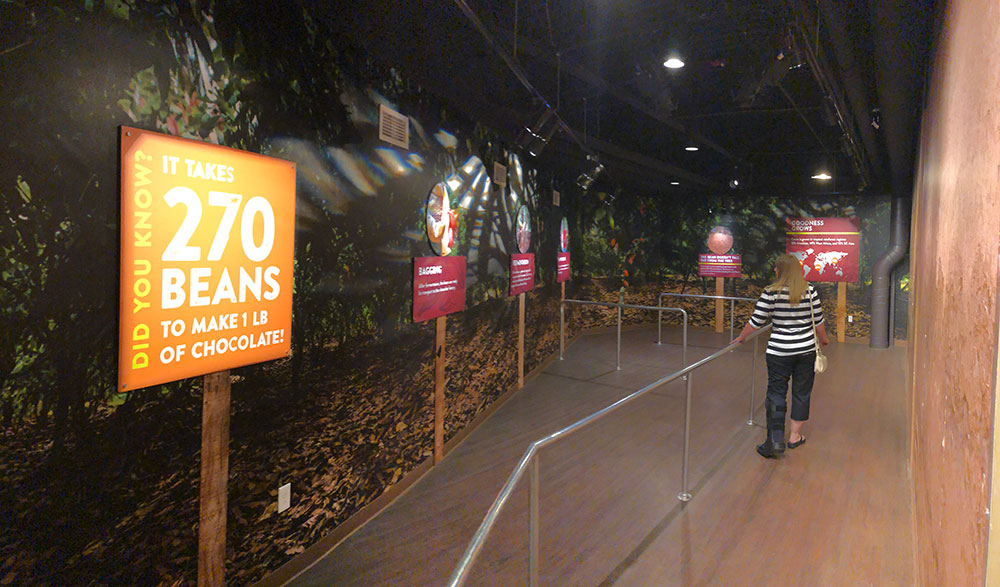
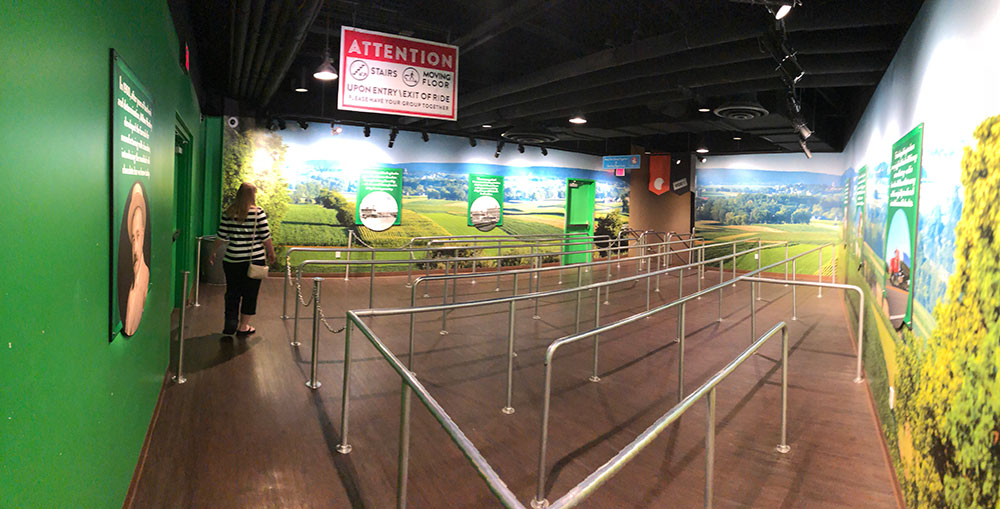
Hershey must have studied Disney line strategies, because the ride has a very long, zig-zag, queueing system, complete with multiple areas of information and a photo section where you can take photos, then pick up photos on the way out (there was nothing subtle about this attempt to get visitors to pay for photos - yuck).
After walking for days, we finally got to the ride itself. Let me cut to the chase. The ride was ironically like a candy bar, all marketing on the outside and void of nutrition (or substance if you will) on the inside. I was glad we neither had to wait for the ride nor paid anything for the ride.
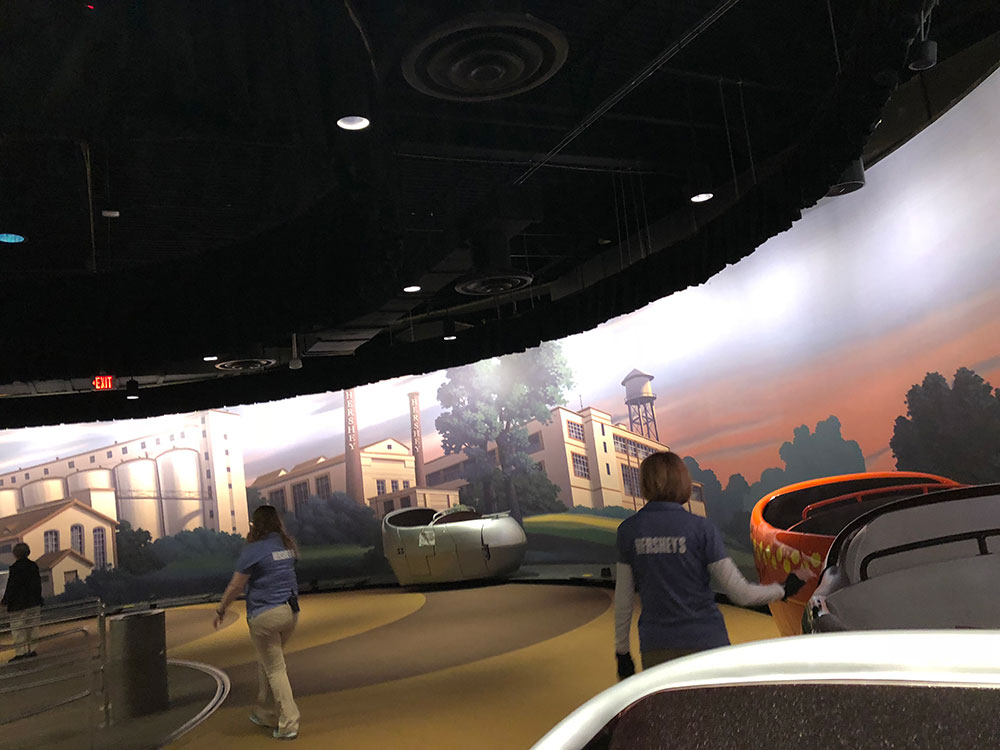
Things looked promising at first. We were escorted into moving cars, ala Disneyland.
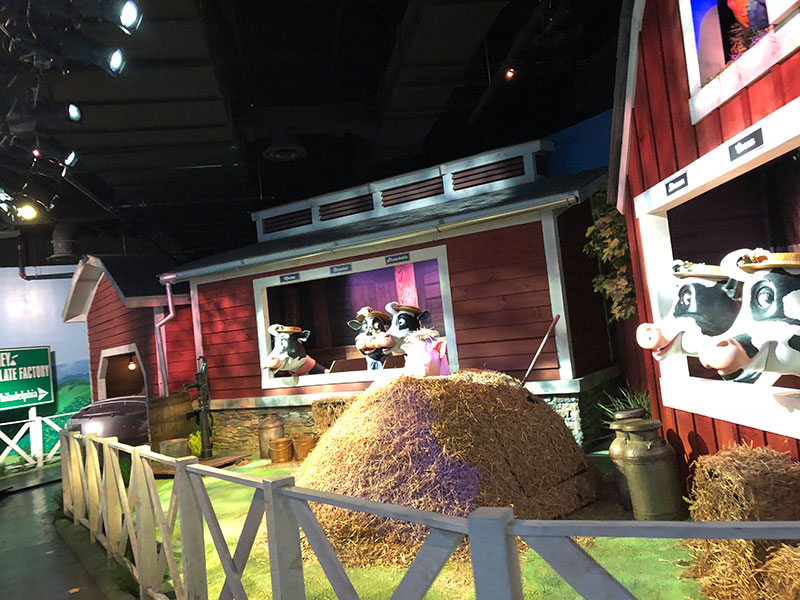
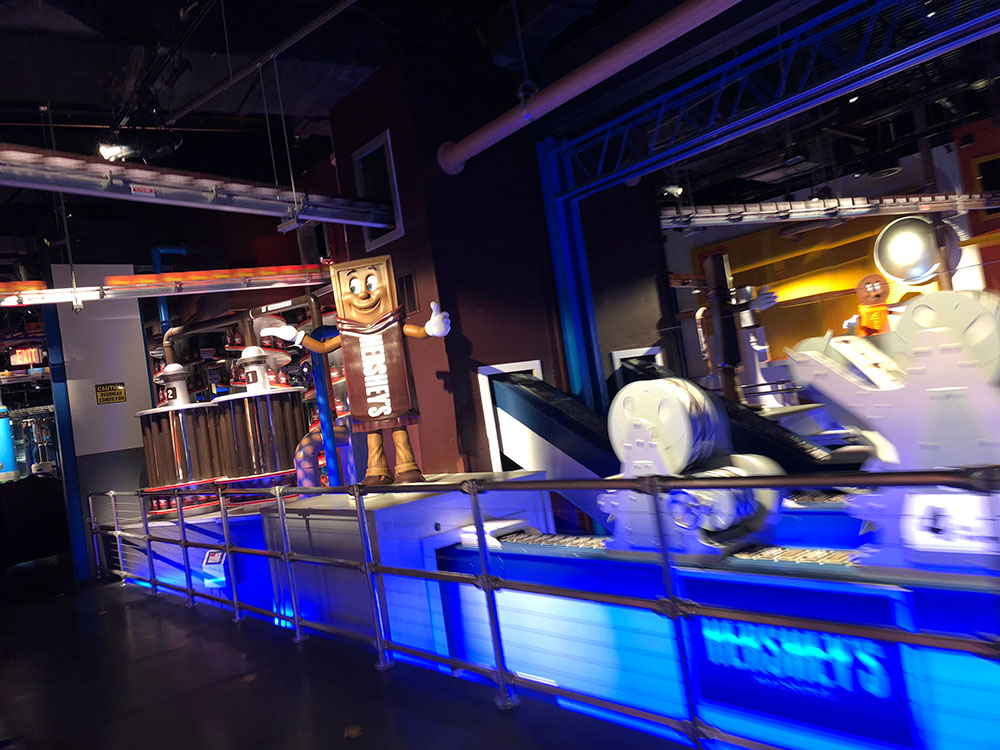
As we entered the first area, there were singing cows and a pig whose head popped up and down. What was the purpose of this?
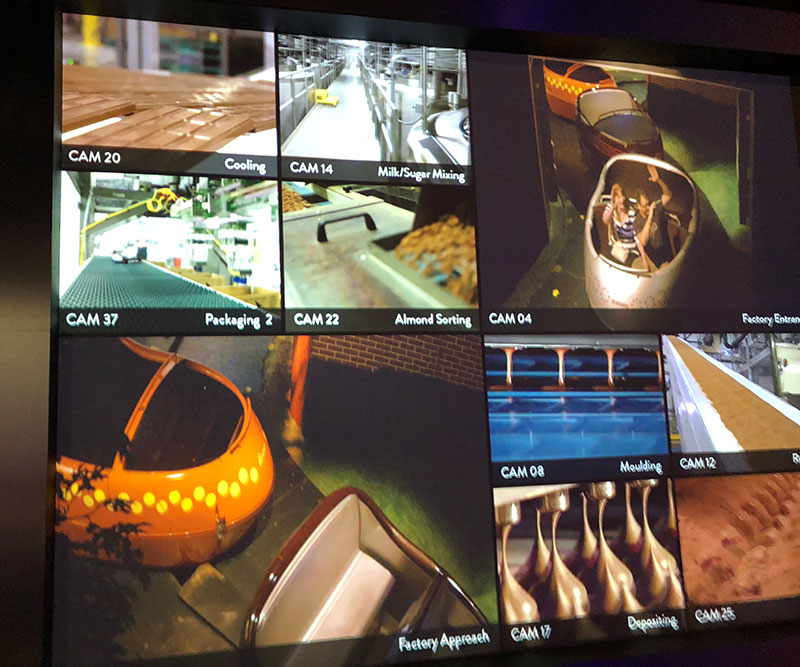
Next we found ourselves staring at a strange screen. Again, why?
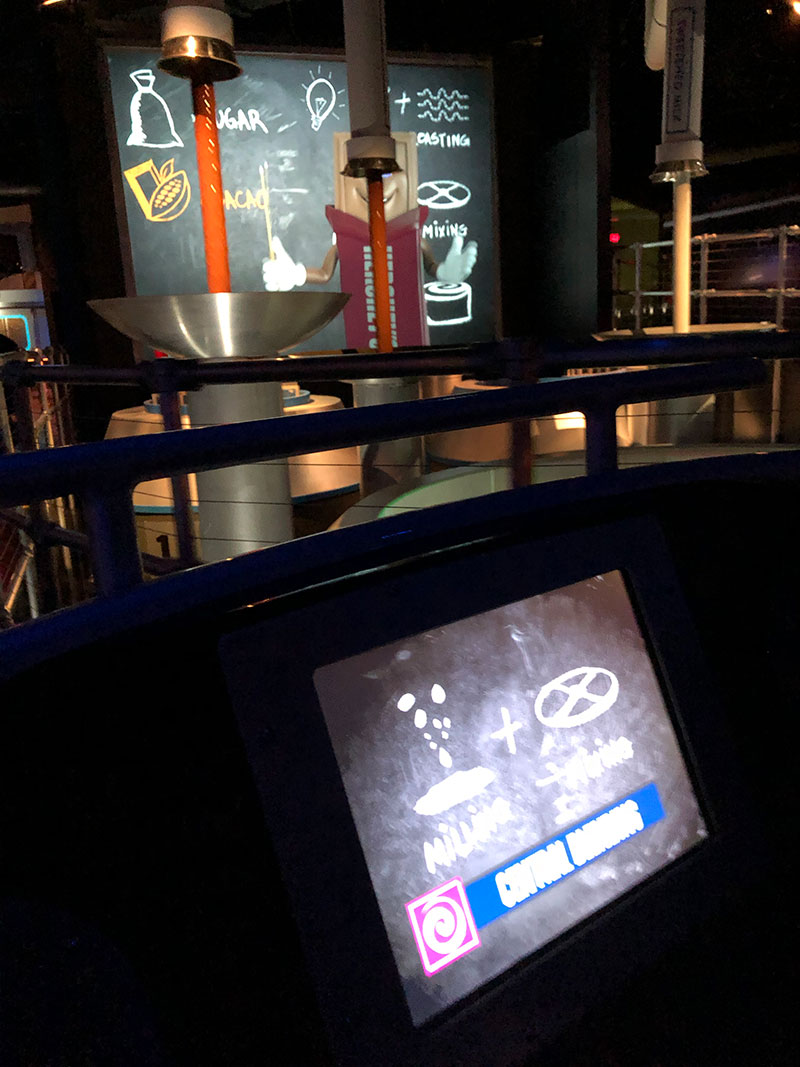
Then, we entered a series of fake chocolate industrial dioramas. At that time a fake blond scientist popped up on the screen in our little cart. This puzzled me greatly as this caused us to look down at the cart rather than the multi-million dollar spectacle-disaster happening around us. Now that I think about it, maybe that is why they put a screen in the cart, so we would be distracted.
Why is there a screen in the cart???
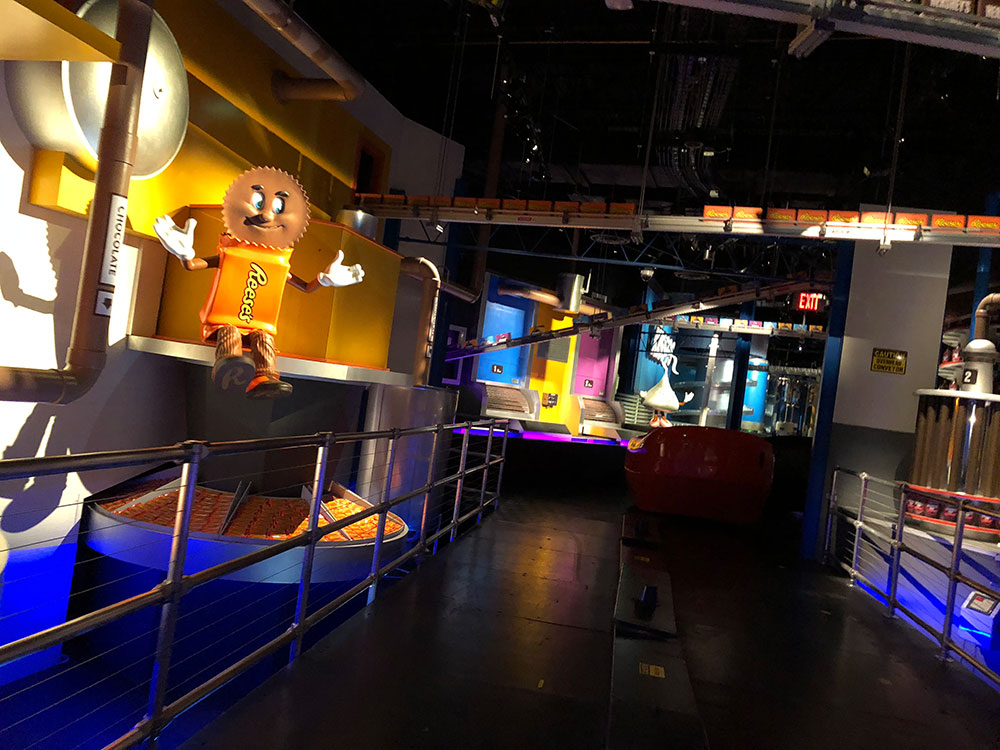
Here are two more dioramas:
I kept my opinions of the ride to myself until, as we approached the end, she turned to me and said, "That was awful; they destroyed the ride!" .... She hated the sterile nature of it (as if no humans picked the beans or were involved at any step in the process).
Hershey has done to Chocolate World what Coke did to the Coke Museum (or whatever the original was called), turning both into visual, but mindless experiences. We would highly recommend the Hershey History Museum in downtown Hershey over this place, but that's our my opinion. Even the kids rides at Disney (they are at least silly or goofy) are more fun than this one.
Following the ride, we headed for the safe refuge of a jeep collection. But, to get there, we had to brave a series of hard rains, fog, and a surprisingly brutal section of road that I'm pretty sure is supposed to be Interstate 81. Apparently, ever since Bill retired from PennDot, things have gone bad!
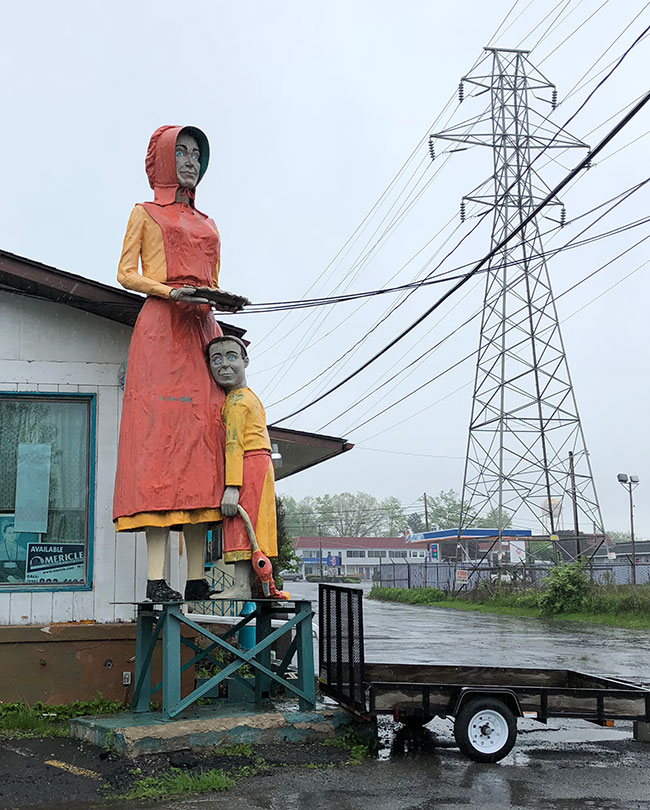
On the way there, we saw this odd structure at "Granny's Motel":
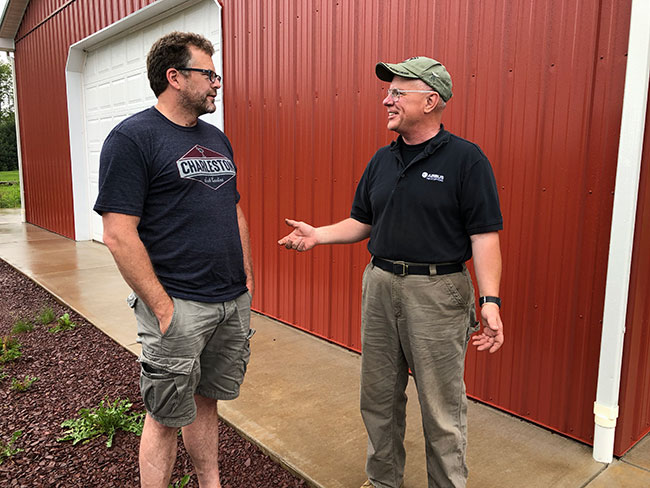
Jerry's place is deep in the hills of Coal Country (or felt that way). He's got a nice spread with a beautiful barn.
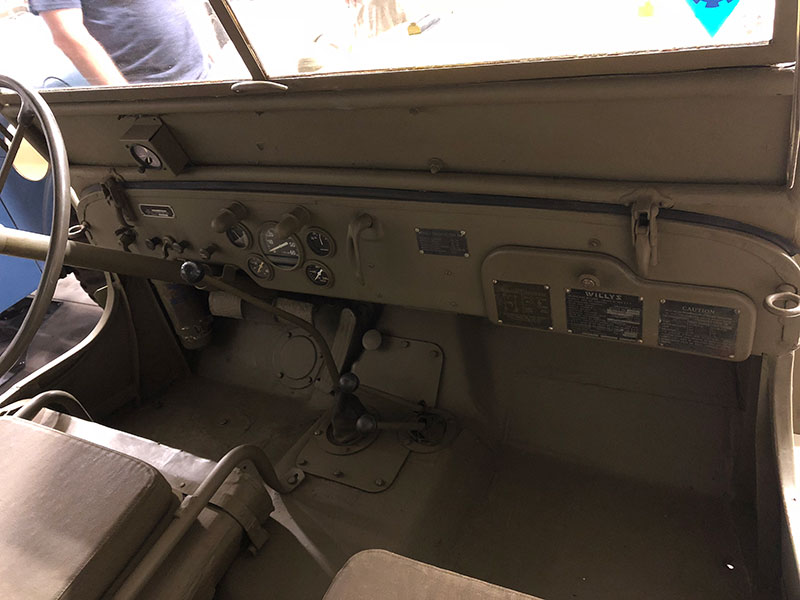
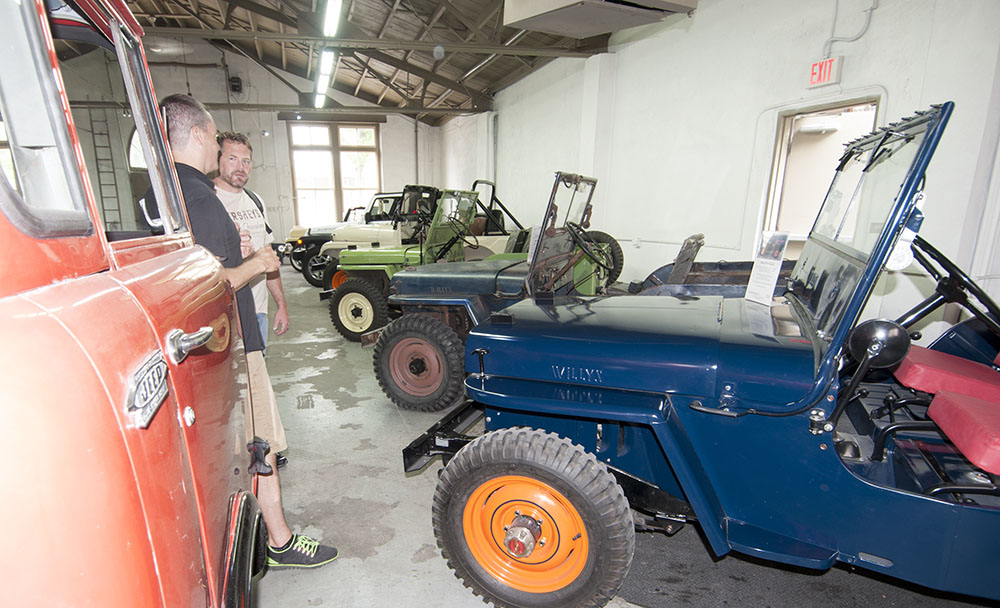
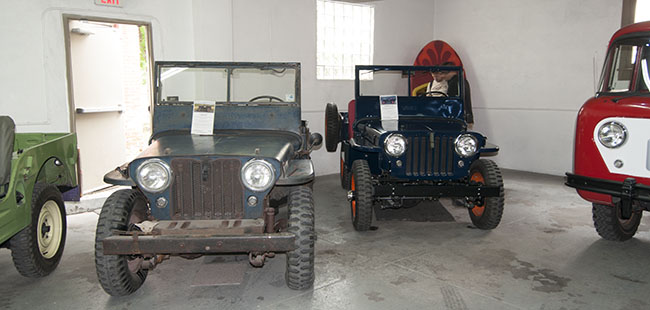
Jerry spent time in the Army and the Airforce and served overseas in several capacities. That's given him a fondness for military jeeps. The first jeep he began restoring was an MB he tackled in the early 1980s. He bought it for $150 from a guy who'd brought it back from Europe. Good luck finding those prices today!
Jerry has set up the MB to be both a standard MB and, for diversity, a Follow-Me jeep.
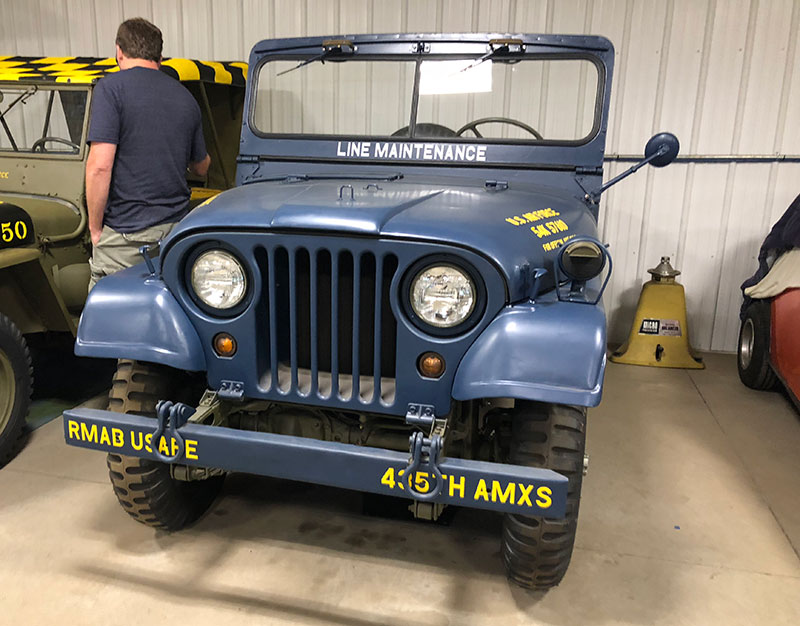
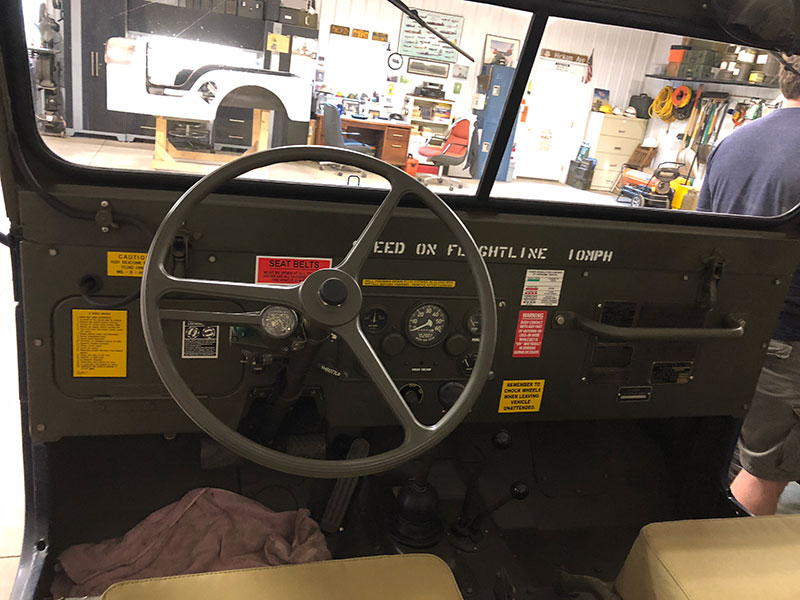
Jerry remembers the M-38A1s from his service days. He decided to redo this M-38A1 to honor his time in the Air Force.
Jerry's working on another M-38A1, except this one is a Canadian M-38A1CDN2. He's discovered a variety of little things that differentiate it from it's American counterpart. He's even sought out special body panels that came out of Canada. He's been invited back to Canada to show off his jeep once he completes it.
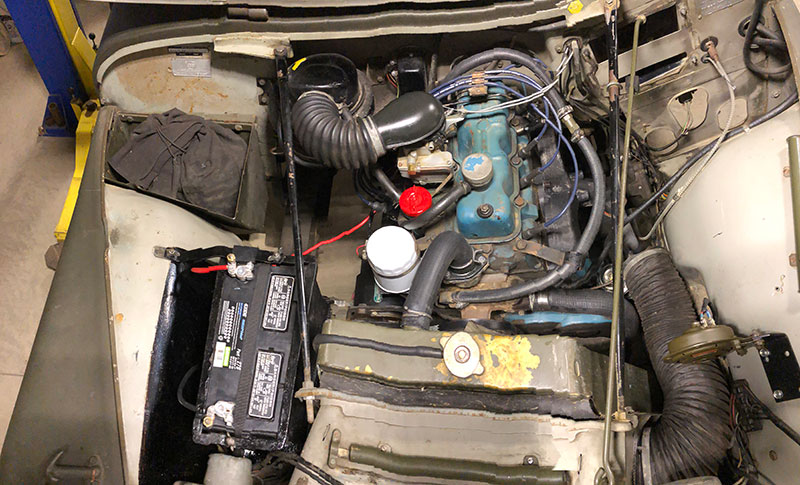
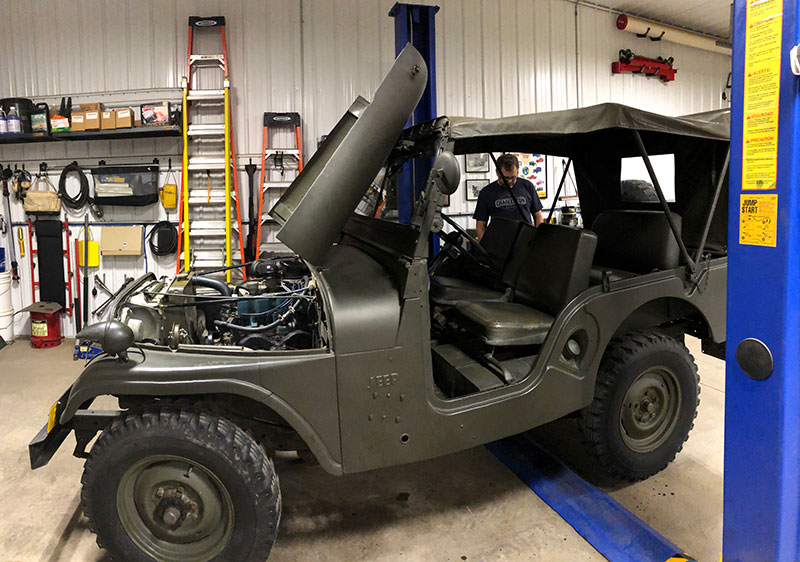
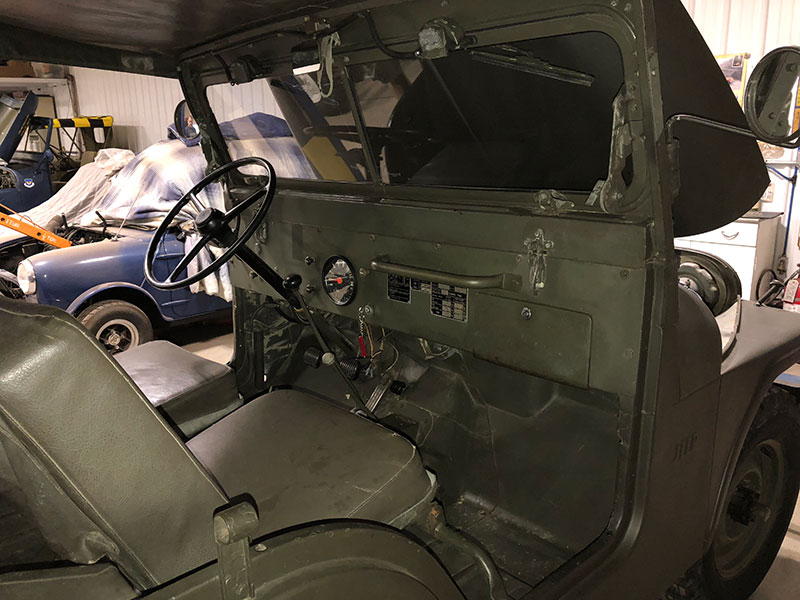
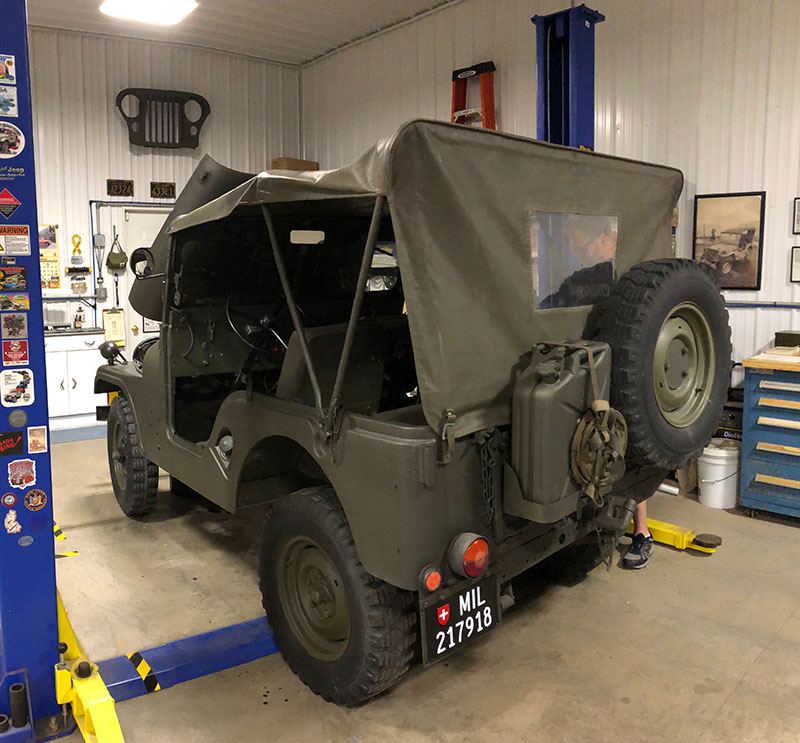
A military jeep Jerry bought recently was a Swiss Military CJ-5. He spotted this on eWillys, so you might remember it. He plans to keep it as is and uses it for cruising the area.
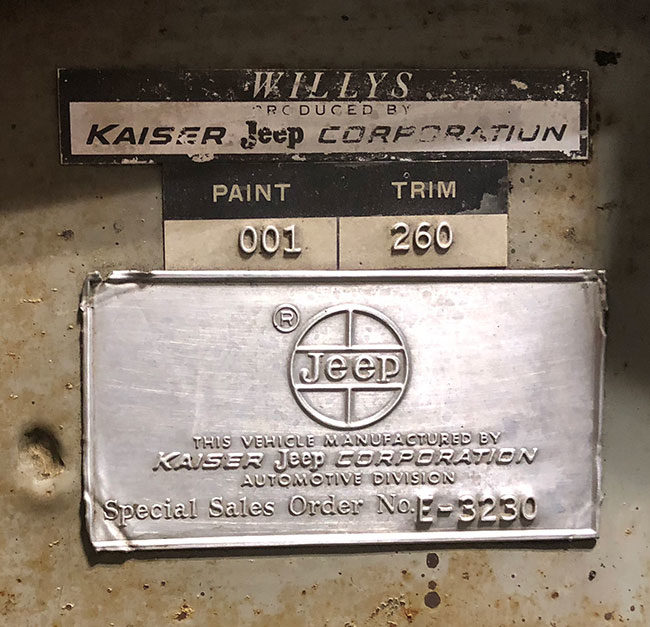
He believes the original color can be found on the inner fenders. Anyone know what color a Military Swiss CJ-5 might have been? I don't know if the Swiss paint color differed from the paint codes shown below?
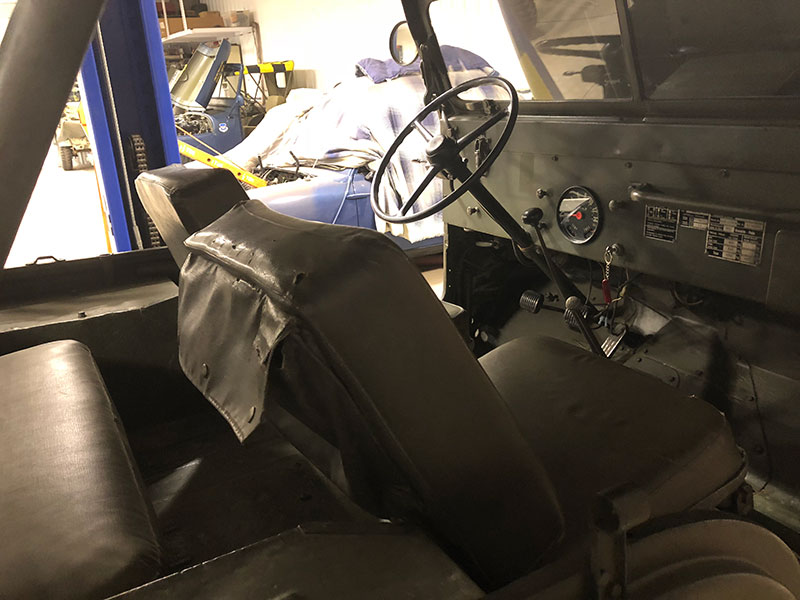
Notice the ventilating windshield.
The seats are thick with a special pocket on the rear of the passenger seat.
Jerry also shared this photo of a family jeep from about 1949. I found two things interesting about it. 1) The cab appears to be an early Worman Half top, something of which I've rarely seen pictures. 2) this early jeep has dual hood clamps. I think this might be the earliest photo I've seen with those. I thought they were a later phenomenon.
We had a nice time visiting with Jerry and really appreciated his time, his vehicles, and the things he sent home with us. Too bad it was raining, as he was set to take us for a ride in the Swiss CJ-5.
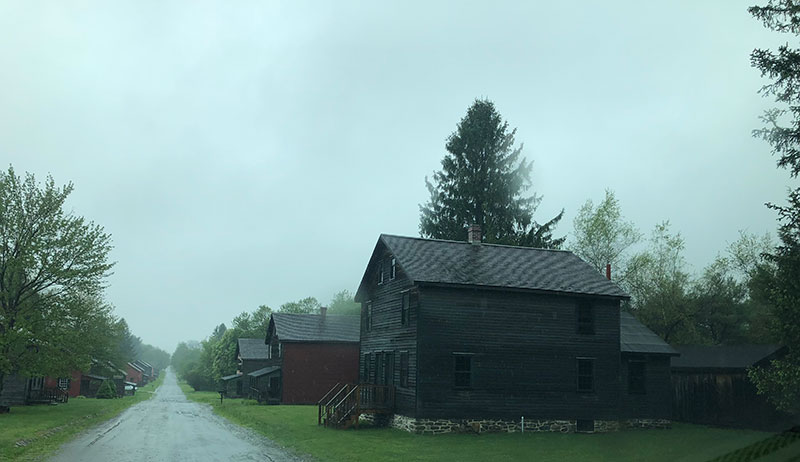
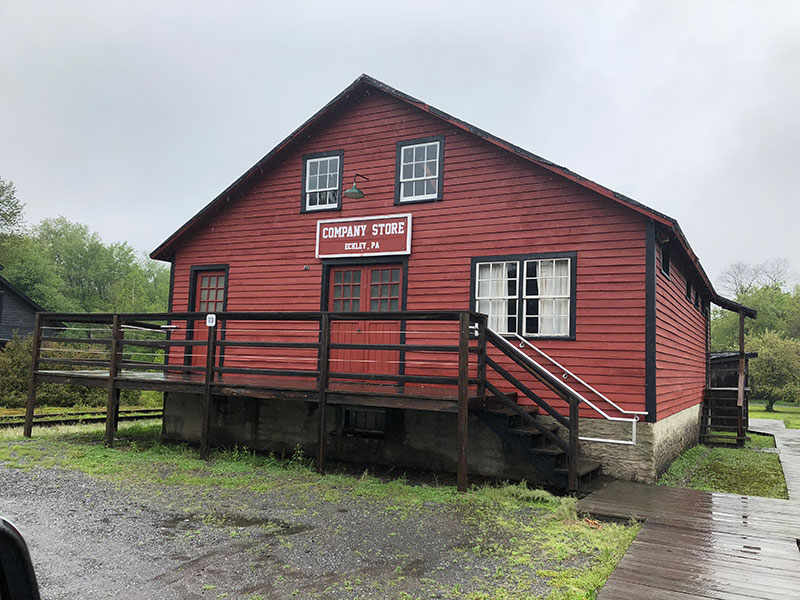
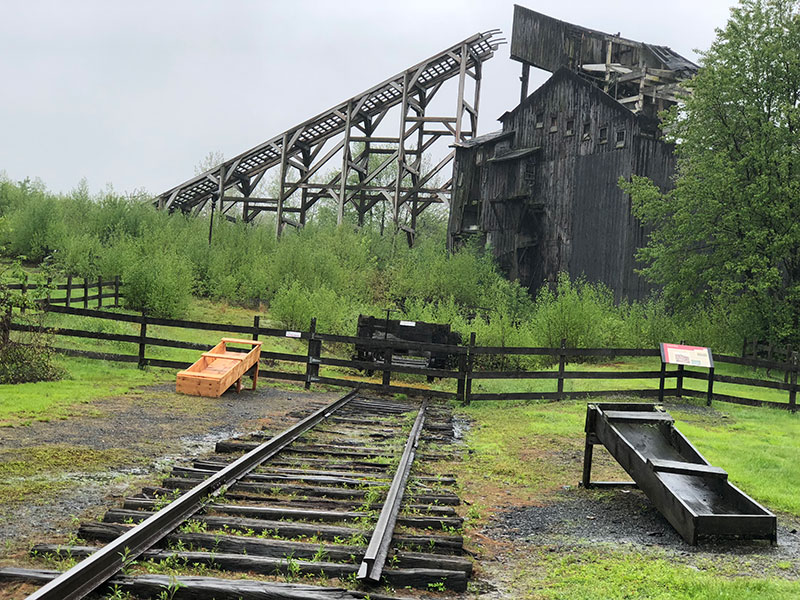
After talking it over with Jerry, we decided to stop by the small town of Eckley, a community frozen in time as a model for what an early coal mining town might have looked like. This particular place is free to walk or drive through. There's a museum on site as well, but we were so late that we decided it wasn't worth the price to walk through it he museum.
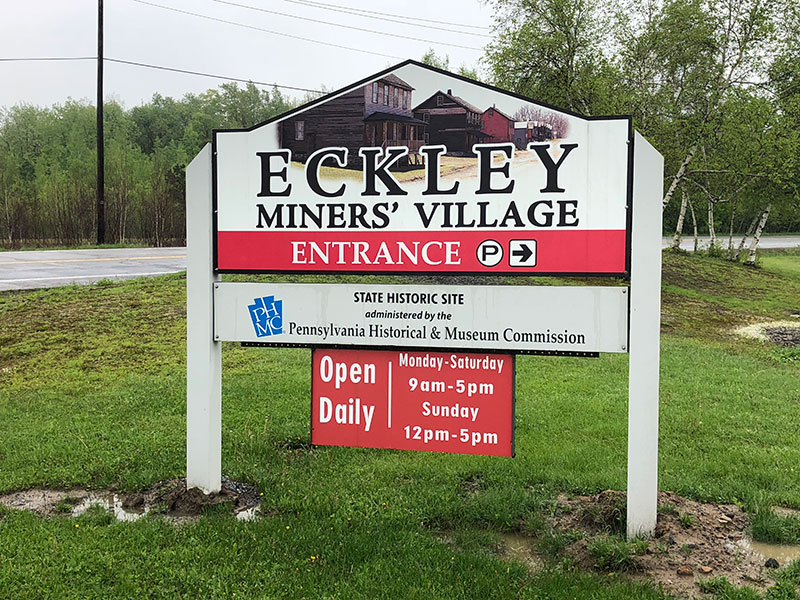
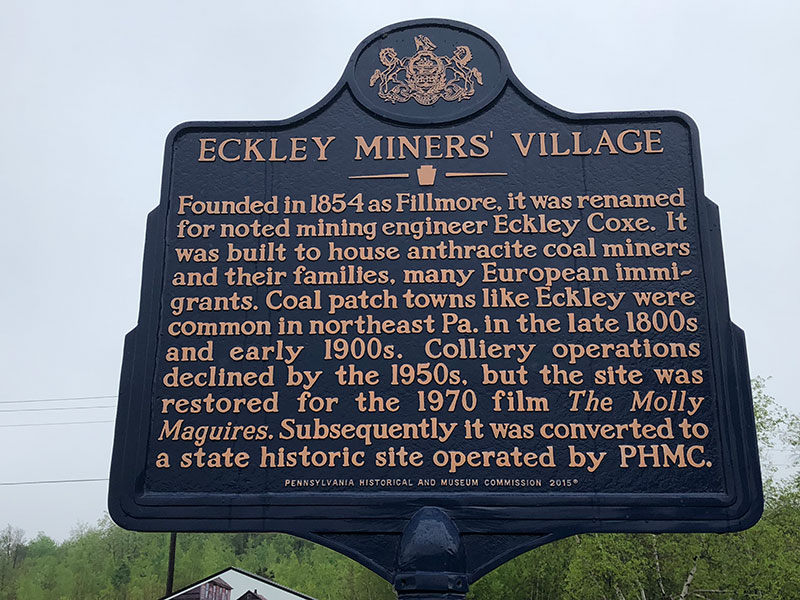
After driving through the town, Ann wanted to stop by the visitor's center to go to the bathroom. I spotted this sign, so wandered up to read it. That's when it hit me. I didn't recognize Eckley, but I did recognize Coxe. I'd briefly written about him in my book SLAG.
Eckley Coxe had inherited a family mining operation and was an early trained mining engineer. He wanted to see mining improved from a safety and technological angle, so it was he and one other guy who helped push for the creation of AIME, The American Institute of Mining Engineers, in 1871. My great great grandfather Anton Eilers would have met him at one of the meetings he attended during the early years of the organization. Small world.
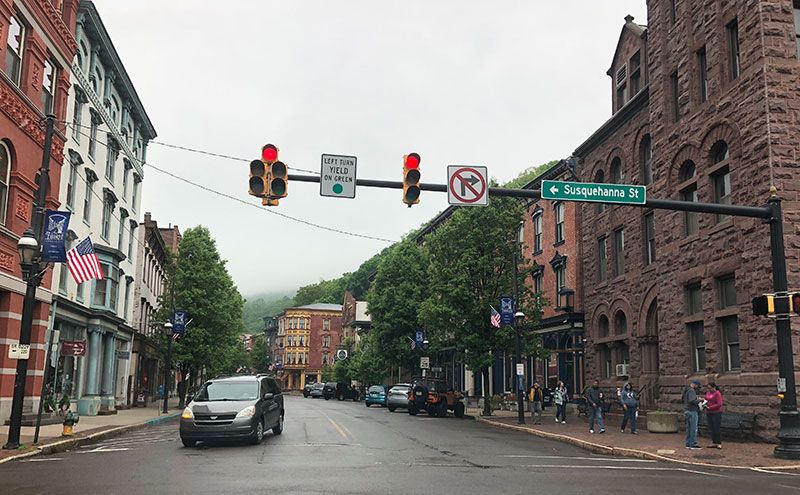
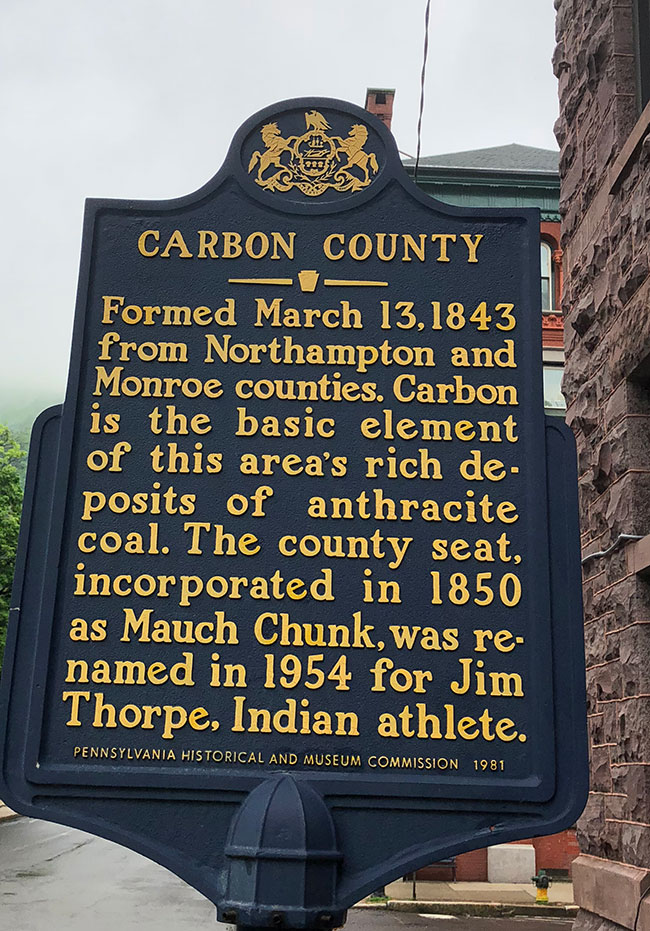
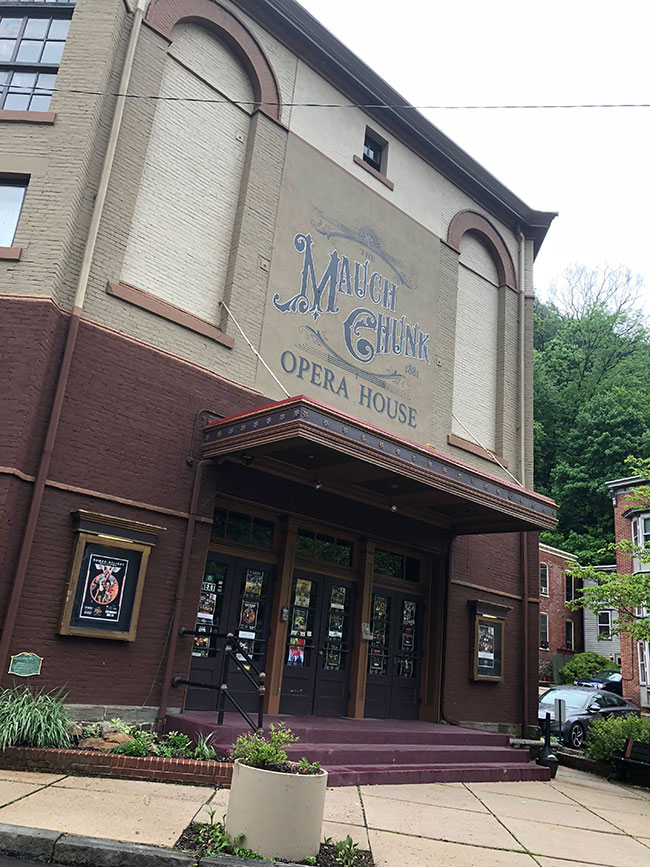
From Eckley, my iPhone took us on an unexpected path through the mining town of Freeland (where the Coxe name can be seen in several places), then up and down hills through fog and rain, until we dropped into the town of Jim Thorpe (formerly named Mauch Chunk). That turned out to be a cute little town.
The second to the last surprise today was that Siri, without my prompting, took us into Bowmanstown, home of Walcks. As I pulled off the highway to figure out where Walck's was, I discovered it was right there off the freeway. It was already 5:30pm, so I wasn't surprised the place was closed.
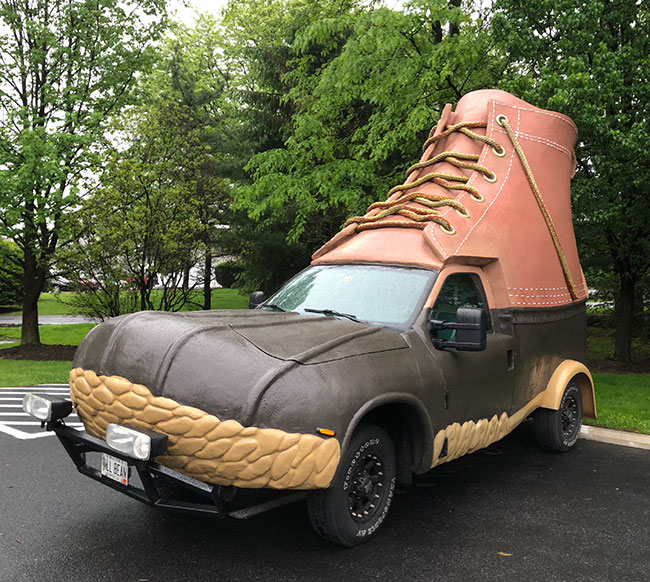
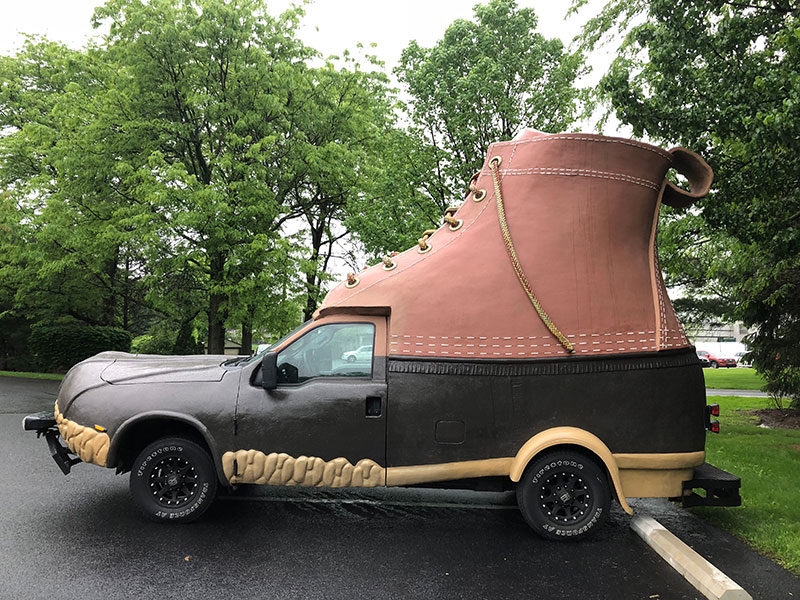
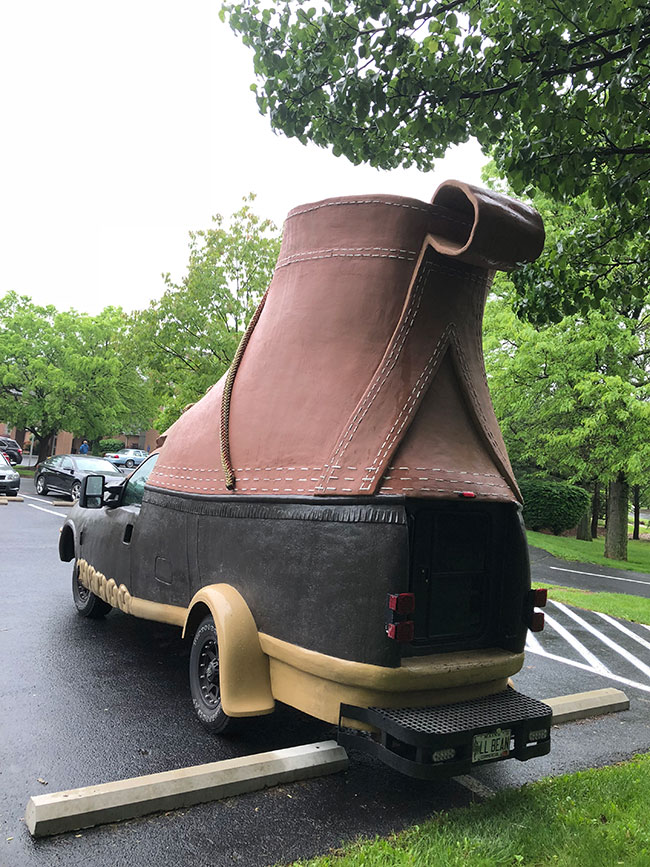
The last surprise of the day was near our hotel. We spotted this LL bean shoe mobile. Who knew?
On Wednesday we have decided to shift plans from the Crayola Experience to the National Museum of Industrial History in Bethlehem. Then, we plan to visit with Chuck and his wife to see their jeeps and finally, we'll be arriving in downtown Philly for a two night stay with my cousin.
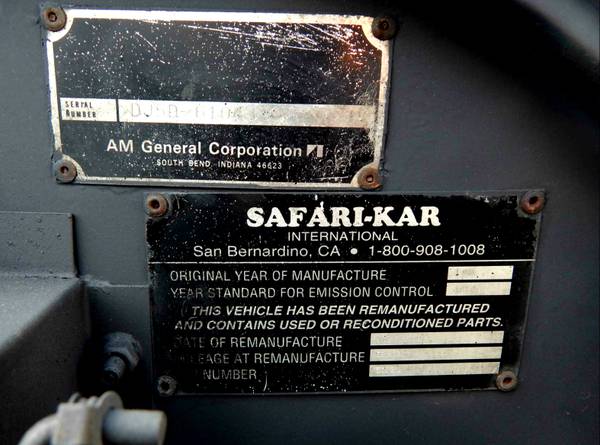
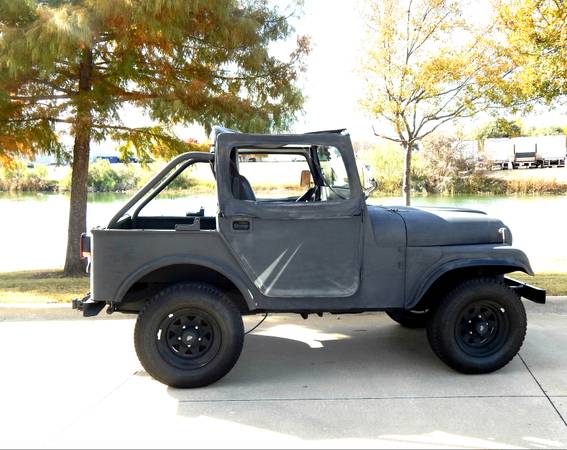
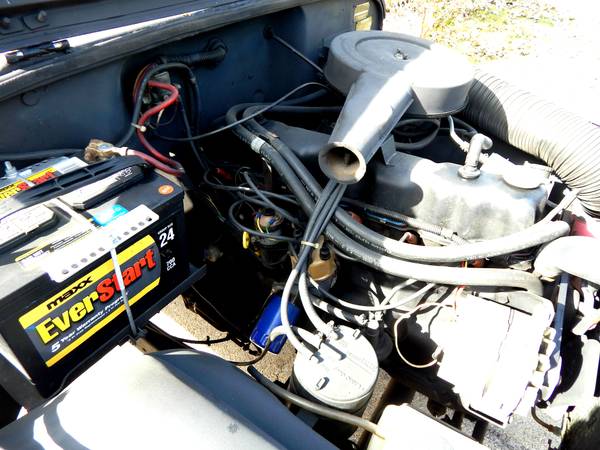
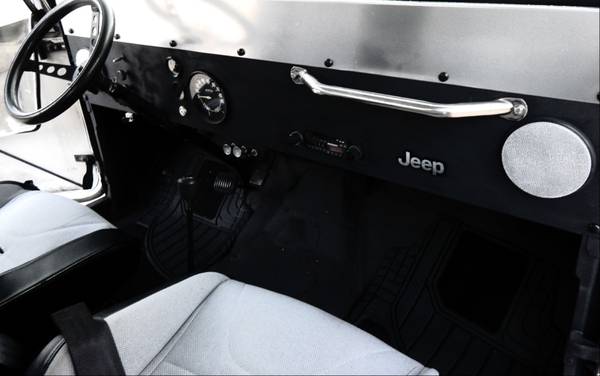
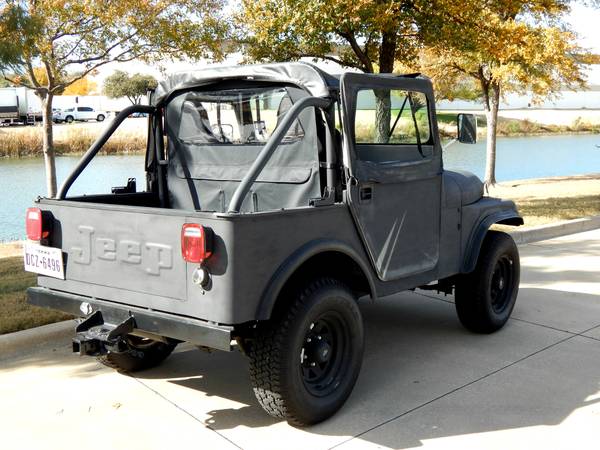
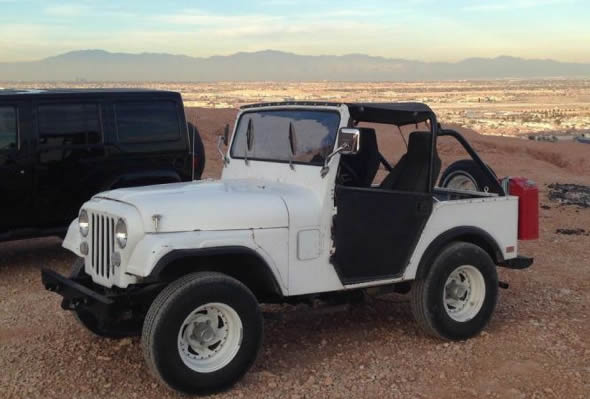
I found a DJ-5 for sale (see below) that had a Safari-Kar data plate. I did some research to learn more about these vehicles.
Safari-Kar International was a company from Woodruff Avenue in San Bernardino, California, that purchased, restored, and resold postal jeeps. It was launched in 1993. Don't confuse it with a weird car by the same name called the SafariKar.
As best as I can learn, the company sold remanufactured DJs and two different kits. One to swap the steering and chop and modify the back half and another for soft top kits. At their height they remanufactured around 30 jeeps a month. They also signed up twelve independent manufactures.
By 1995 the company ran into a legal problem. They were reselling the vehicles with a new odometer as a modern vehicle. But, by doing so the law dictated the 'kars' had to meet modern safety regulations. (you can read an entire article about the company in a 1995 article from Automotive news (also archived at the bottom of this page).
Four Wheeler Magazine may have reported on this modification in a 1993-1994 article, but I have yet to confirm that. They did reference a DJ in a later Cheap Jeep article, but with no mention of a soft top.
AMC 1976 CLASSIC JEEP Up for sale is a one of a kind classic 1976 Jeep Year: 1976 Transmission: Auto Model: Safari Price: $5,000 firm Will not take a penny less was asking $6,000 reduced for quick sale . If not sold by this weekend will be trading for a small cabin. Miles: ONLY 28,000 on rebuilt motor Rebuilt transmission Clear Texas title
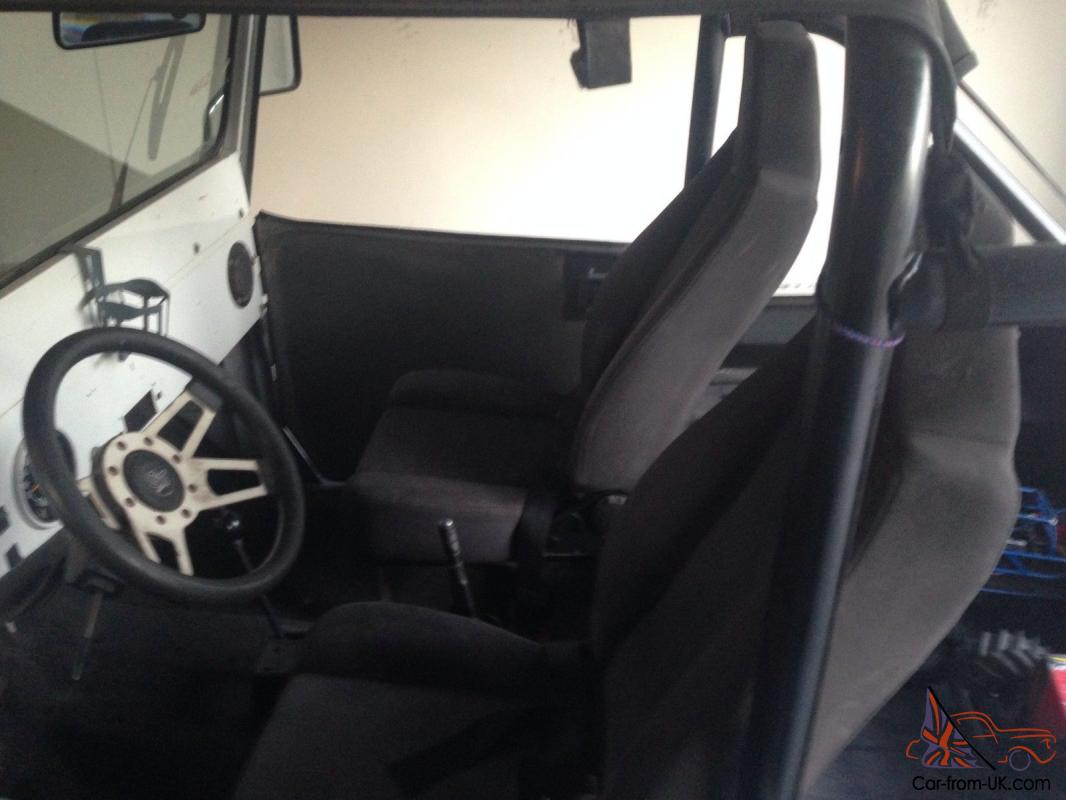
Updated Texas registration & inspection Runs & Drives Excellent Driven as my daily driver Brand new Goodyear tires Two brand new $600 Rugged Ridge front seats Brand new bikini top & windbreaker Brand new carburetor Brand new alternator Installed a new choke so it well start first start in winter Brand new classic seat belts Brand new chrome mirrors & rear view mirror ... also wipers new battery -and brand new additional parts Has Hitch Currently installed on jeep is a brand new black bikini top, windbreaker, & the old original soft doors
I have the complete orgional soft top, soft doors, and hardware which included in sale
======================
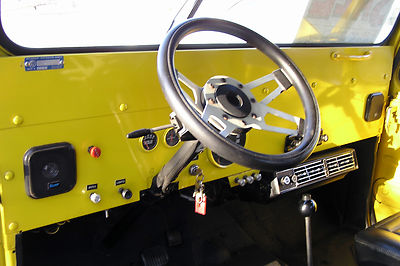
Other Safari Kar examples: You can see similar steering wheels and seat designs.
This one was listed back in March of 2013 as being a Safari Kar DJ. Note the similar roll bar.
A small California company has launched a remake of a U.S. Postal Service Jeep to compete in the low-end sport-utility segment.
But the remanufactured Jeeps are ahead of their time - so much so that Safari-Kar International of San Bernardino, Calif., is bumping up against state and federal laws.
As a licensed remanufacturer in California, Safari-Kar performs a type of recycling, said President Tommy Mason.
In reconstructing former Postal Service Jeeps and declaring them a new 1995 Safari-Kar, the company:
Replaces the 'Jeep' badge with 'Safari-Kar.'
Mounts a plate on the left door frame disclosing the vehicle's former mileage and that the vehicle is remanufactured from used parts.
Replaces the used odometer with a new one.
Gives the vehicle a 12-month/12,000-mile warranty.
Sets the odometer at zero.
Although Safari-Kar is only producing about 30 vehicles per month, Mason believes there's a market for a cross between a new and used sport-utility. The base price is $6,500.
The strongest prospect is a commercial fleet such as parking enforcement vehicles, rural route postal vehicles and rental vehicles in the Sunbelt, said Mason. Customers can order the steering wheel either on the right side or the left side. He said the vehicles, painted in bright colors, also make a good second car or first-time buyer vehicle.
'The car is in a price range that is very affordable. With used cars, the terms (for financing) are limited, making the payments very expensive. Because this is registered as a 1995 vehicle, we'll get the same or similar financing as on a new car,' said Bob Giles, president of Giles Nissan-Volvo in Lafayette, La., who has agreed to be a Safari-Kar dealer.
Safari-Kar has signed 12 independent manufacturer's representatives throughout the country and will be seeking dealers in addition to Giles, said Ron Weaver, Safari-Kar's chief operating officer. The company has sold vehicles to fleets in Rhode Island, Massachusetts and California. It has lined up contracts with rural route mail carriers, municipal fleets and rental car fleets, he said.
FACING A LEGAL JUNGLE
But the market could go sour if the remanufacturer doesn't iron out problems with state and federal laws, such as:
Setting the odometer at zero and labeling Safari-Kars as current model vehicles violates federal odometer law, said Richard Morse, chief of the odometer fraud unit for the National Highway Traffic Safety Administration.
'If they are calling these 1995 vehicles, they must meet 1995 safety requirements,' said Clive Van Orden, chief of NHTSA's division of safety assurance.
Many states don't register remanufactured vehicles as California does, admits Mason. The company is exploring sales opportunities in Texas and Louisiana. Some state officials don't know how to classify the vehicles.
'We are still trying to ascertain what it is and who should license it. We believe it needs to be titled as a used vehicle,' said Burgess McCranie, an attorney with the Louisiana Motor Vehicle Commission.
If the odometer is replaced, it can legally be set at zero, said Weaver, adding that the company complies with California law. The odometer can be replaced and set at zero only if it was destroyed, said Van Orden.
'They (federal officials) are wrong (about Safari-Kar having to meet current safety requirements). There is a difference between a manufacturer and a remanufacturer. We only have to meet the original standards (of the original model year) of the vehicle. Safari-Kars only have to pass that (original) year's standards of emissions,' Weaver insists.
NHTSA IS WARY
But NHTSA officials disagree. Weaver told Automotive News he would contact NHTSA about federal requirements. Van Orden is scheduled to visit the company's California plant in the next couple of weeks to examine Safari-Kar's remanufacturing process.
'I'm not familiar with other state laws, but we have new, used and remanufactured vehicles. Remanufactured vehicles are similar to new vehicles. They have their own certificates of origin and their own special reports of sale,' said Chris Humphries, manager of the California Department of Motor Vehicles Redland office.
Safari-Kar 'has tried to make sure it is in full compliance with California law,' Humphries said. 'Nothing has been refused by our headquarters. Everything has been complied with.'
Henry performing 'toppage' on a Jeepster in a downpour . . .
Today we plan on visit Bill and Henry at Lime Street Carriage in Lancaster, Pennsylvania.
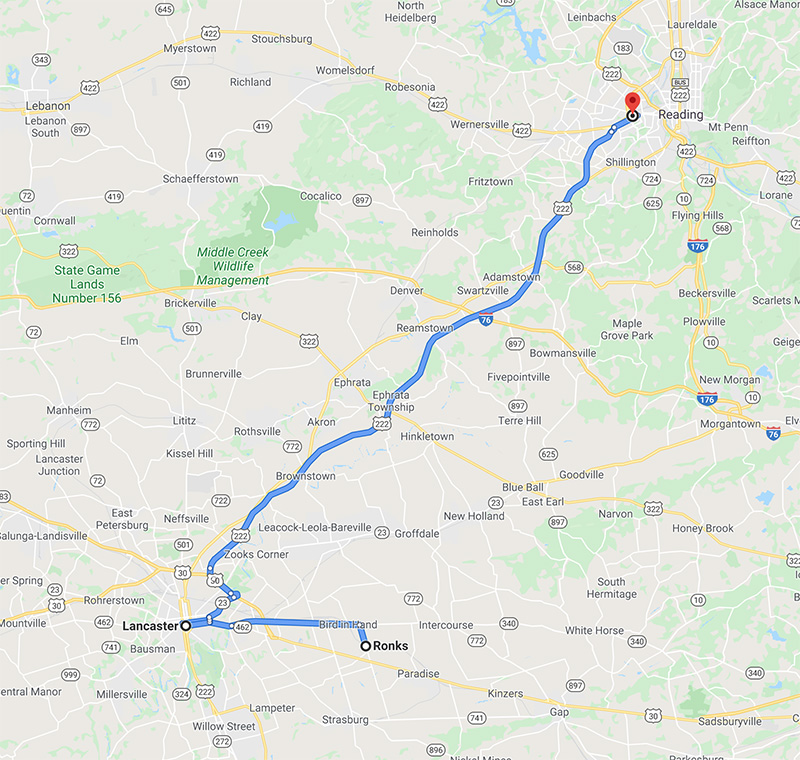
On Thursday we drove from Ronks, Pennsylvania, to Reading, Pennsylvania.
Ann and I awoke to a rainy morning in Ronks, PA. I'm not certain Ronks is a town, but it's definitely a street. I do know for certain there's a Waffle House off of Ronks street because we ate a midnight dinner there last night, because I wanted some grits: scrambled eggs, bacon and grits to be exact. Yeah, I know their butter is really hydrogenated oil coupled with other ingredients requiring a chemistry masters to decipher; I enjoyed my grits just the same.
Our goal today was Bill Reiss' Lime Street Carriage in downtown Lancaster. Ronks is only a short drive away, so it didn't take long for us to get there. When we arrived at Bill's, he showed us around his current showroom of jeeps (and other vehicles) for sale. He explained that he's in the middle of a renovation. His building was formerly a Studebaker dealership and other businesses. He laughed about the seven layers of carpet and three false ceilings he's torn out of one area of the building. On the plus side, he was able to open up a great deal of space. Even though there's plenty of work left, it's easy to see how great the space will be when he's done.
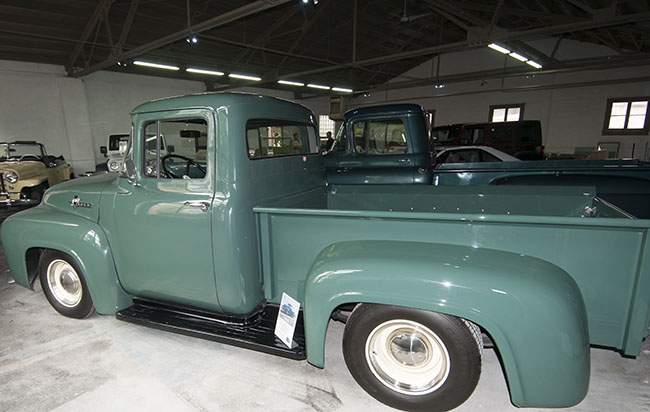
Here are Bill and I checking out a few of the jeeps in his shop. There are several 2As and a CJ-5 lined up there.Here are twins Norm (on the left) and Norma. Norma is named Norma, because she's prettier.Bill has this vintage truck for sale.
After a quick tour, Bill's friend Henry arrived and we all went to lunch at a local pub (great food, thanks guys!). After lunch, Bill offered to take us to their jeep restoration shop in a nearby town. The weather looked good, so he thought we'd take the Jeepster. Best of all, he was going to let me drive back!
That was the plan anyway . . . The Jeepster had different ideas.
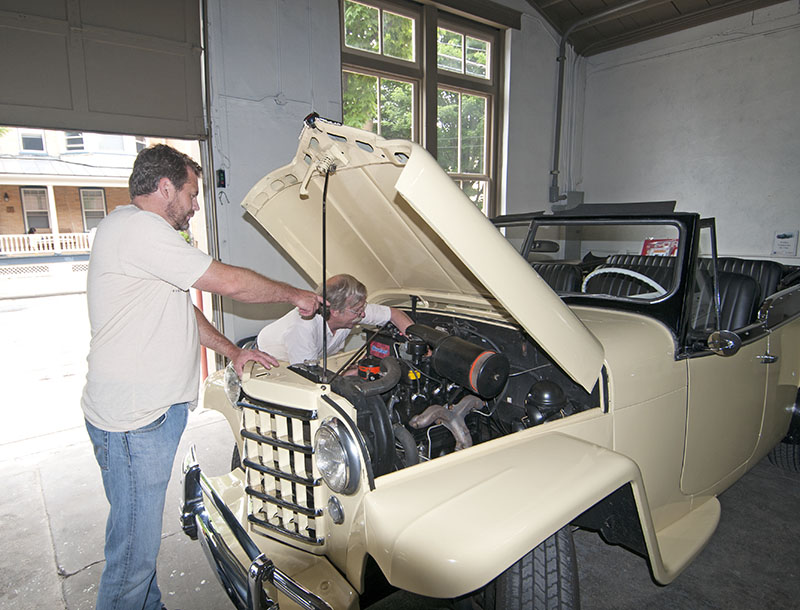
First, the normally dependable Jeepster didn't want to start. As you can see, I was offering all kinds of useless advice. Henry thanked me for my advice, suggesting I stick my suggestions where the sun can't reach them.
My wife said point into the engine and offer some advice. She promptly took a picture. That's when Henry provided some advice of his own :-)
Henry figured out the problem, and soon we were rolling out the door.
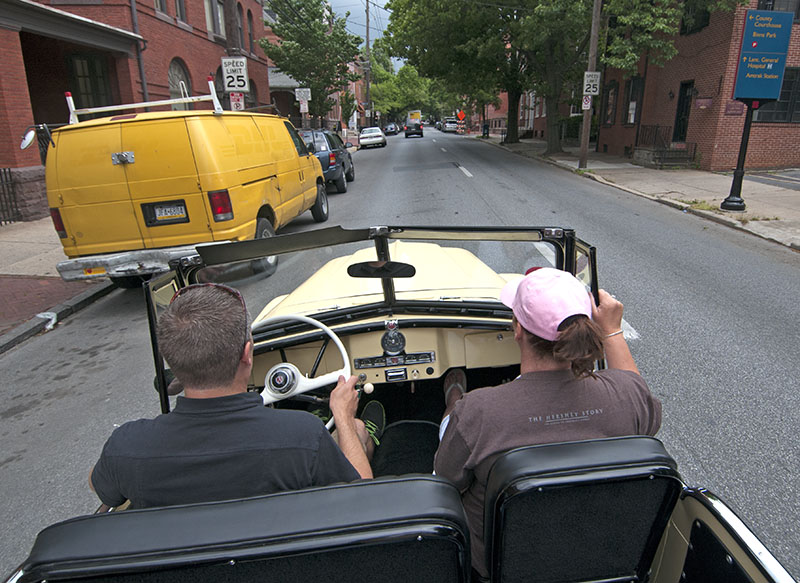
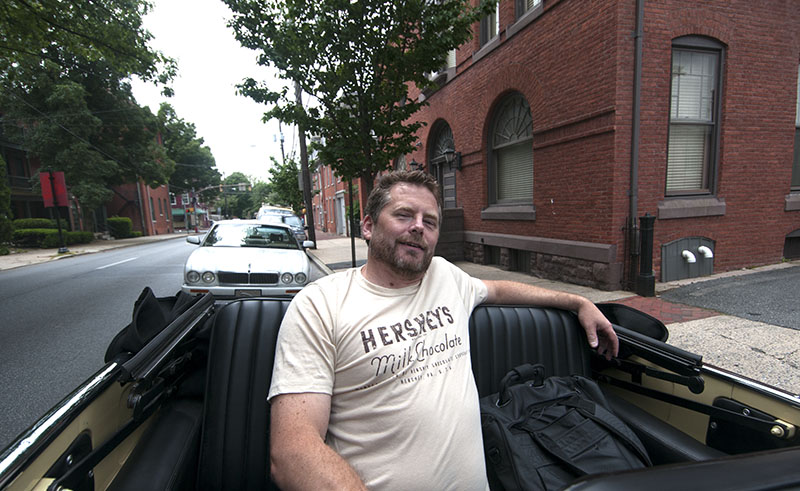
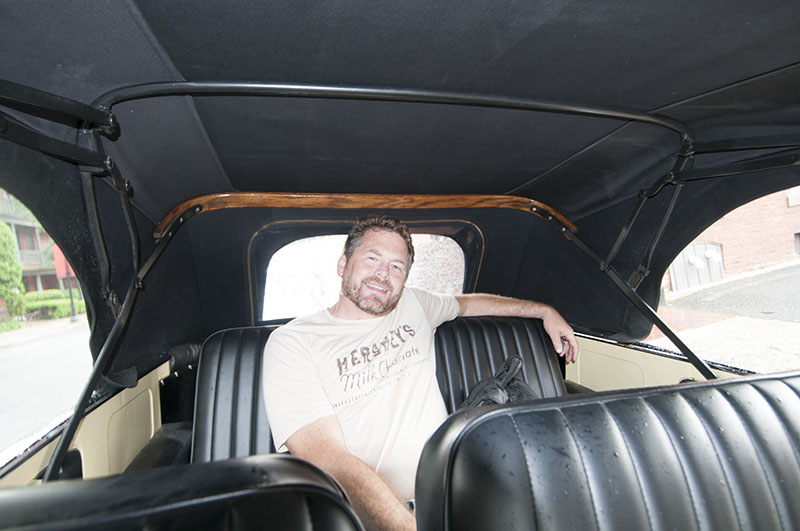
We are really cruising downtown Lancaster in style!I'm continuing my uselessness by lounging in the rear of the car. I really like my Hershey's shirt btw.
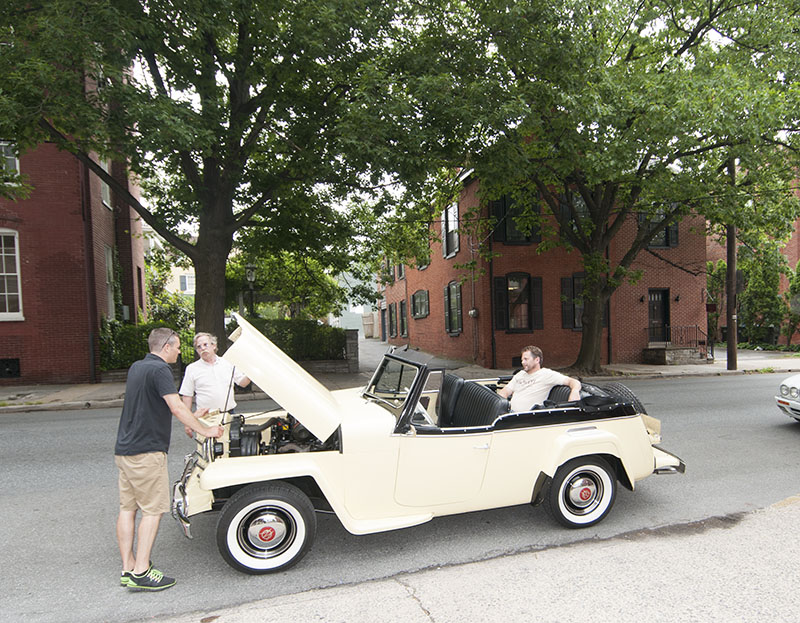
We had a blast on the drive. Sure, it was short, lasting less than a block, but we made the most of it before the Jeepster started acting up again. So, Bill pulled over and Henry and Bill went to work on the engine (issue with the points). As you can see, I'm enjoying the ride even if we aren't moving anywhere. Besides, if there is one thing I've learned as a cook, that is too many cooks spoil the broth.
I was thoroughly enjoying my time away from my computer. The seat was comfortable, the weather warm, and the entertainment lively!
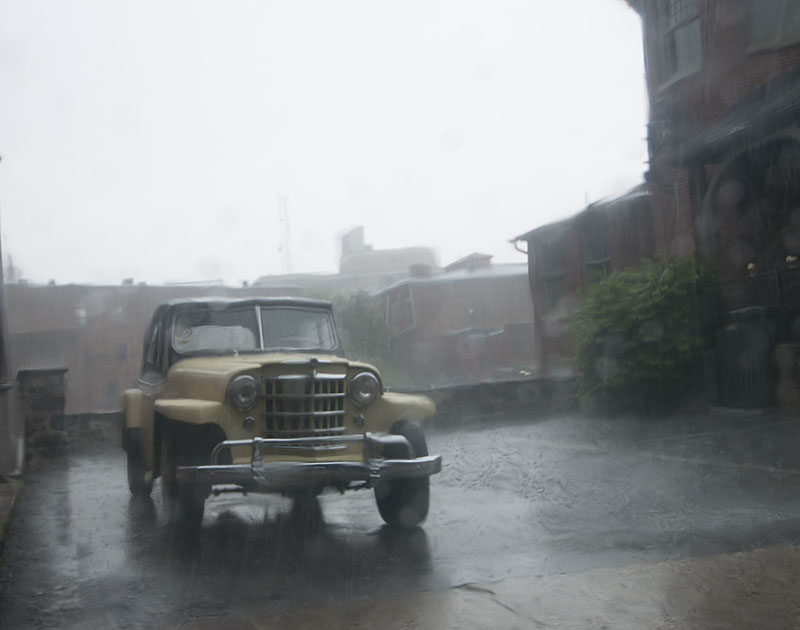
I was really enjoying myself . . . Even when it started sprinkling, I was still having a good time. Bill ran back and forth to his garage a couple times to grab some tools as Henry messed with the distributor. At one point, Bill thought it best we raise the top, so he reached back and pulled it forward. Not two seconds after the top was secured, the god of rain let loose torrents of water. It poured. Hard. As you can see below, I remained content. I was having all kinds of fun at this unexpected adventure!
Eventually, it rained so hard we (meaning mostly Bill and Henry) installed the top's sides (See top pic to watch Henry in action). Then, we all pushed the Jeepster into a parking lot, piled into Henry's Jaguar, and drove away.
So, I missed out on my opportunity to drive a Jeepster. I guess that's just another reason to visit again next year??
Using Henry's car, we eventually made it to the restoration shop. Around the shop are all kinds of jeep models: CJ-2A, CJ-5, Truck, Wagon, FC and others. They keep very busy and appear to do some nice work.
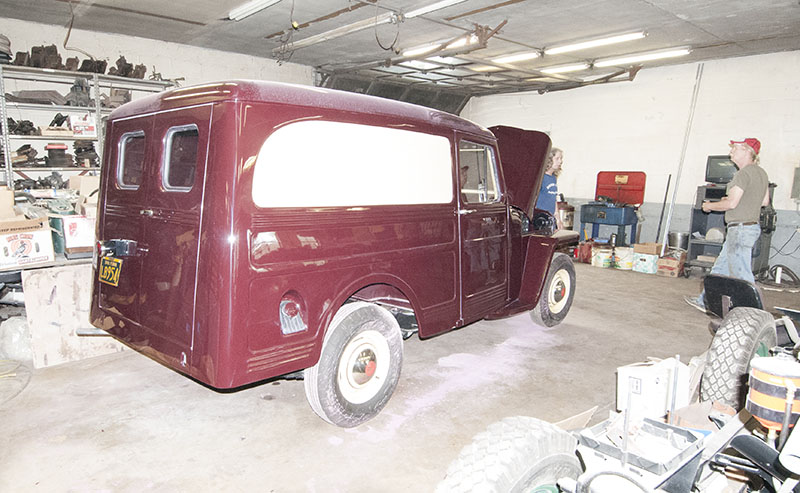
Check out Carl Walck's wagon in the image below, one that they are restoring. The wagon's passenger door had been badly dented by a telephone pole; however, now you can't tell it was ever near a pole. Great work!
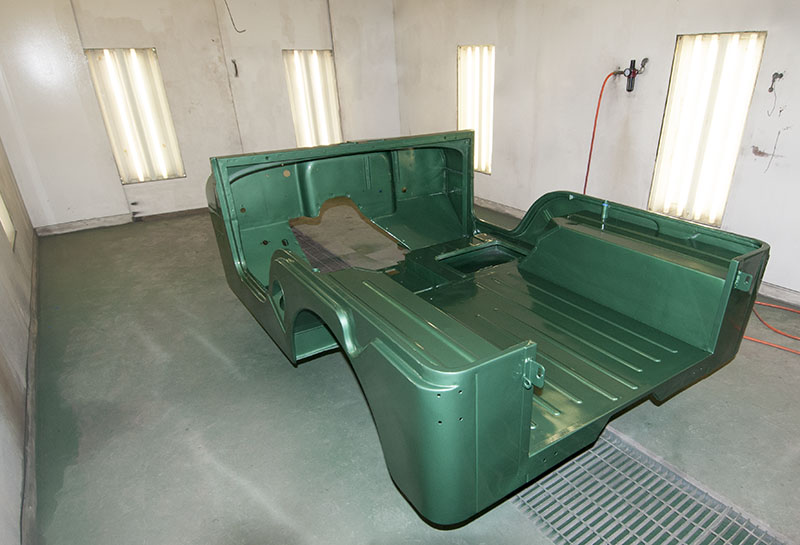
Carl Walck's WagonA rebuild CJ-5 body in the paint room.This is a truck cab they are rebuilding.An FC-170 Dually Bill found off of eWillys. It's waiting for a turn in the shop.This woodie will be restored soon.The interiors of these are just great!
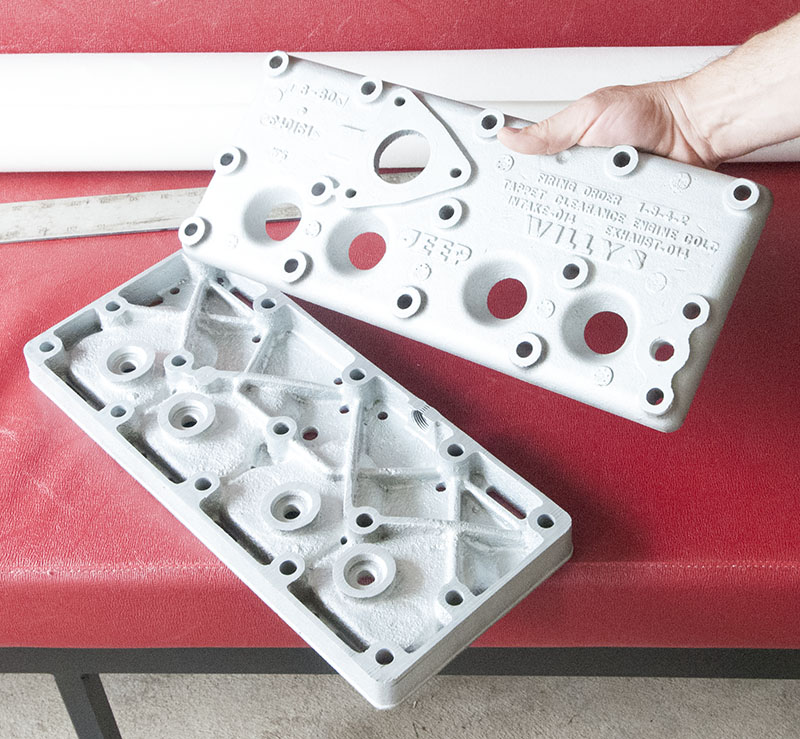
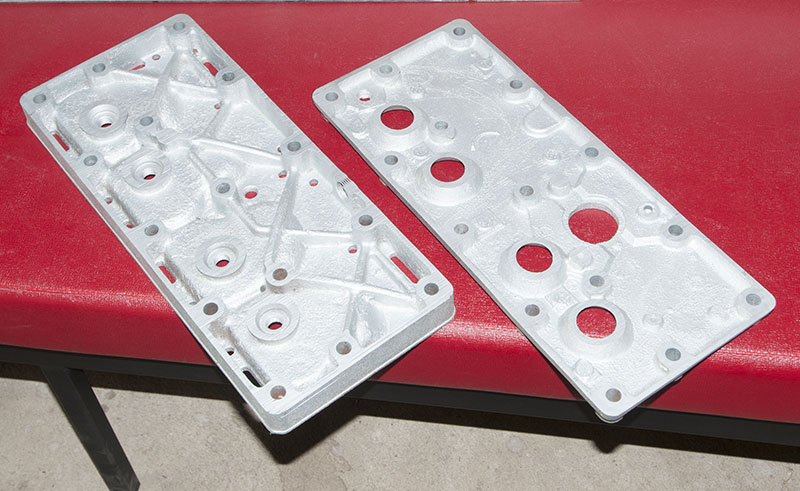
Bill and Henry were curious about the design the Willys engine head, so they had one cut in half.
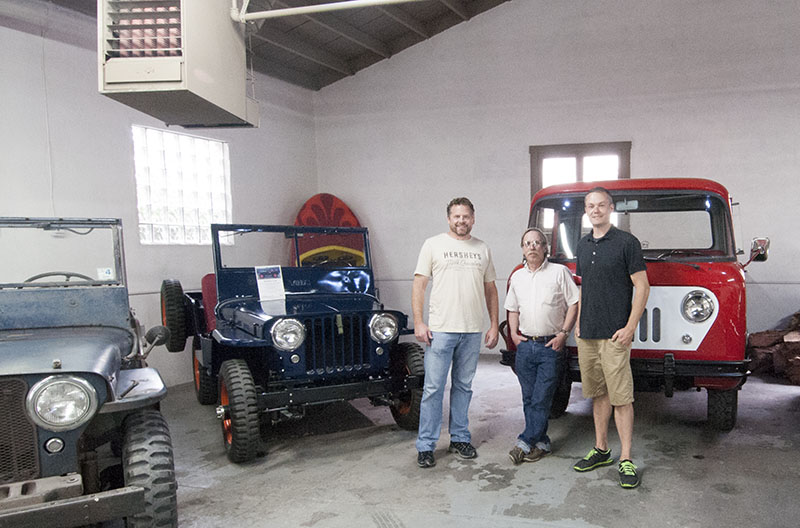
After a fun time at the shop, we returned to Lime Street Carriage for one last picture. Many thanks to Bill and Henry for an adventure that Ann and I won't soon forget. We'll be laughing about it for years.
Me, Henry, and Bill
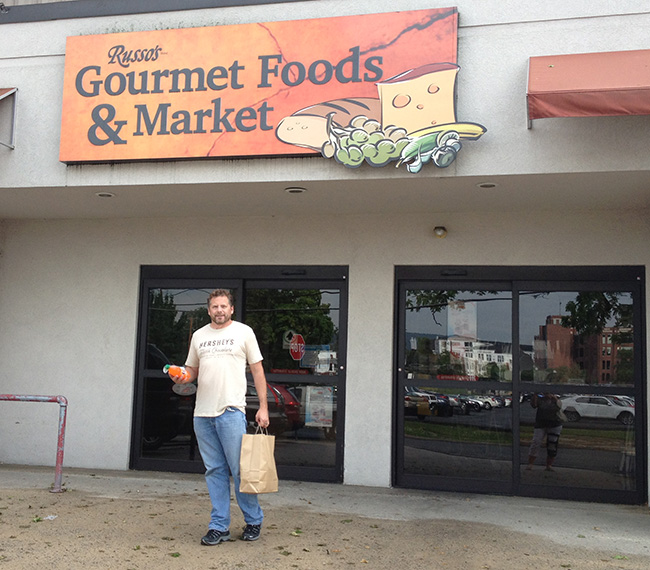
After our afternoon with the guys, we drove north to Reading, Pennsylvania, where we got another screaming deal on a Marriott hotel room. We arrived in the late afternoon. Around the corner from our room was Russo's Gourmet Foods & Market, an Italian specialty market. I'm not very familiar with gourmet Italian food, but I found a variety items I couldn't resist. I left with a bag full of goodness!
On Friday we meet with Seth in Kempton, PA, at 9AM. After we get done with him, we'll be stopping by Dietrich Meats (thanks for the suggestion John). Then we head over to Sea Cliff, Long Island.
The only hitch in our plan to visit with my son Karson this weekend is that he called Thursday night to tell me the FEMA/Americore folks have been ordered to stand by for a possible evacuation to Oklahoma. So, we might or might not see him this weekend. That's a big bummer for me, but he's got to do what he's got to do. Those folks in Oklahoma right now need all the help they can get.
UPDATE: Bruce let me know that there were three different windshields sported by the DJ-3A:
1. The typical 3A type with the vent that opens up;
2. It also came with what is referred to as the 3B WS frame. That green jeep (see below) probably has it's original WS frame;
3. The 3rd style is the ventilating WS frame that is similar to the 2a frame in that the glass tilts outward. This 3rd type is very rare and I have only seen one DJ with the 3rd style
OVERVIEW
I've been meaning to write this history of sorts about the DJ-3A ever since I received this information from Bruce last October. Many thanks to Bruce for his tireless effort to understand the DJ-3A and his desire to share this information with the world-at-large.
I would still not consider this post finished, as I'm sure a few of you have some interesting details to add or correct.
THE GOAL:
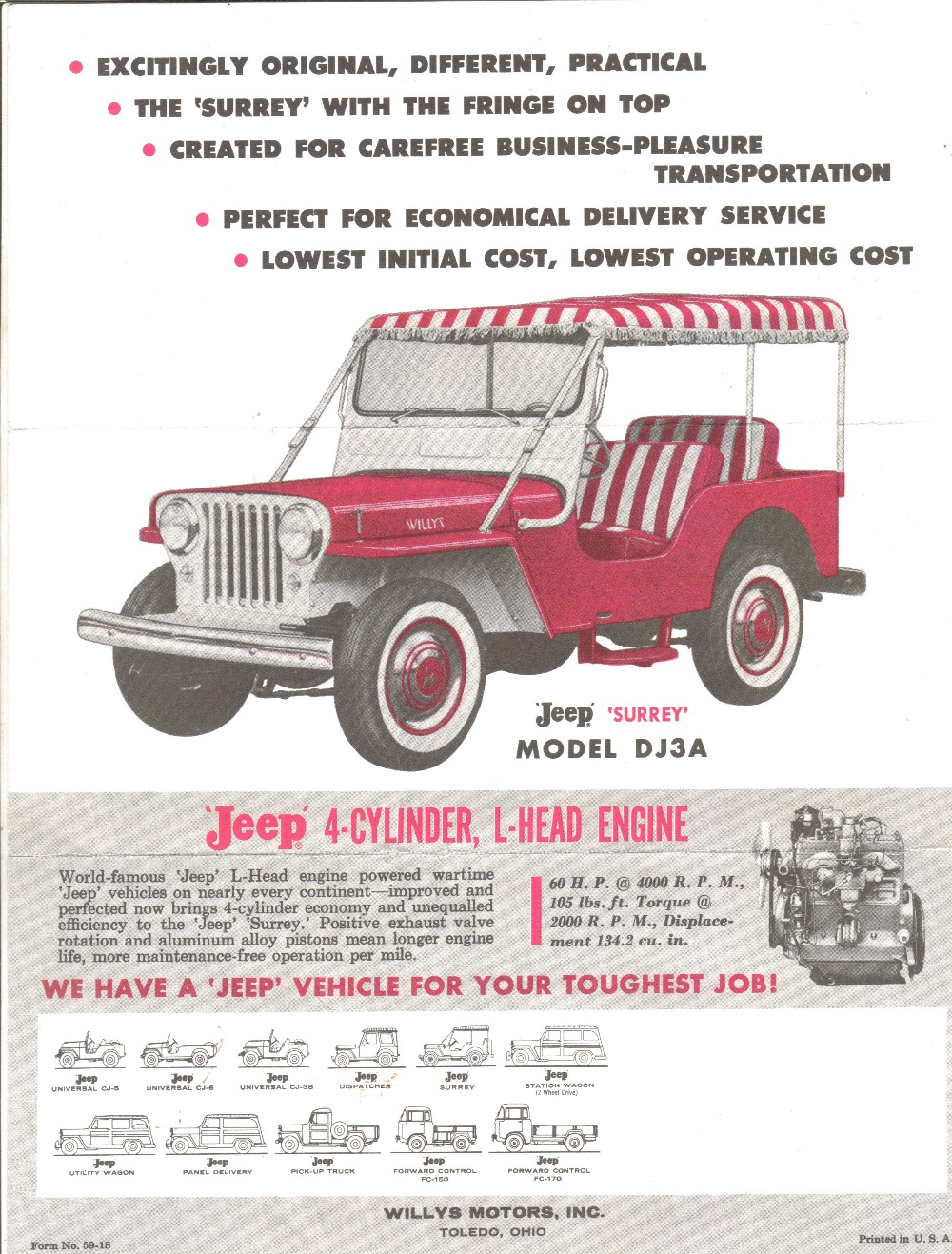
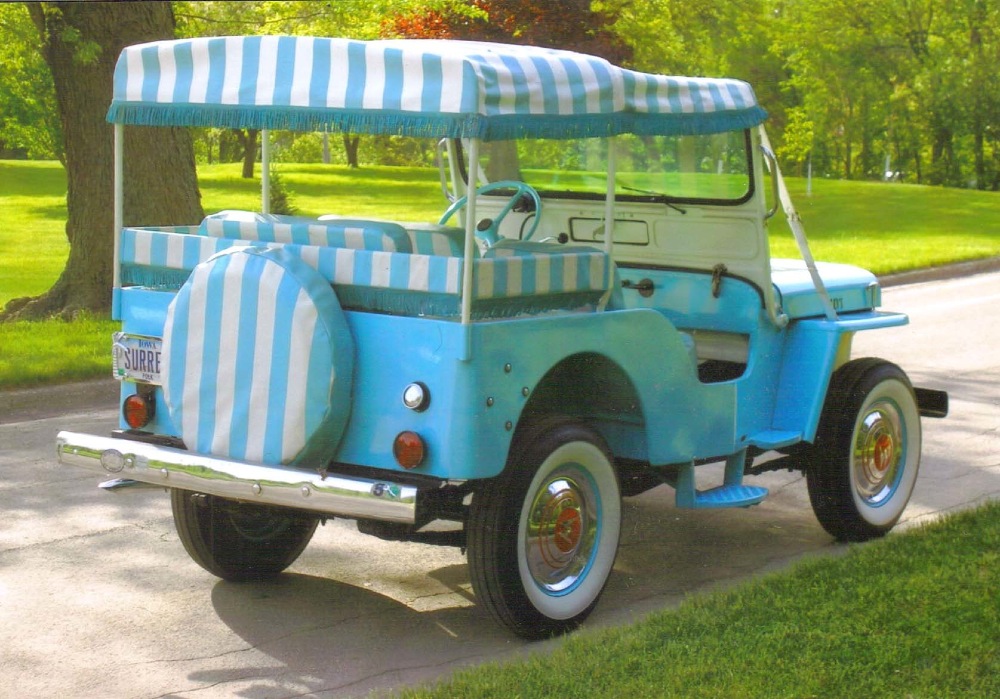
My goal here is to take Bruce's information and organize it in a way to make sense of this strange thing called the DJ-3A Dispatcher Gala Surrey Not-quite-a-CJ-3A colorful Jeep. I want to differentiate between these three models -- DJ-3A/DJ-3A dispatcher, DJ-3A Gala, and the DJ-3A Surrey -- so that I can better evaluate these vehicles when I run across them for sale.
Importantly, and for clarification, based on all the research I have reviewed, there appears to be no such thing as a DJ-3A Gala Surrey (and I'm as responsible as anyone for describing them that way). The literature I have received from Bruce refers to either a DJ-3A Gala or a DJ-3A Surrey. The Gala's were promoted as Gala's at the international resorts and Hawaii (which became a state in 1959, which might explain why this was being handled like an international sale).
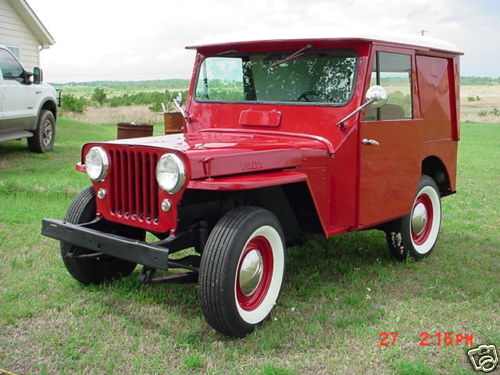
THE DJ-3A & DJ-3A DISPATCHER: The DJ-3A was introduced in 1955. It used the body style of the older CJ-3A, along with the L-134 engine. Unlike the CJ-3A, it came with either a column shift or top loader three-speed T-96 manual transmission. It was offered with many different body options including a soft top, hard top, or even a full van body. Some of these body options made changes to the body necessary, including some that had no tailgates so the spare tire could mount in the rear.
Others, like the DJ-3A Dispatchers, had differently shaped passenger and driver sides to allow easy entry & exit of the vehicle (I assume those were the reasons). With all these different body options, it is no wonder many of us, and yours truly as well, were confused about what constitutes a DJ-3A.
Thus far, everything I've learned suggests that there were no 4wd DJ-3A's produced. So, if you encounter a 4wd DJ-3A, it's been modified.
Probably, the most distinctive, unique, and consistent body attribute of a DJ-3A is the large speedometer, similar to the CJ-5 and the post-1955 CJ-3B speedometers. It was the only 'low hood' flat fender produced with the large speedometer.
EXAMPLES:
Below is a Convertible DJ-3A. You can see the lack of 4wd in the front. Click on the picture to see more pictures. Though I thought the below windshield was from a CJ-3B, Bruce provided a correction to that statement. He says some DJ-3As came with a 3B SW Frame, and he believes that's what we are looking at in this pic.
Here's an example from Chris of a DJ-3A without a tailgate.
Here's a DJ-3A Dispatcher example (note cutout sides) with a tail gate:
And here's another nice dispatcher with a top:
THE DJ-3A GALA:
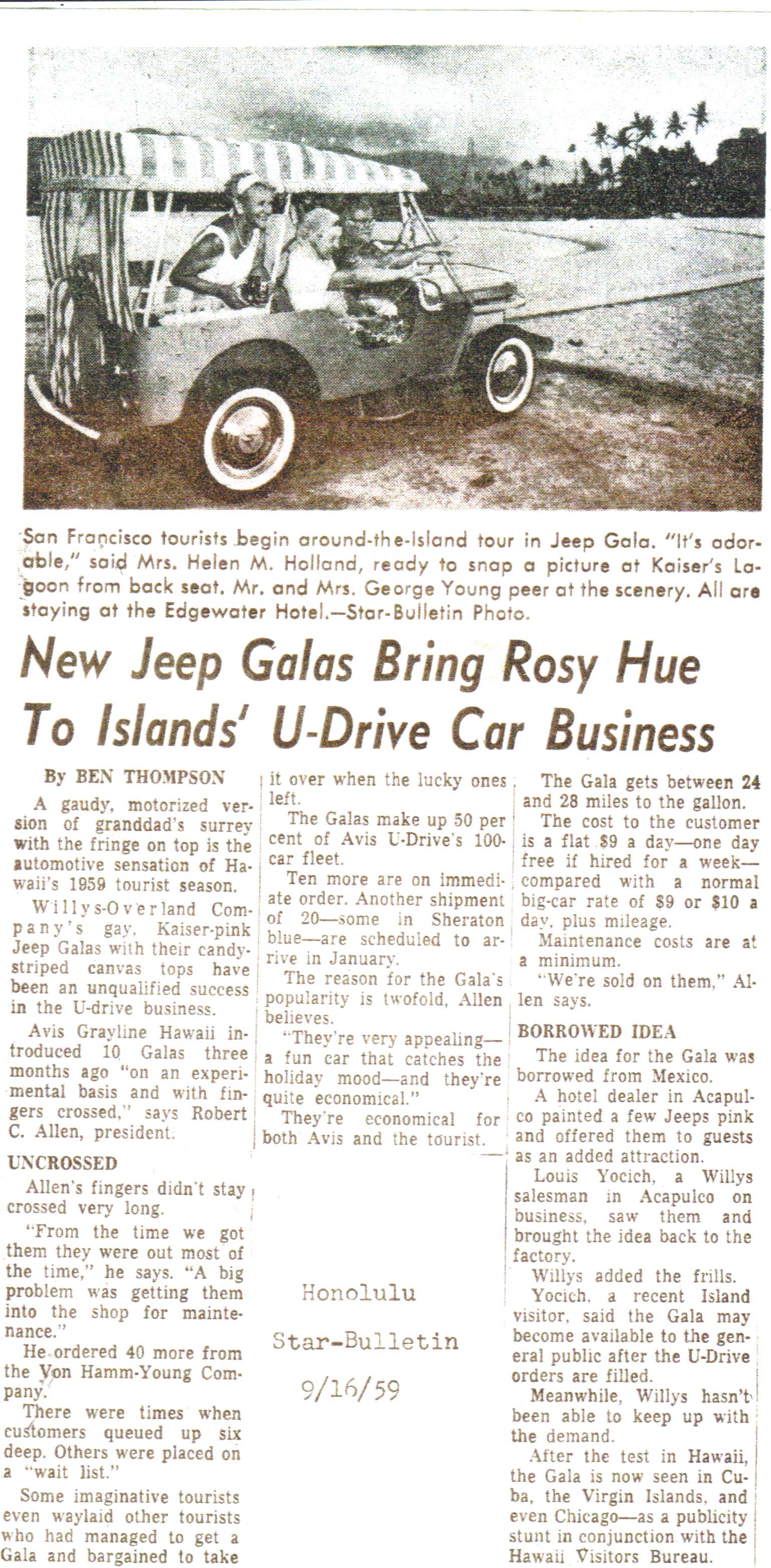
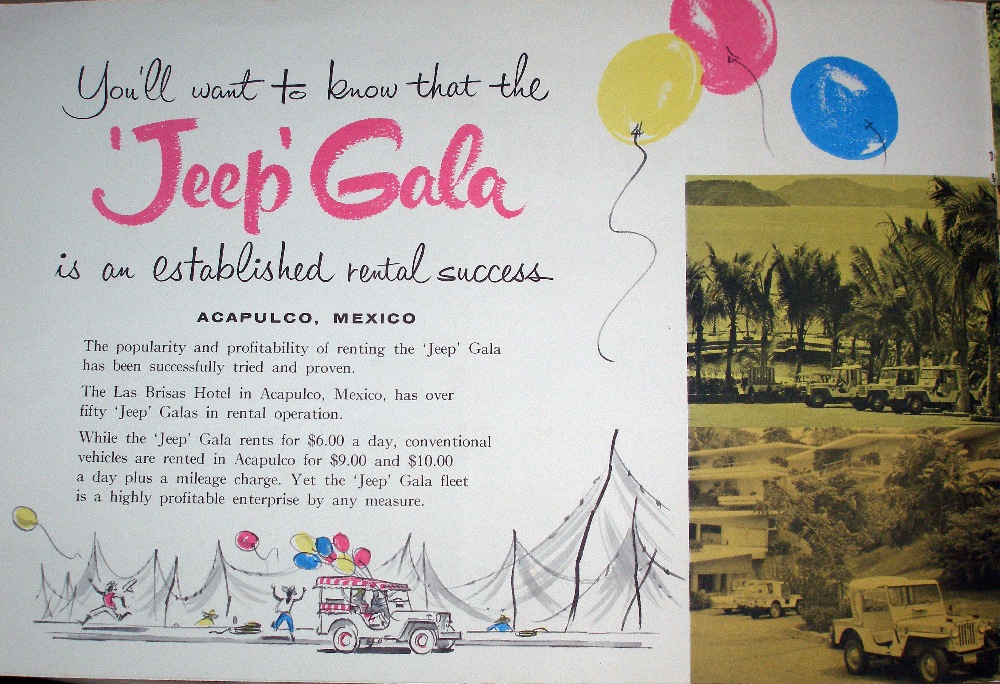
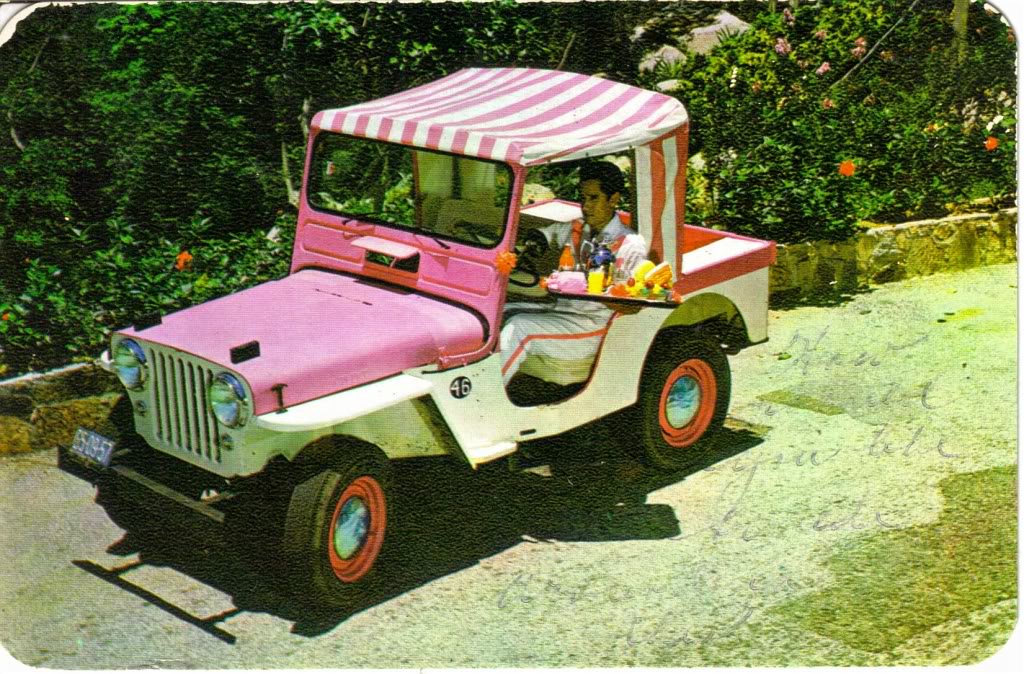
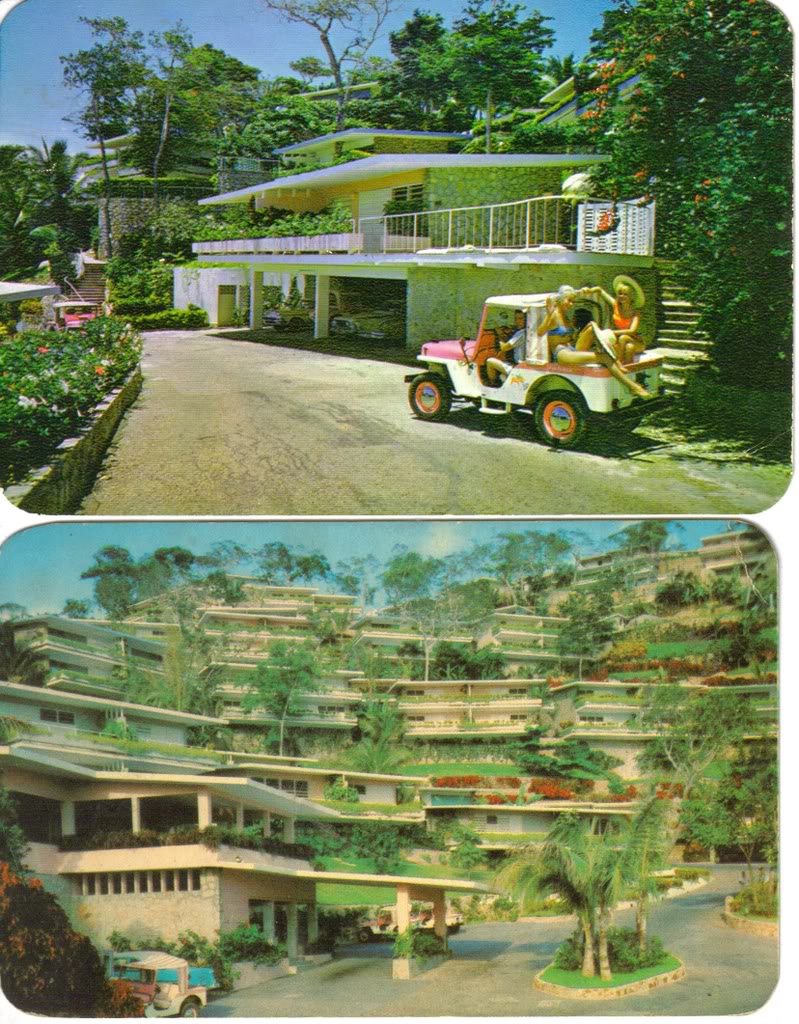
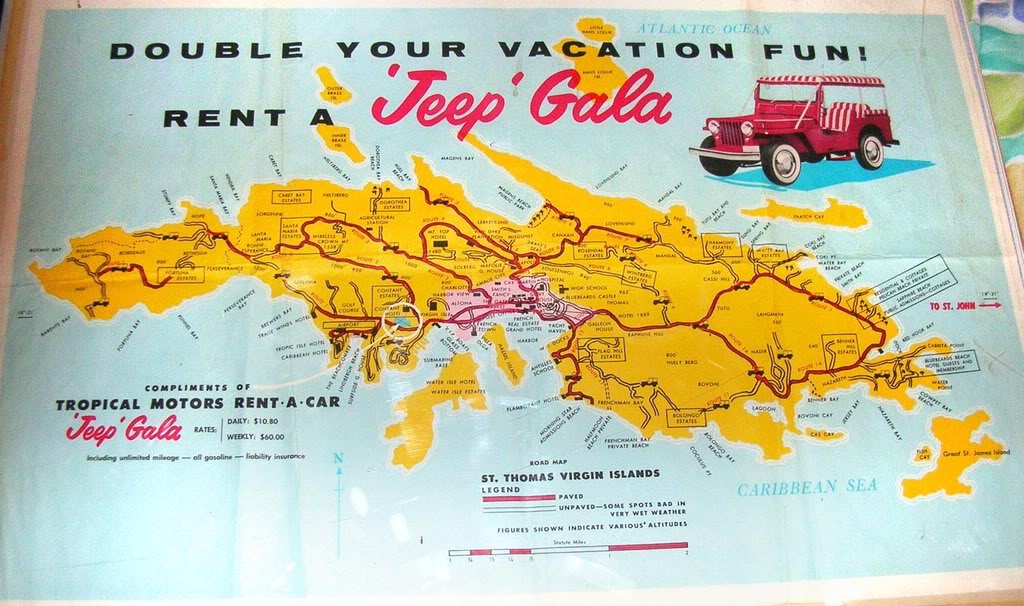
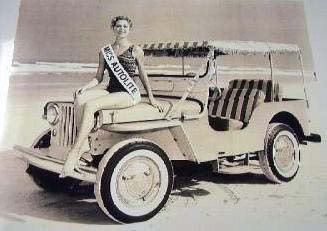
In early 1959, the DJ-3A Gala was introduced and marketed to vacation locations in an attempt to offer rentable transportation solutions for vacationers visiting resorts. According to the article below, the idea was the brain child of the Las Brisas Resort in Acapulco, Mexico, which painted a few jeeps pink and offered them to consumers. Louis Yocich, a Willys dealer, spotted them and brought the idea back to the factory. To this day, the Las Brisas resort and hotel still refers to itself as a 'Pink and White Paradise" (see quality control comment).
MUCH MUCH More information. This post was simply too big to put on the front page:
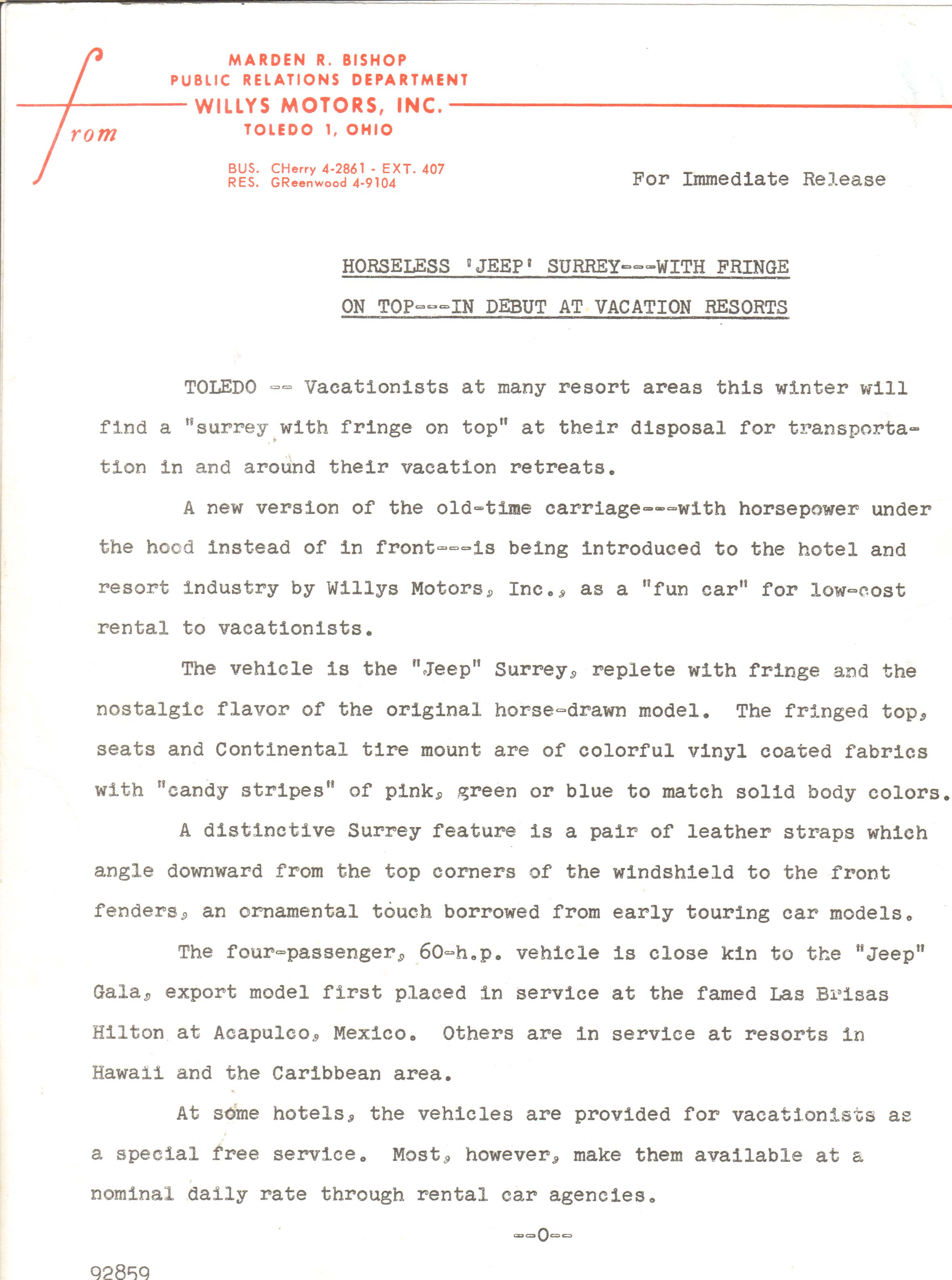
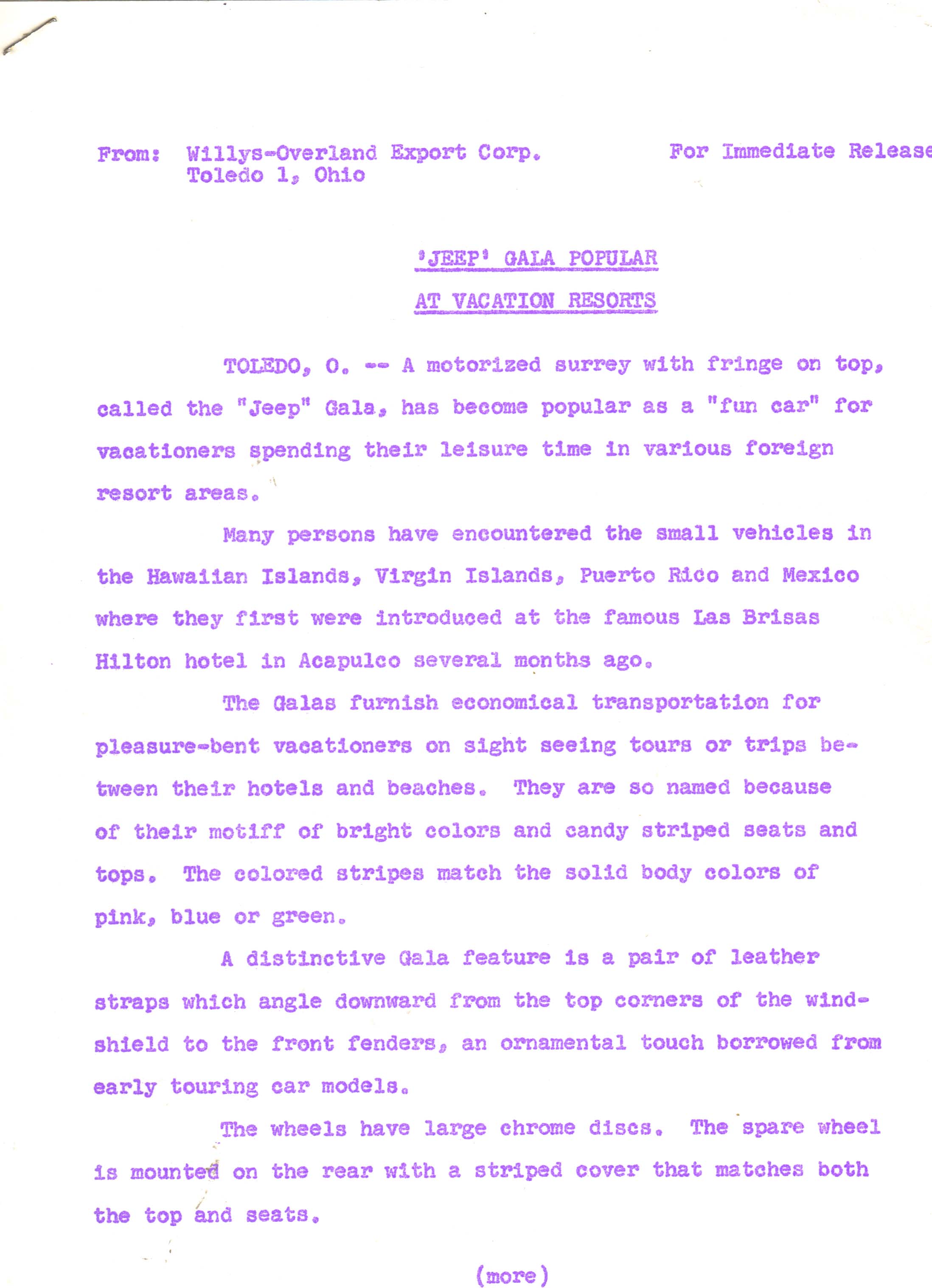
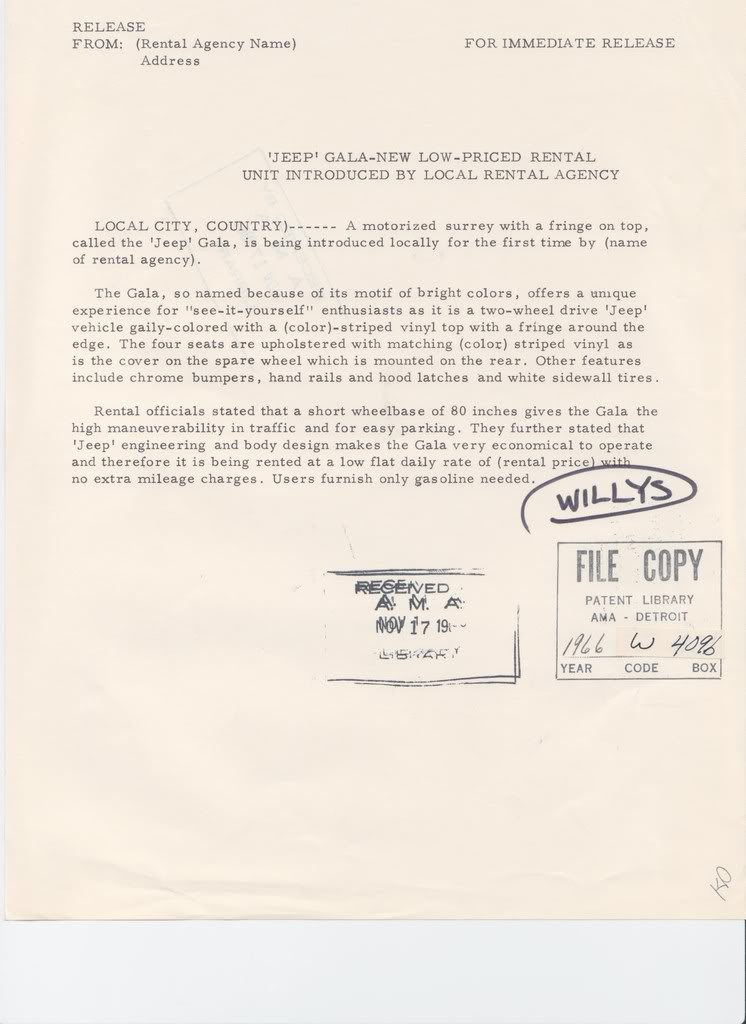
And just to confuse things, here is are 3 press releases from Willys Motors. The first one announces the 'Surrey', but is really discussing the Gala. In contrast to that, the other two labels the Jeep a Gala:
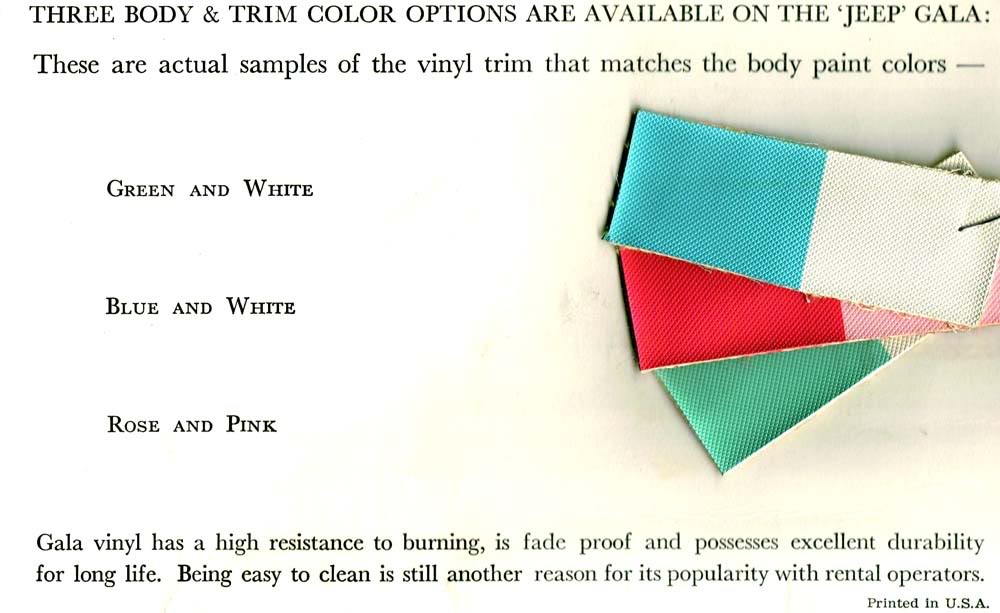
Here are Color Schemes:
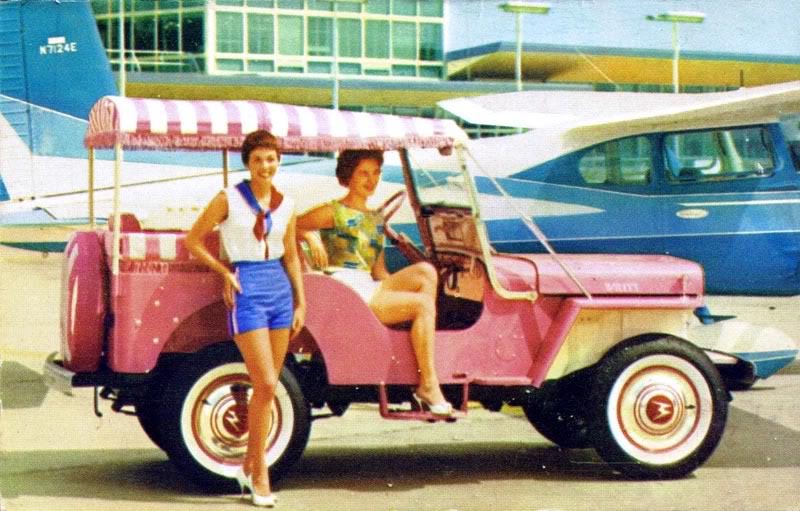
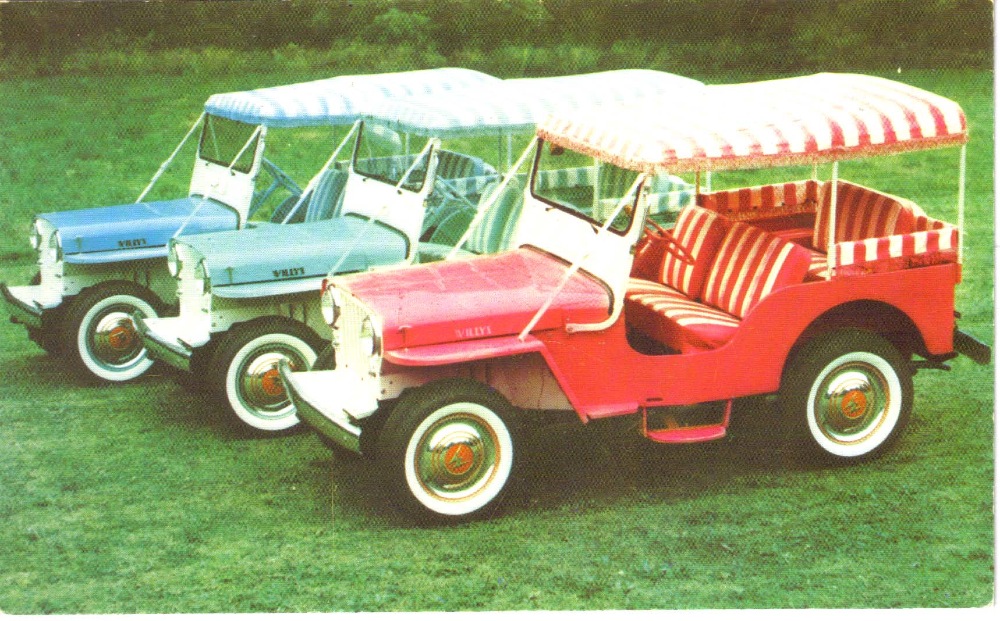
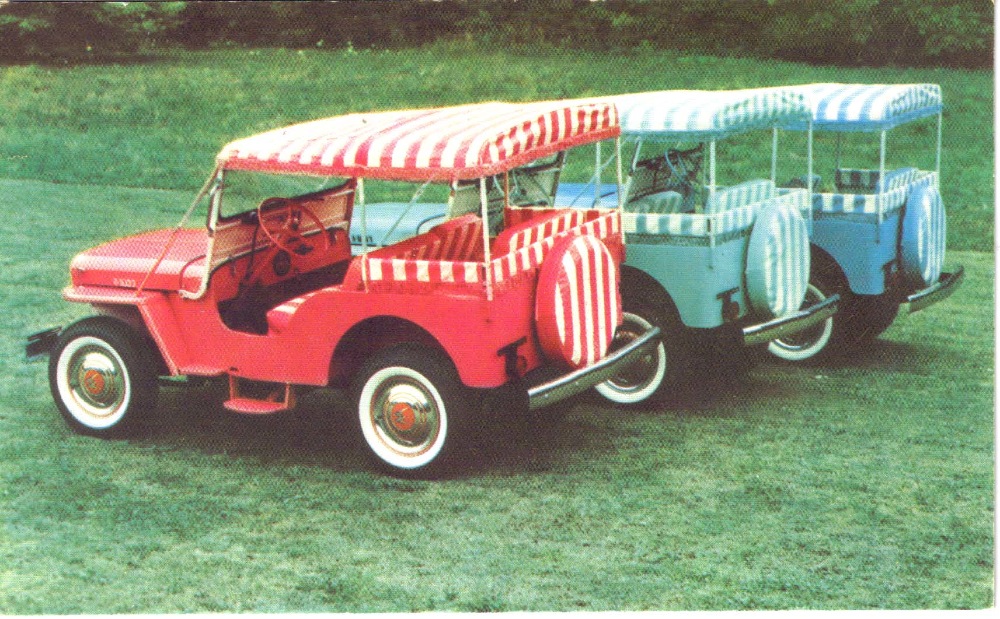
Here's a Gala postcard:
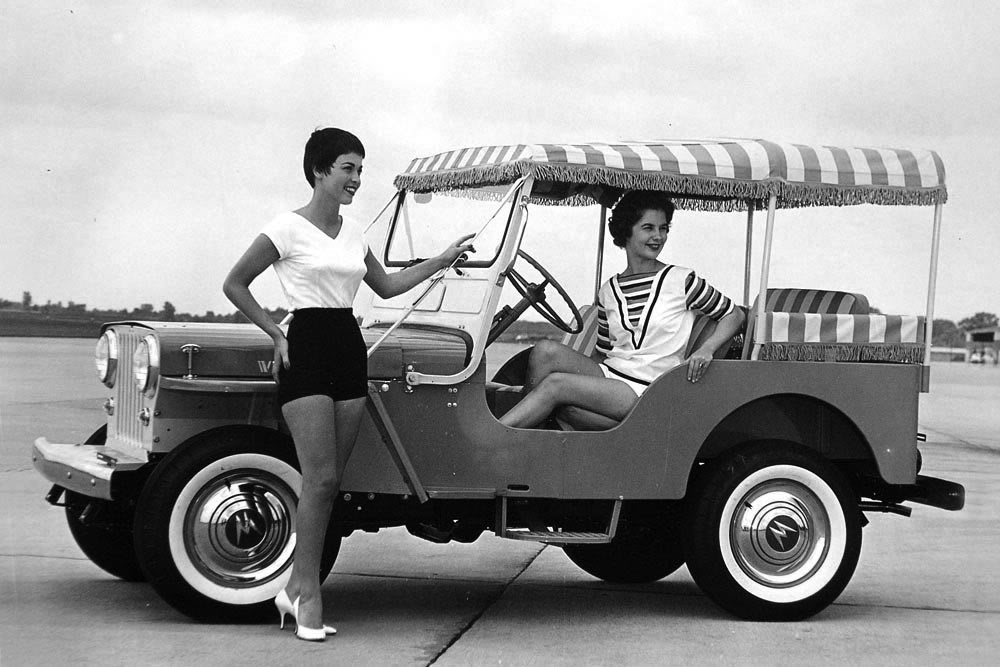
Here's what Bruce describes as 3 1959 Press Photos for Galas:
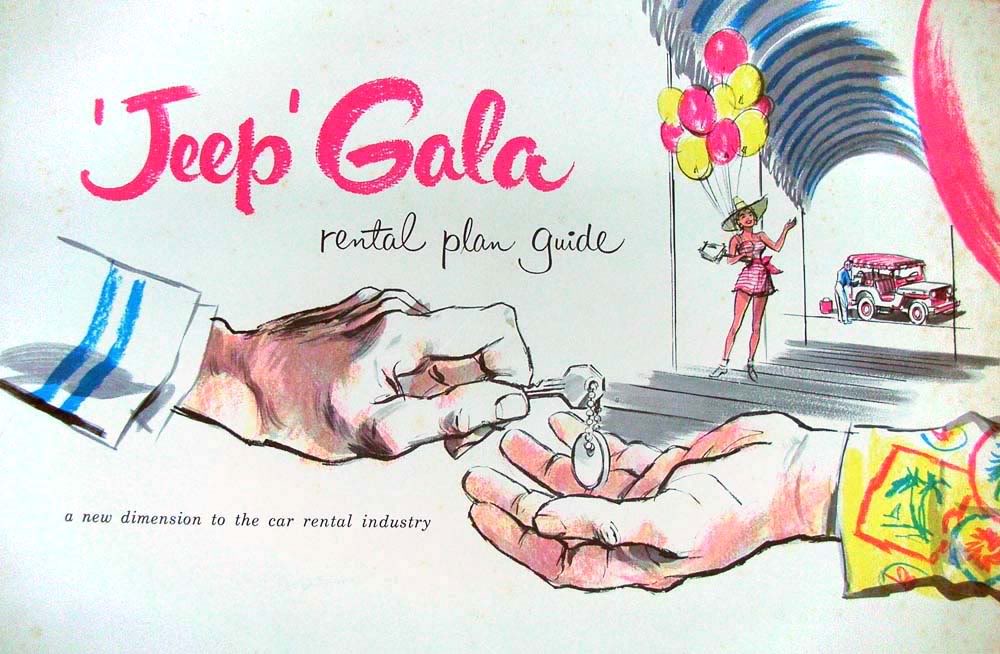
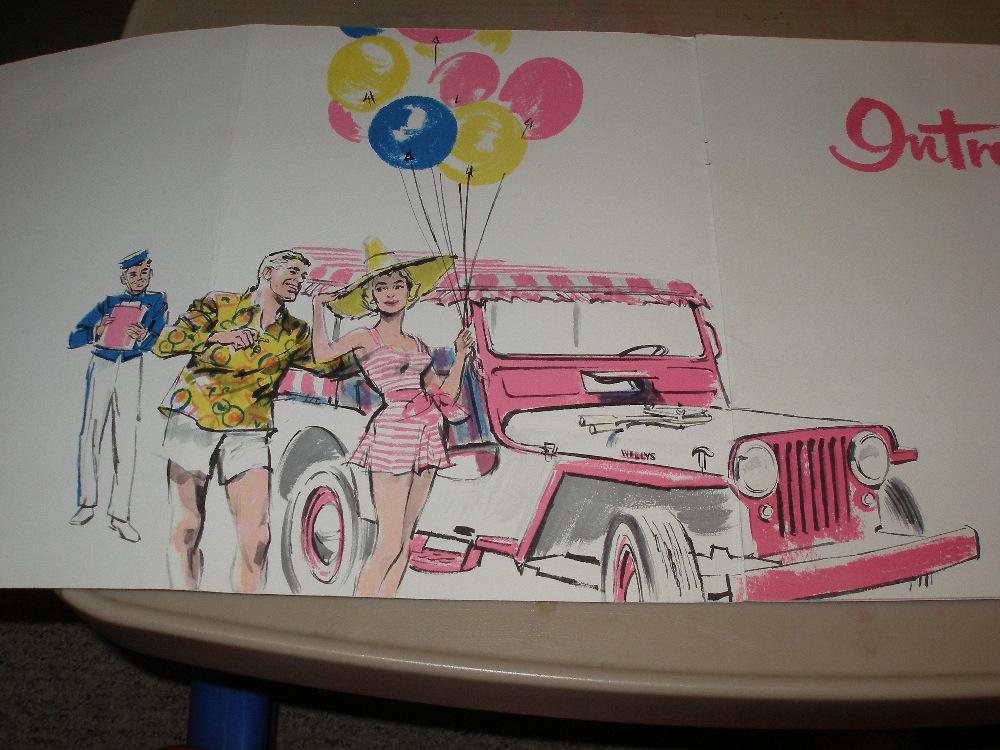
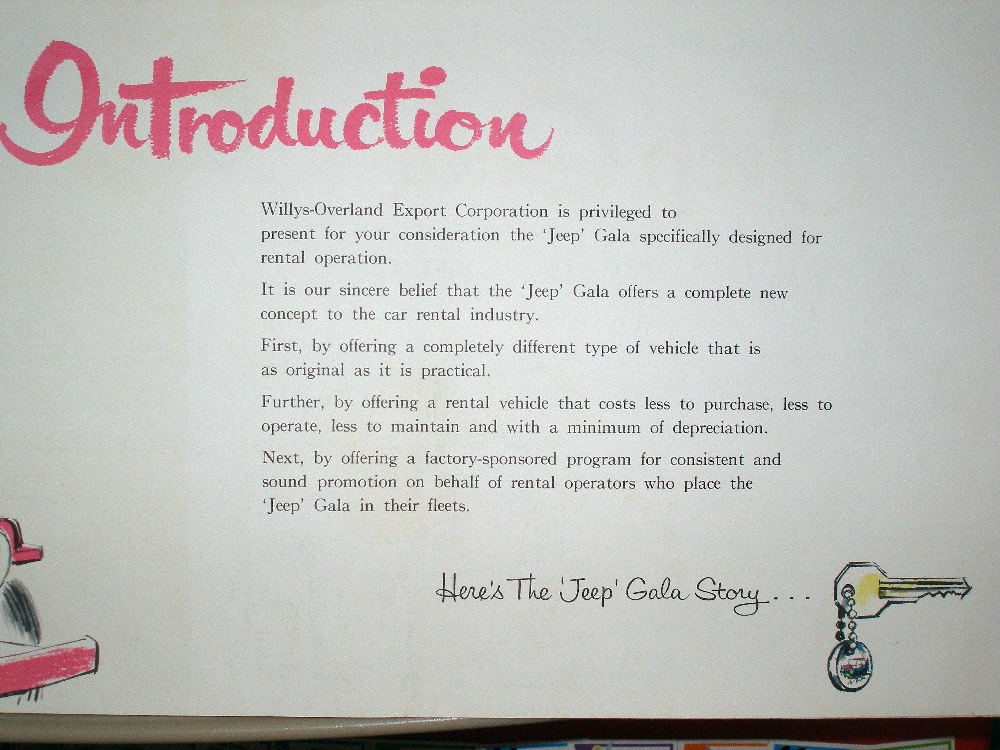
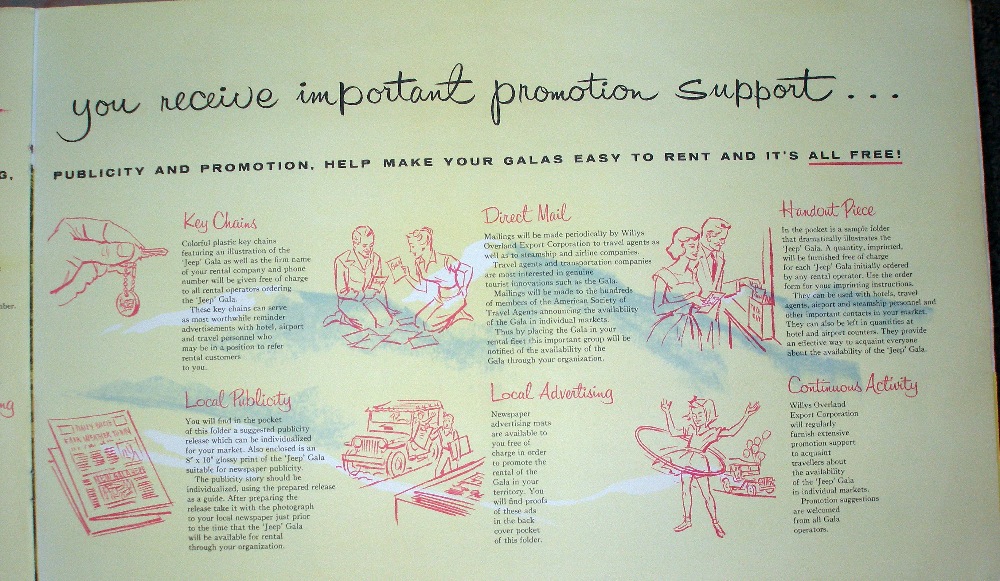
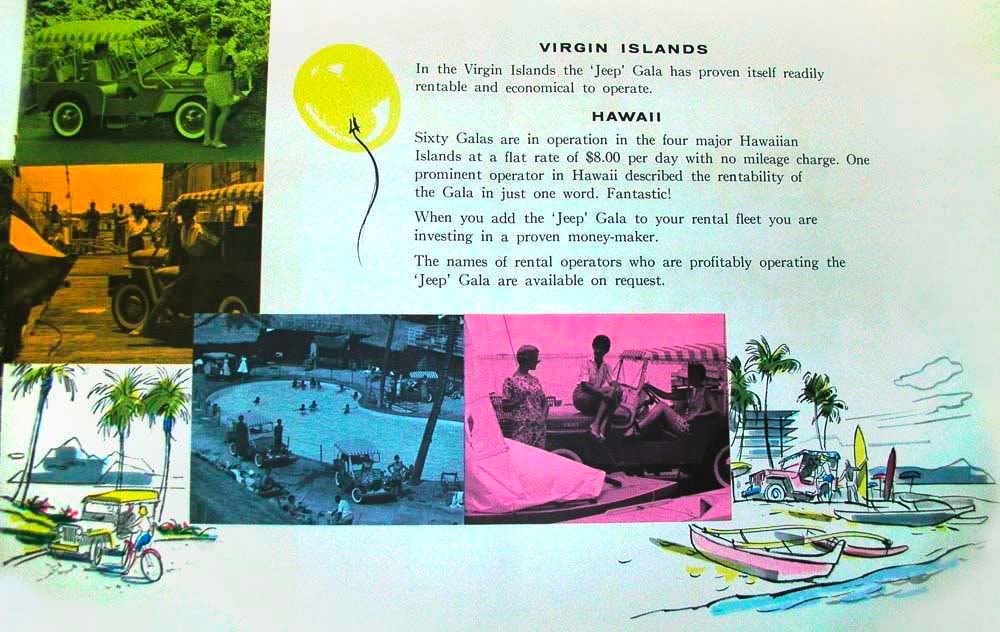
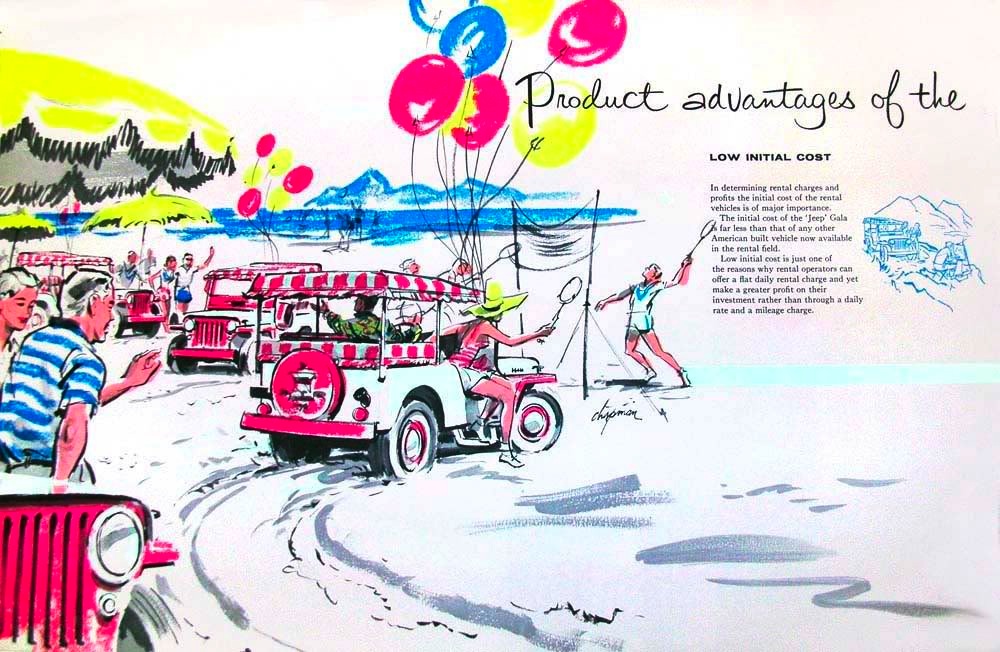
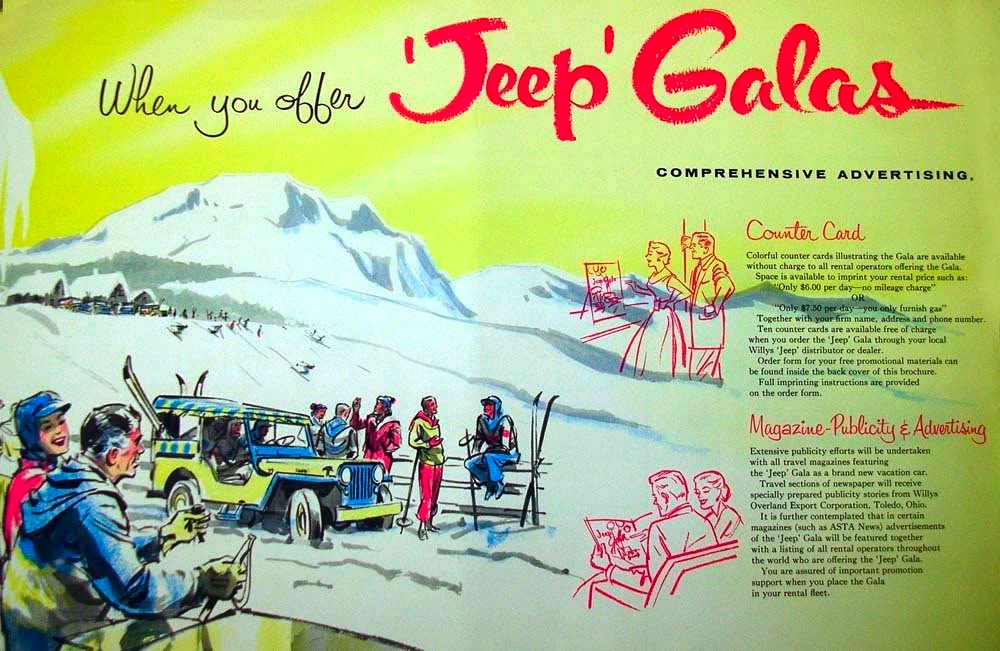
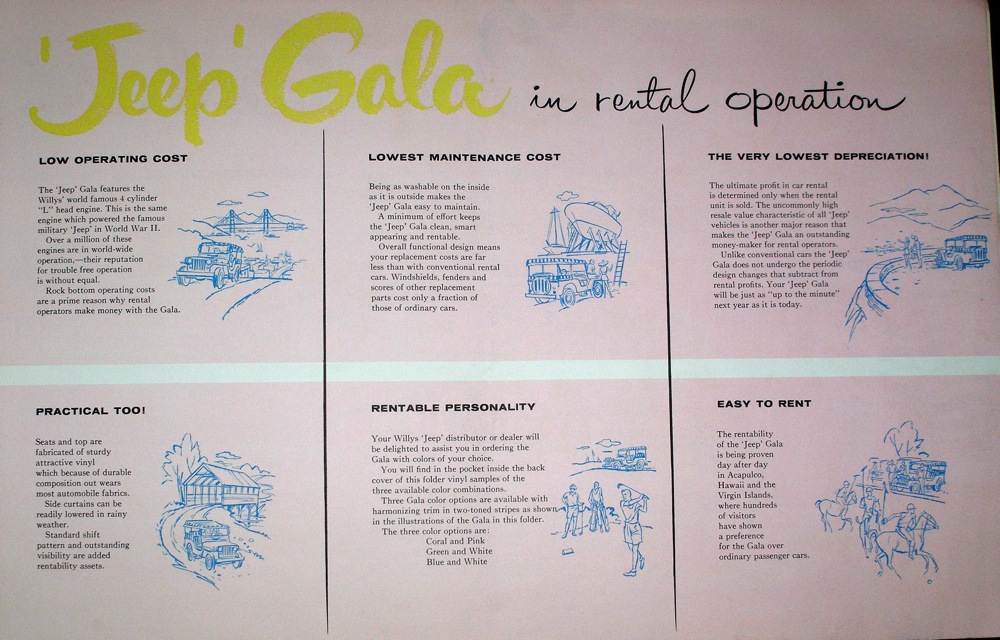
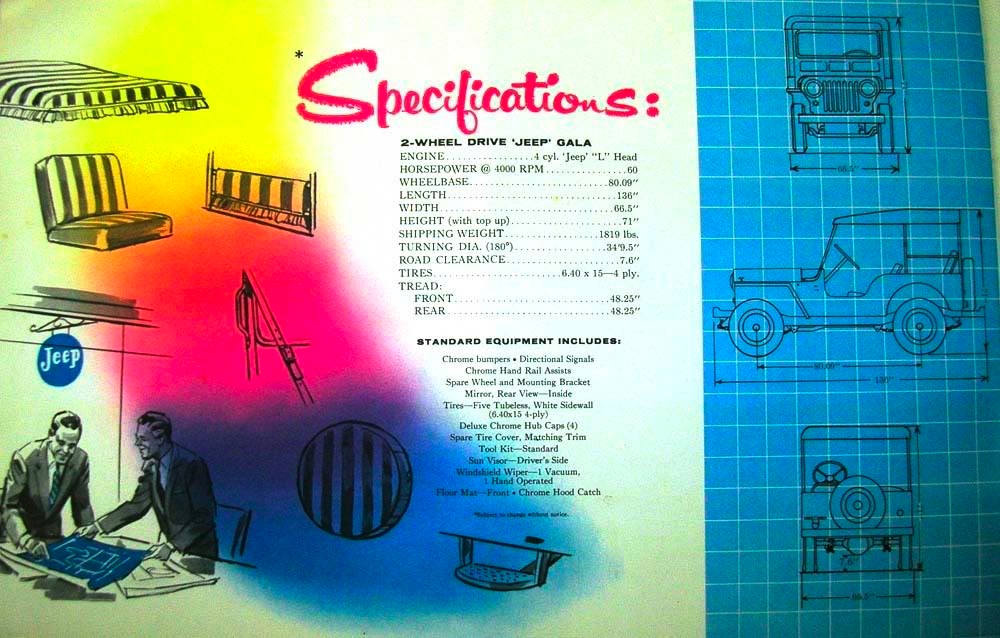
Finally, here is a 10 page brochure, that I assume is in order, aimed at hotels to stimulate demand for Rental Galas.
One additional note. While I haven't found a confirmation about this, one poster of a DJ-3A Surrey on youtube says that Willys Motors found themselves with a surplus of bodies and chassis from a cancelled Post Office contract, leaving Willys with a supply of parts they wanted to use for something. This would provide additional motivation to reach out to Las Brisas and other resorts.
Geographic Areas using Galas:
Galas were purchased by businesses in Mexico, Hawaii, Cuba, Virgin Islands, Puerto Rico, and, just to throw a wrench into my definition of a Gala, apparently Chicago. But hey, Chicago is another world, right? Anyone know of other areas?
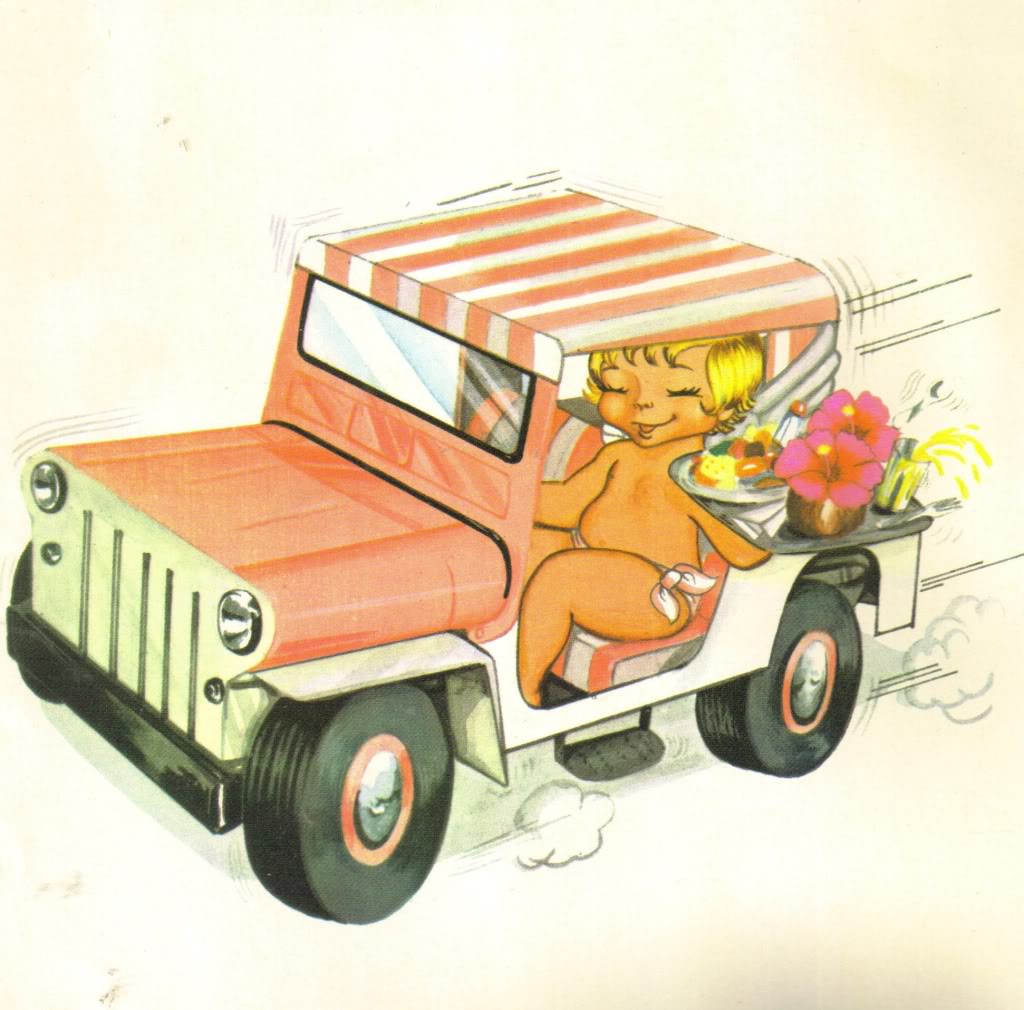
Here's lots of literature and images of the Gala rentals:
From the island of St Thomas in the Virgin Islands:
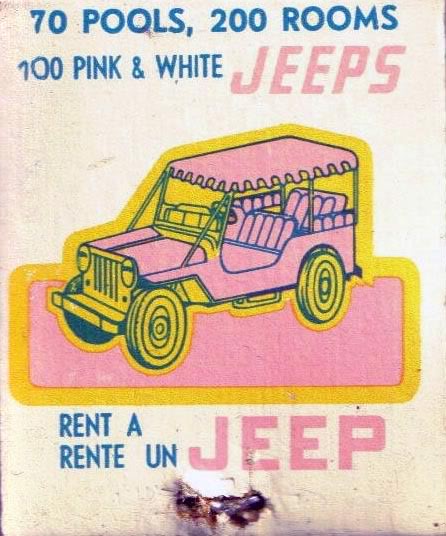
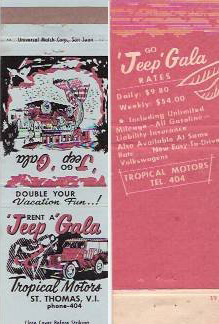
Here's the front and back of a matchbook from St. Thomas
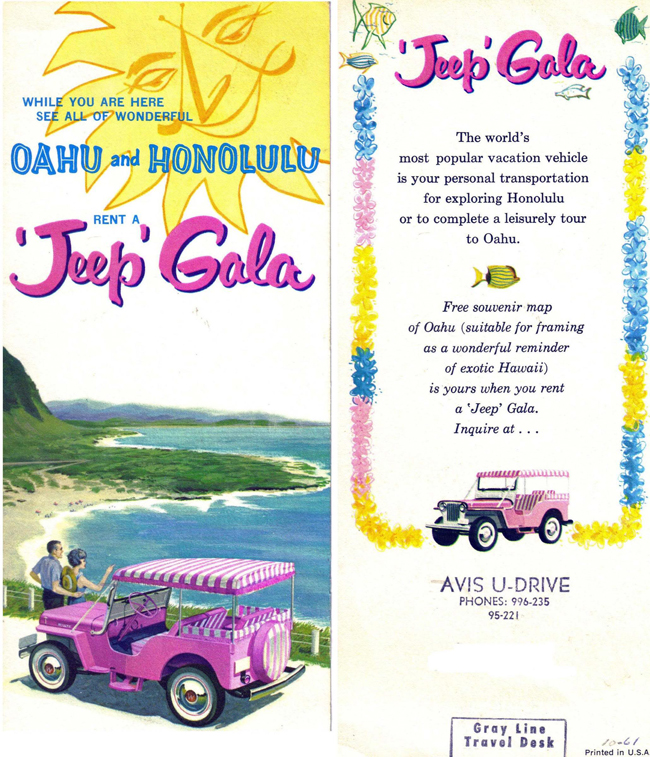
And a variety of items from Hawaii:
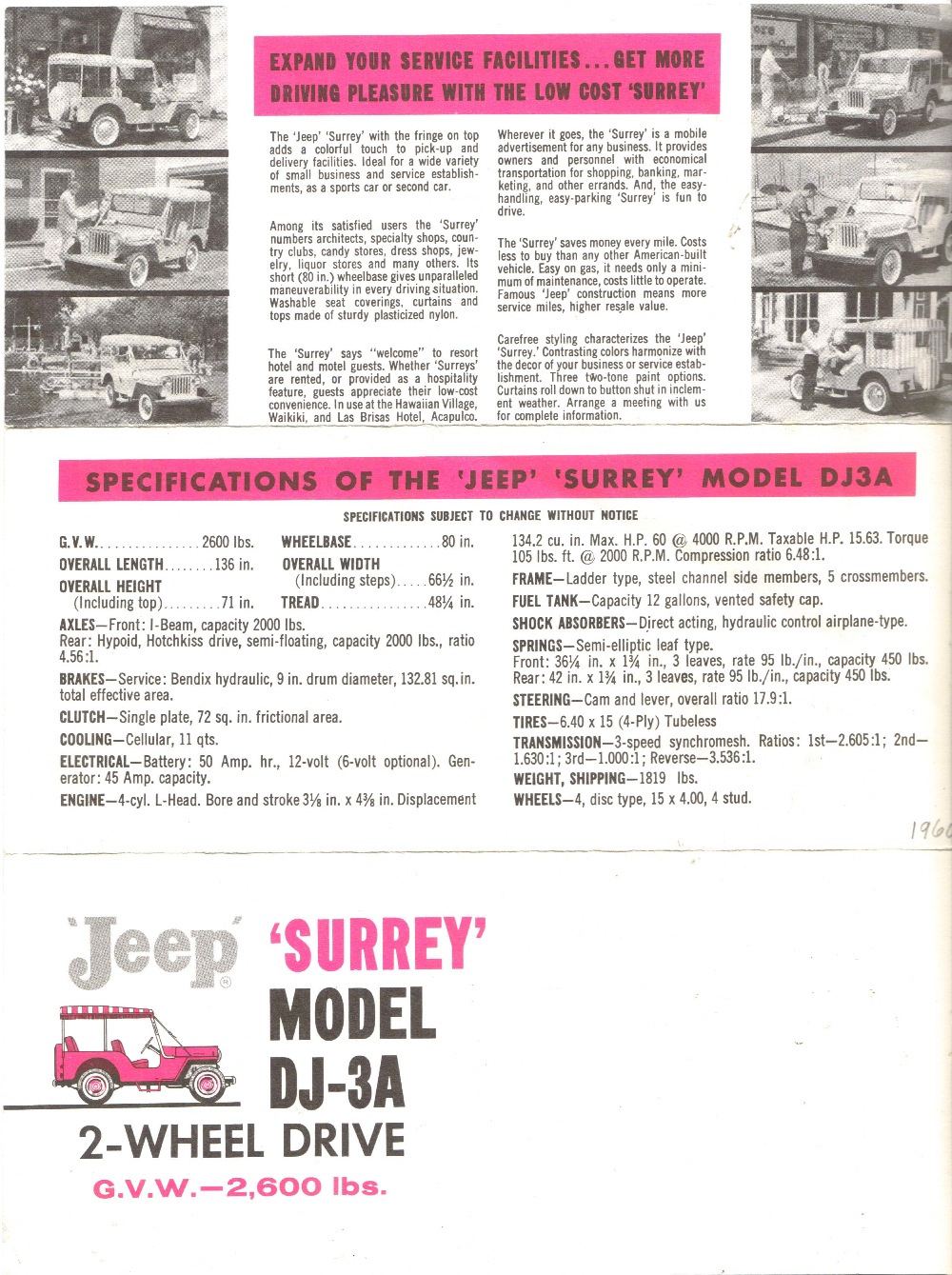
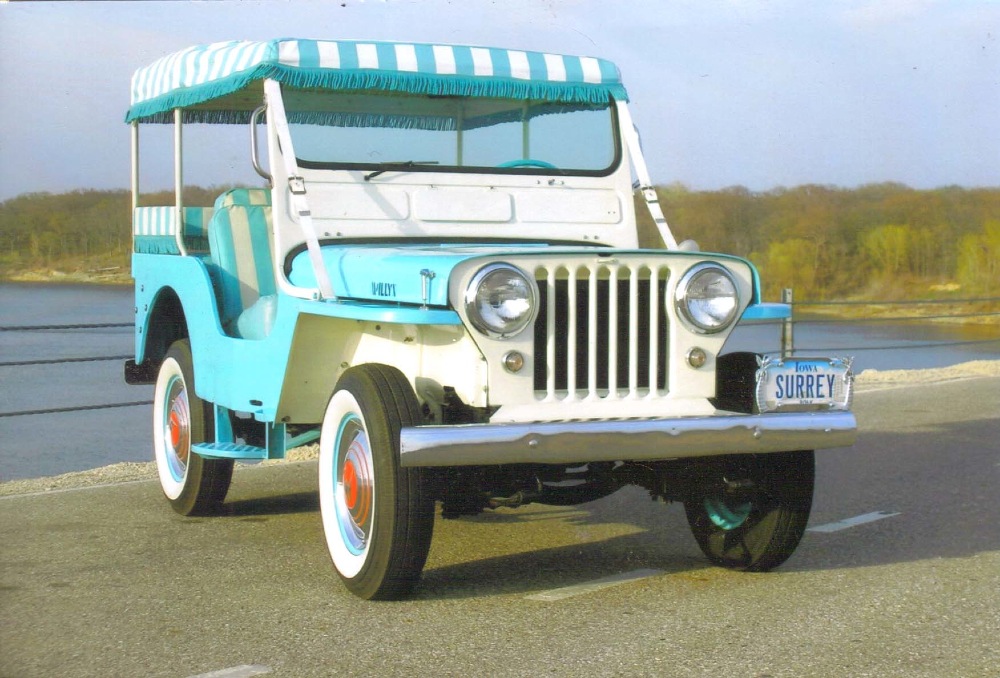
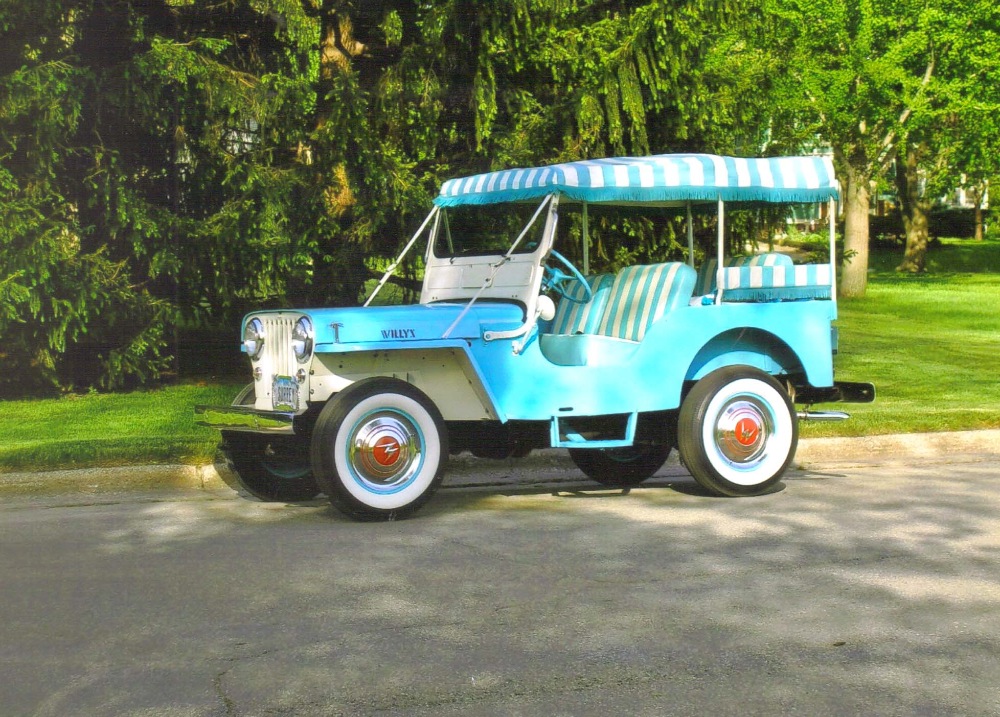
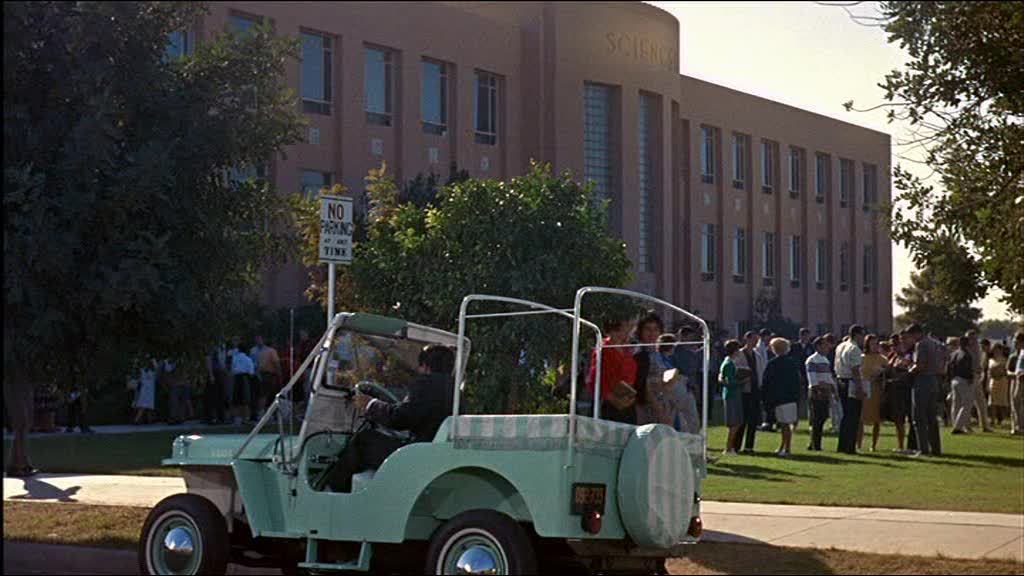
THE DJ-3A SURREY: With the success of the Gala, starting in late 1959, Kaiser Willys decided to expand the theme of the Gala, choosing to promoting the DJ-3A Gala domestically as the DJ-3A Surrey in an attempt to capture the historical theme of the old Surrey buggys used for transportation in the horse and buggy days. The biggest identifier was the change from a half cab to a full top with a trim reminiscent to the old horse-n-buggy surrey tops, but in a color scheme similar to the Galas. These would be produced from late 1959-1964 and 'exported' by Willys Motors Export Company as Galas. In addition, a Continental Kit could be purchased to dress up any jeep and turn it into a Surrey.
Two bits of good news from Paul. One, his jeep was NOT affected by Alaska's recent earthquake. He had the sense to bolt things to the wall that could potentially fall onto his jeep. Two, he's made some more updates to Knardly Rolls! So, read on . . .
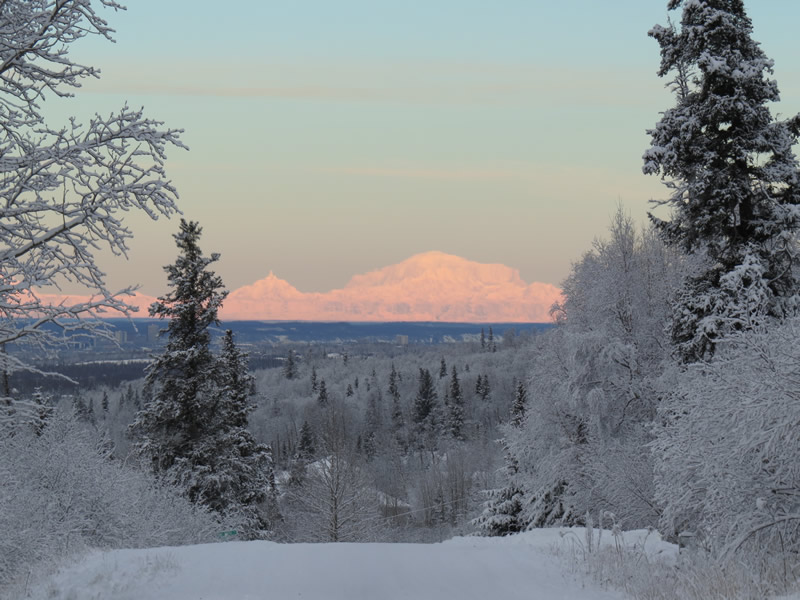
Looking towards Anchorage and the mountains beyond, January 2016. This was pre-earthquake, though it pretty much looks the same after the earthquake.
Paul writes, the progress so far this winter season on the Willys has been a little weird. Things started to get strange when I decided to fill the cooling system for the first time in 30 years. I’m an optimist but I like to think I’m based in reality so I told myself there’s always the possibility of leaks in the cooling system and having a couple of empty buckets ready to catch dripping antifreeze might be a good idea. With the empty buckets cleaned and placed nearby I poured the first gallon of antifreeze into the radiator.
After a short pause to inspect the hoses and connections for system integrity I began pouring the second gallon of coolant into the radiator and I quickly noticed my feet were getting quite wet. I managed to wedge the empty but rapidly filling buckets under the front axle where most of the escaping antifreeze could be captured since the leak appeared to be from the front of the engine by the timing chain cover. Oh well, it looks like yet another unexpected repair or modification needs my attention.
After the leak slowed down to a slight drip I repositioned one of the buckets directly below the radiator drain and began transferring the antifreeze from the cooling system into the bucket and then back into the gallon containers which is where this green fluid came from about 15 minutes earlier. When no more fluid flowed from the radiator drain and the recaptured antifreeze was safely back into the gallon containers I decided to call it a day and leave the heavy thinking for the tomorrow.
After having strange dreams throughout the night concerning the coolant leaks on the Willys, by the next morning I ready to start pulling components off the front of the engine so the timing cover could be removed for troubleshooting. Since the engine has never been run after being rebuilt this was a fairly quick and easy task.
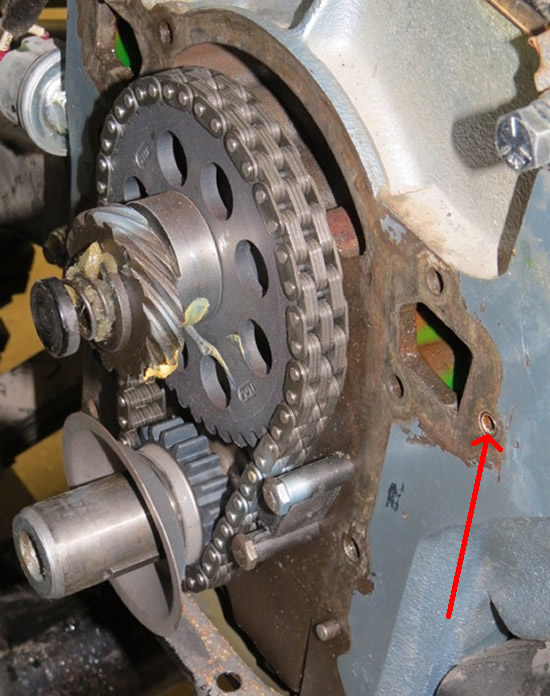
Once the timing cover was out of the way and the front of the cylinder block could be inspected I learned an interesting bit of information about the Buick V-6 engine. The front of the block has 4 bolt holes (2 on the left and 2 on the right) for the timing cover to attach, BUT the timing cover is manufactured as either a 2 or a 4 bolt type.
The plugged bolt hole is the one closest to the right edge of the photo, it was left unplugged and partially exposed by the timing cover so the antifreeze flowed out quickly.
The timing cover on my engine is a 2 bolt type (where the coolant passage flows into the water pump) so the two unnecessary threaded holes in the block should’ve been plugged to prevent antifreeze from leaking. The unused threaded hole on the block is drilled into the coolant passage but the unused hole to the right is a blind hole and not open to the cooling system.
To prevent anymore leaks and to make me feel better I installed internal wrenching hex plugs in the unused holes . These plugs were screwed into position after the threads were cleaned and dried and the threads on the plugs were coated with gasket compound, then it was time for reassembly. Things were going pretty well until I noticed the rubber on the crank pulley damper was cracked and bulging out along the seam so this project came to a halt until the damper made a trip south to the Damper Doctor for a rebuild.
[editors note. I *think* it was in one of those holes that, during my very first engine rebuild, I put too long of bolt into one of the holes. I tightened it down, though it got difficult near the end. Imagine my surprise when the #1 cylinder piston kept hitting something while i tried spinning the crank. OOPS, I'd damaged the cylinder wall!!]
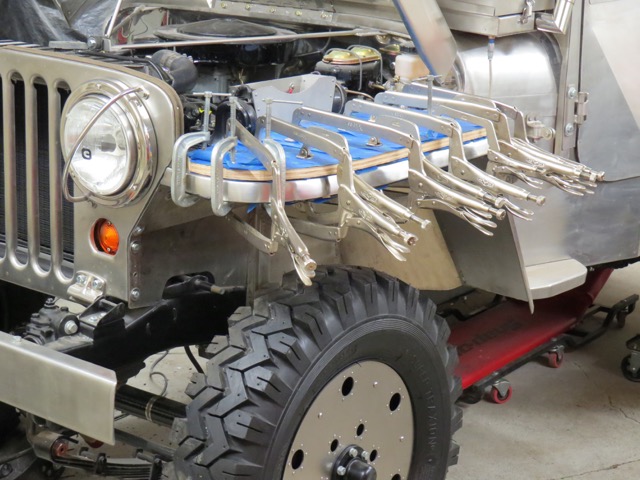
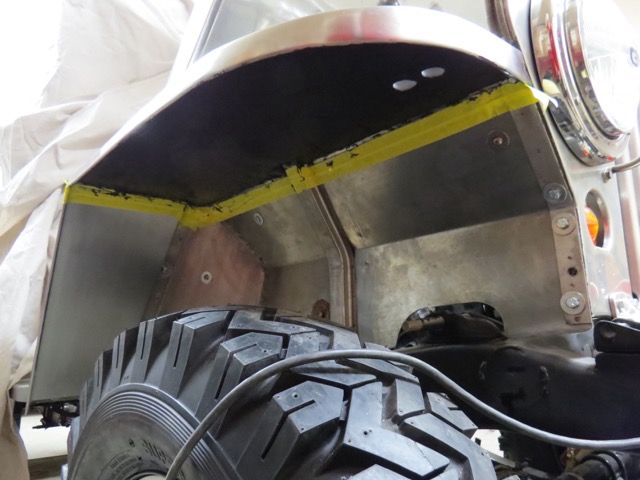
Two pieces of 3/4 inch plywood spread the clamping pressure and prevent damage to the metal when installing the abrasion panels to the underside of the fender.
While waiting for the damper to return I got to thinking about the possibility of the new aggressive tread tires on the Willys throwing rocks against the lower surface of the front fenders and the rear wheel wells. The roads here in Alaska have lots of rocks and gravel on them, some of the rocks are left over from the previous winter, some of the rocks are early for next winter and the rest of the rocks are spilled by gravel trucks during our short summer months…also known as construction season.
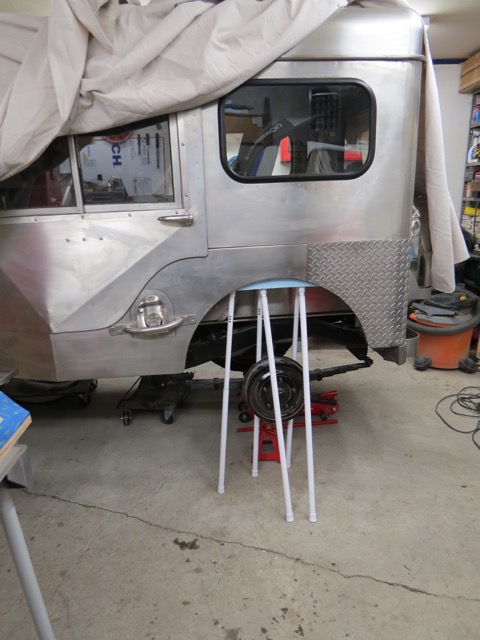
I’m using 5 shower curtain rods to apply pressure and hold the foam in position until the silicone cures. The blue foam helps spread out the pressure
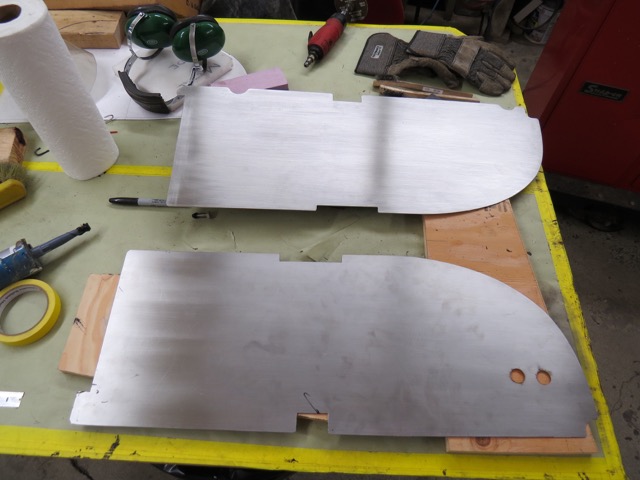
I decided it was far easier and a lot less work to prevent rocks thrown by the tires from hitting the lower surface of the sheet metal than trying to massage stainless that’s been stretched back into perfectly flat condition so I made inner fender protection panels out of 0.050” stainless and 3/4 inch thick high density upholstery foam. This foam is the same foam I used when making the interior panels for the Willys cab so while it can be filed, curved and cut with a bandsaw it’s also rather hard to compress even by standing on it so I felt this foam would make a perfect spacer between the lower stainless panel and the body.
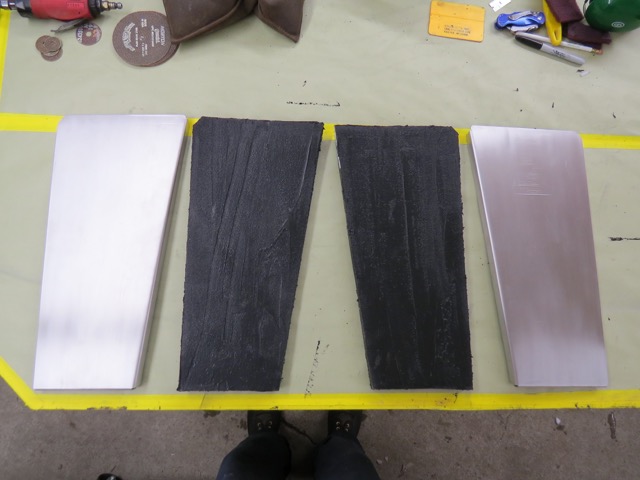
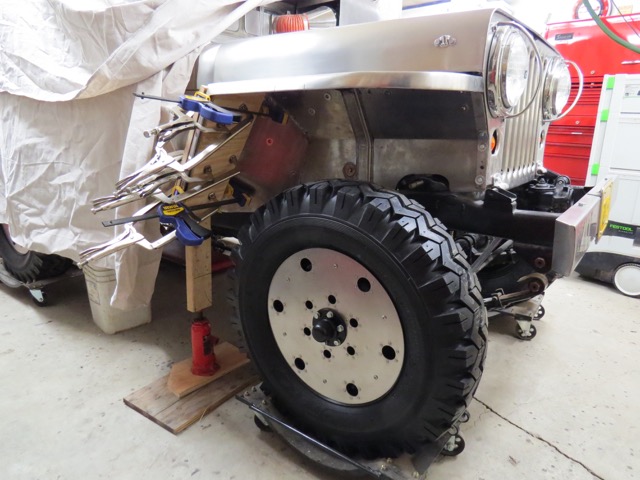
Here you see the two stainless panels along with the 3/4 inch foam spacers coated with black silicone. These parts will be bonded to the tire side of the front fender aft panel (that attaches to the step). The stainless steel panels will be exposed so it should be difficult to see that the wheel well has been modified.The aft (angled) doubler being bonded to the front fender… the hydraulic jack is used to prevent the doubler panel from slipping down before the silicone cures.
Once again I’m bonding the foam to the body panels with black silicone, after the silicone has cured the stainless steel protection panel is attached to the foam by black silicone and after that’s cured the edge seams are sealed with a bead of black silicone. The bathroom shower curtain rods used during the upholstery installation have come back to work on the Willys but this time they’re holding the foam and stainless together in the rear wheel wells while the silicone cures. I was able to use vise grip clamps on the front fenders because I made stress spreaders out of 3/4 inch plywood to prevent the clamps from scratching the stainless.
The aft doubler has been installed and the upper doubler is next.The stainless steel upper doublers. I haven’t cut the holes (in the rear doubler) for the hood latch attach hardware access.
I wanted to get weather stripping and door seals for the little Willys so I called Steele rubber products for a catalog and some free samples of the various types of aftermarket seals they sell to see if they’d have what I needed for the doors. Not only was their catalog a great help, the free (small) samples let me check how the seal was compressed when the door was closed so I could purchase the correct diameter of seal to fill the gaps. Once I was finished measuring the doors and selecting the type of seal necessary for different areas of the doors I ordered a combination of flat and half round seals in various widths along with a few extra feet of each seal just incase I made a mistake while cutting or installing the seal. The seals arrived within the week and installation was quick and easy. Stainless and Steele work well together…. I’m happy.
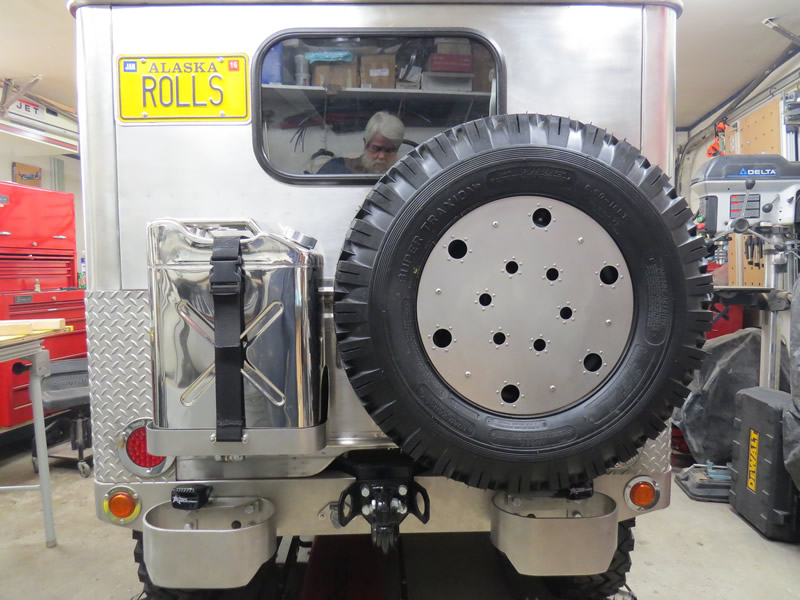
The new tires have been mounted to the new wheels and the wheel discs are attached so it’s time for pictures. The old white haired guy reflected in the back window is me… my hair was brown when I started this rebuild.
UPDATE: This post was published on eWillys November 15, 2014. I don't normally post whole articles, but there is a great deal of interesting information within it. I'm reposting this today because there is some additional information about Mr. Clement Miniger and his Auto-Lite company leading a syndicate to buyout John North Willys' stock in 1929 (Learn more about Miniger And Willys Light here).
A variety of pre August 1946 CJ-2As in different colors waiting to be shipped from Willys-Overland's Toledo plant.
This fascinating article was published in the August 1946 issue of Fortune magazine. It's a LONG article that covers the history of Willys Overland Corporation from it's bankruptcy in the early 1930s to it's post-war market positioning. There is not much information specifically about jeeps, nor many jeeps photos. But, if you want to understand how the corporate structure evolved, it's a good article.
One particular chart published in the article was Willys' research on paved roads. The company felt that jeeps would be very popular in outer countries, due both to the brand and the lack of paved roads. To meet that demand, Willys planned to export 25% of all jeeps.
WILLYS-OVERLAND
THIS JEEP-RIDING AUTO INDEPENDENT IS TAKING NEW LEASES ON LIFE AND ITS OWN REAL ESTATE • THE BOYS IN THE BACK ROOM ARE DOING FINE
ln the years between the depression and the second world war, the once great Willys-Overland Co. clung by its nails to a niche in the U.S. automobile market. Gamely, it tried to sell the public a mousy little car, with a tough, four-cylinder engine, which was the cheapest thing on the road to run. Itself battered into receivership and reorganization by the depression, Willys had the patently sensible idea that such a car, guaranteed to get people from here to there at a minimum expenditure for fuel and upkeep, would be a blessing to a hard-pressed public that had not been similarly served since the demise of the models T and A Ford. But the public was proud, if poor, and more conscious of the millinery than the engineering of a car. When it had to buy cheaply it found the used-car market much more tempting. During most of those years Willys’ production ranged below the break-even point. bln 1940, a mere 27,000 cars were built. Now Willys-Uverland is coming up for the postwar round with a product line still topped by a light passenger car-with a four or a six-cylinder engine, buyer’s choice. It will probably be as cheap to buy, give or take a few dollars, as any 1947 car on the market, and possibly less expensive to operate and support than any of its competitors. And though it will be considerably more stylish, inside and out, than the prewar Willys, it will have, at most, simple good looks rather than breath-taking beauty. If that were the whole story, one might wonder why some people think Willys-Overland is an exciting proposition among the auto independents today, and why some mighty big boys in the automobile industry appear to be sparring for position in the peculiar, complicated Willys-Overland hierarchy.
Unquestionably Willys has fresh charms. To name four:
1) The tough, four-cylinder motor that was the bread-and-butter item in the prewar Willys is the same motor that powered the Army Jeep, which became an international byword during the war. As the largest producer, by far, of the Jeep, Willys-Overland became the beneficiary of this enormous, war-born prestige (and also added a tidy sum to its treasury). Ten days after V-J day, Willys was in production on its civilian or Universal Jeep, of which it had sold around 28,000 by June 1, despite plant shutdowns totaling eighty-three days owing to strikes in suppliers’ plants.
2) Under way at its giant Toledo plant is a Jeep-inspired line of Willys utility vehicles including (a) an all-steel, all-purpose station wagon, (b) a sedan delivery truck, and (c) a low-weight, medium-duty truck with a combination four and two-wheel drive. All are powered by an improved four-cylinder Jeep engine and feature the Jeep snub nose and square fenders. All will be produced in 1946, and can be run through the same assembly line if necessary.
3) Because the rugged, lightweight vehicles in the Willys line are peculiarly suited to the exigencies of foreign motoring, in which the paucity of paved roads and the steep price of gasoline are forbidding factors, the company has decided to throw 25 per cent of its production into export. The development of a foreign market of such proportions is steadying to the seasonal economy of an automobile company. And Willys’ new top management is richly experienced in the export field.
4) Finally, many an economist, foreseeing an era of inflation, high taxes, and high gasoline costs, will agree that the hour in the oiiing is ripe for an automobile that places operating economy above fashion appeal. Willys is confident that its traditional economy car is, at last, accurately attuned to the times, and that its 1947 passenger model can bite into a solid and sustained market, both here and abroad.
For an automobile manufacturer to hew to a traditional policy of price and engineering over a long span of years is something of a distinction. Most companies, including Ford, have sedulously shifted with the competitive winds, the general tendency being to raise the levels of weight, speed, show, and, of course, the price of the product. In the case of Willys-Overland, moreover, it is remarkable that any recognizable tradition whatsoever has survived in view of the way the company has been buflfeted about financially and jounced under the weight of a management merry-go-round on which five separate presidents have ridden in the last ten years. It would almost seem that by some rite or alchemy the sprawling Toledo plant, with its acres of inanimate brick, mortar, and machinery, had been endowed with a soul or spirit of its own that mystically exerts an influence on the product--or, at any rate, enables the plant to respond nobly to the coaxings of a sympathetic engineer.
To weigh Willys’ new prospects, one has to look as closely at the personalities involved as at the product. And as with so many companies, you can’t guess where Willys is going until you’ve seen where it’s been. Modern Willys-Overland history begins on the day in 1929 when handsome, grandiloquent John North Willys sold out his common-stock holdings in the successful company he had put together some twenty years earlier (the market crash followed almost immediately). The deal represented no sly prescience on Willys’ part, however. The purchaser was a syndicate headed by his good friend, C. 0. Miniger of Electric Auto-Lite, who was mighty pleased to get a controlling interest in the company for a mere $21 million. And Willys’ real reason for getting quit was to accept an ambassadorship to Poland.
Under the depression’s impact, the company went straight to pieces, losing some $35 million in the years 1929 through 1932. In the fall of 1932, Mr. Willys was induced to return from Poland to try his skills at resuscitation. He threw $2 million of his own money into the company and sought bank credit for the balance of Willys-Overland’s working-capital deficit. On the day a Detroit bank was to loan him $1 million (February 14, 1933) the bank, along with every other bank in Detroit, closed its doors, and Willys-Overland went into receivership.
The prestidigitation that followed has to be watched closely.It was no journeyman performance. While the company bumped along in receivership, producing no more than a daily token of cars, and the bondholders and the cash creditors bitterly fought over a settlement of claims, George W. Ritter, a Toledo attorney who handled John Willys’ local legal affairs, began doodling with figures on his desk pad. He was not a nationally known corporation lawyer in any sense. George Ritter was. born down the line in Vermilion, Ohio, in 1886, attended Baldwin University and Cleveland Law School, and began practicing law in Sandusky in 1907. He came up to Toledo as a trial lawyer in 1913 and didn’t establish his own firm until 1917. Ward M. Canaday, whose agency handled Willys-Overland advertising, became his friend and client, and in 1925 Ritter became personal counsel for John Willys. He has disarmingly soft brown eyes, friendly Rotarian manners, and speaks rather slowly with a homespun Ohio accent.
George Ritter’s doodling was concerned with ways and means of getting the claims of the bondholders and the claims of the creditors into one hand-at thesmallest possible expenditure of cash money-in order to force a reorganization of the company, and then raise new money with which to run it. In the spring of 1935, Ritter showed these calculations to John Willys, who approved them and agreed to put up a substantial portion of the money required to swing the deal. Mr. Willys thereupon bounced oif to the Kentucky Derby, suffered a heart attack, and died the following August. But Ward Canaday, who had been looking over Ritter’s shoulder throughout the doodling, quickly jumped into the John Willys role, and the play was resumed. Mr. Canaday, onetime sprightly sales agent for the Hoosier Kitchen Cabinet Co., first bobbed up in the Willys picture as assistant advertising manager of the company in 1916.
He was shortly promoted to advertising manager but in 1921, when Willys was rocked by the postwar depression, he left to organize the United States Advertising Corp., taking the Willys account with him as a nucleus. (Willys still places its advertising through that corporation, now known as Canaday, Ewell & Thurber, Inc., of which Mr. Canaday owns 97.9 per cent.)
Canaday and Ritter then invited C. O. Miniger and the first Mrs. Willys, who owned considerable preferred stock in the company, to join them in the formation of Empire Securities, Inc., whose purpose was to buy up Willys-Overland bonds and outstanding claims. (J0hn’s other wife, whom he married in 1934, is not a part of this story.) There was $2 million in bonds out and Empire got 70 per cent of them for 70 cents on the dollar; there were unsecured claims of approximately $6 million outstanding and Empire bought up 97 per cent of them at 25 cents on the dollar. The total cost to Empire for the bonds and claims was $2,442,611, plus expenses. Only half of this money, however, was subscribed to Empire by Messrs. Canaday, Ritter, Miniger, and Mrs. Willys; the rest came from short-term bank loans to Empire Securities, Inc.
Empire now had completely palmed Willys-Overland.Through 77B of the bankruptcy law, Mr. Ritter’s reorganization scheme was pushed through- the courts in 1936. The interesting thing about the scheme was that it provided for the division of the old Willys-Overland Co. into two separate companies. One was Willys-Overland Motors, Inc., whose function was to go on making motorcars; the other was the Willys Real Estate Realization Corp., whose ostensible purpose was to gather up all the Willys real estate that would be a “burden” for the motor com-
pany to carry (including back taxes of $500,000) and eventually to liquidate or rent it.
Here it should perhaps be observed that by exercising various options under the plan, Empire traded in its bonds and claims for 1,400,000 shares of common stock in Willys-Overland, which represented control, and also secured the vast majority of common and preferred stock of the real-estate company.
Of Willys-Cverland Motors, Inc., it need only be said, at this moment, that it went out and raised $3,500,000 of new capital in a sale of stock underwritten by a syndicate headed by E. H. Rollins & Sons, Inc., of New York, and wrote up its appraised $1,290,000 worth of plant and equipment to a “going-concern” value of slightly under $10 million. With assets of $15 million it proceeded, in a modest way, to make cars. The immediate history of the real-estate company is more interesting, however.
At peak operation, in 1928, Willys-Overland turned out some 320,000 cars; the reorganized company was planning on producing only 70,000 cars a year. Therefore, Willys Real Estate Realization Corp. saw lit to take over almost the whole kit and caboodle of Willys-Overland’s vast fixed holdings. It took the giant six-story administration building (renting out two floors only to the motor company); it took 1,500,000 square feet of space from the company’s four-million-foot plant at Toledo; it took over the sizable Wilson foundry at Pontiac, Michigan, which makes all Willys’ castings; and it took over $1 million in cash that had been impounded in banks-proceeds from the sale of machinery that had been claimed by both bond-holders and creditors during their legal tussle.
With this cash item, plus the proceeds of various real-estate parcels sold oil (some to the U.S. Government), the real-estate company was able to retire the bulk of its preferred stock. Most of this retirement money was paid to Empire Securities, which then turned around and used the cash to liquidate the short-term loans it had originally made on organization. Eventually, Mr.Miniger and Mrs. Willys sold out their holdings in Empire to Empire. It is possible that this purchase, also, was made out of cash realized on the sale of real estate. Ultimately the real-estate company became a wholly owned subsidiary of Empire Securities, Inc., which in turn owned a clear controlling interest in the common stock of the motor company. How much actual cash it cost Messrs. Canaday and Ritter to come in at the tip of this inverted pyramid is not known. Some estimates put it as low as $500,000 for the pair of them. Mr. Canaday became Chairman of the Board of Willys-Overland Motors, Mr. Ritter’s firm its legal counsel.
For preliminary notation it might he mentioned that Willys-Overland Motors is now engaged in buying back from the real-estate company the principal “burdens” of which the latter relieved it in 1936 and 1937, i.e., the Wilson foundry, the administration building, the extra plant space, etc. For the volume of business Willys expects to do, it needs them. But more of that later.
Management--in flux
Meanwhile, the reorganized automobile company was having a grubby time. Though it started free of debt under the provisions of the ingenious Canaday-Ritter plan, it was relatively poor and unable to strike out in a bold way. Rugged old David Wilson, former head of the foundry, whose guts and shrewdness had kept the shop alive during the days of receivership, was President, and a mighty unhappy one under the heel of the white-collar hierarchy. Finally, in 1939, after a spectacular Board meeting during which Wilson’s formidable forefinger emphasized a point with such vigor that the Board Chairman was reportedly precipitated into a nearby wastebasket, old-timer Wilson went back to retirement in Pontiac, Michigan. He was succeeded by Joseph Frazer from the Chrysler Corp. The Directors felt the sales organization needed shoring up and Joe Frazer was one of the industry’s crack sales executives.
On the engineering side, Wlllys Overland ha ma e a strike in 1938 when it secured the services of Delmar G. (Barney) Roos, whose blend of idealism and practicality makes him a handy guy to have around a shop, as both a dreamer and a doer. Roos’s frank, arresting features, outthrust from a wrestler’s neck and shoulders, are a familiar sight at meetings of the Society of Automotive Engineers of which he was once president, and his stubby fingers on the drawing board have contributed a great deal to the complexion of the modern motorcar.
He began his career with big cars-the Locomobile, the Pierce-Arrow, the Marmon. In 1926 he joined Studebaker as chief engineer and there developed an entirely new line of cars and trucks, some of which are still in production. Then he went to England as consultant to Rootes Ltd.-whose subsidiaries include Humber, Sunbeam, and others-and became a whole-souled devotee of the small, light car. “Not the toy cars you need a shoehorn to get into,” he assures you, “but a car with less steel and spinach that gets back to the fundamentals of transportation. This nation could cut its gasoline bill in half and still have adequate, comfortable transportation.”
Returning to the U.S. in 1938, Roos bypassed Big Three offers to go with Willys-Overland because “it was the only company building anything like what I believed to be the future volume car of the U.S.” It was certainly not the then current volume car-in the years 1937-4-1, Willys averaged only 35,000 cars a year--but there were extenuating circumstances. Roos was never able to build a Willys car from scratch. His predecessors had made extensive commitments for stampings and parts and, like a good housewife, Barney had to use them up. By remarkable improvising, he got off the line a Willys Americar that was nothing to be ashamed of. The Frazer-Roos team was just beginning to click in passenger-car manufacture when the war came, and with it a sharp turn in Willys-Overland’s destiny.
THE JEEP IS BORN
Nobody, not even in its darkest days, ever accused Willys-Overland Co. of lacking sheer manufacturing skill. A home-town outfit, it has always maintained a solid core of workmen who knew how to tackle machine problems. Therefore, when the Army, though reluctant at first to deal with small producers, gave Willys a crack at scout-car design the company responded smartly. Early in the negotiations an Army officer whispered to Roos, “Above all, Barney, make it tough,” and so Barney piled in all the power he could muster. He knew that in the final showdown he could shave the weight to specifications. With Willys-Overland that is the specialty of the house. Getting the Jeep contract was a plume in Willys’ cap, and along with other government contracts for naval hoists, 155-mm. shells, Corsair plane-wing parts, etc., it brought a substantial boost to the company’s working capital. In fiscal 1941 earnings went from a red $800,000 to a black $800,000; in 1942 its profits were $1,265,000; in 1943 they were $3 million; at the end of 1944 the company’s assets had billowed to $73 million, with profits of $4 million and a working capital of $14 million.
Signs of undersurface unrest were not totally absent during the war years, however. In 1943, Mr. Frazer exercised his options on 75,000 shares of stock, which netted him about $200,000, and quit the presidency of the company. Mr. Frazer’s and Mr. Canaday’s aims and ideas were not altogether compatible.
Midway in the war Willys-Overland began pointing toward its postwar livelihood. With the war-production lines well grooved, Barney Roos had time to do some creative thinking and to dust off and freshen up the passenger-car program he and Joe Frazer had nursed along in earlier days. Then, in the spring of 1944, Ward Canaday induced Charles Sorensen to quit the Florida beach where he had been resting since his rather abrupt retirement as Henry Ford’s right arm, and to take on the presidency of Willys-Overland (Canaday himself had been the interim President). Part of the inducement was a contractual agreement to pay Mr. Sorensen $52,000 a year for ten years whether he lived or died, as well as an option to purchase 100,000 shares of Willys-Overland common stock at $3 per share (then selling at $12.50 a share, recently at $26.75). From Mr. Sorensen’s view, doubtless, the opportunity to swing one more big automobile job was the greater lure. He went into the reconversion program with considerable vigor. At Ford Motor Co., Sorensen had built Army Jeeps from Willys-Overland blueprints, and his admiration for the vehicle was high. He drove on the civilian-Jeep program and had it ready for the assembly line ten days after V-J day. His thinking contributed enormously to the new Willys utility line, and his rough powers of persuasion clinched its acceptance by a skeptical Board. At sixty-four, “Castlron Charlie” is hard and brown, and full of beans.
Naturally the industry thought that Charlie Sorensen would lead the Willys team, and the products that were largely of his building, into the great race coming up in the automobile world. Therefore the announcement in January of this year that James D. Mooney, formerly of General Motors, had taken over the presidency and board chairmanship of Willys-Overland was something of a shocker. Not that the sixty-two-year-old Mooney, an 'engineer by profession, a C.M. Director and top executive, and fresh from a wartime captaincy in the U.S. Navy, was anything less than a good catch for any company in the business. But in the circumstances connoisseurs of Willys-Overland history wondered if another President had come a cropper in the Board room. Impressions of this kind were strengthened when it was observed that Mr. Sorensen was more often to be found at his Florida retreat than in his Toledo office.
Willys-Overland, on its part, accounts for the changes in a most logical way. It was a part of Mr. Sorensen’s employment contract that at such time as he might deem appropriate another man would be elected President, with Sorensen moving on to fill an ofiice to be created. As vice chairman of the Board, he continues in a consultative and advisory capacity to Mr. Mooney.
POLICY -- BY MOONEY
The new Willys Chairman and President is a ruddy, hefty Irishman with a scholarly bent for philosophy and economics. Though business is fun to him he has never been known to play it for marbles. At Toledo he looks with vast enthusiasm on the materials he has been given to work with. In the welding of his policies and personality with the Willys tradition and product, no seams are visible to the naked eye.
“Our philosophy,” says Mr. Mooney, “begins with a platitude: we have to pay for the war. Money, credit, and prices will all express that in one way or another in the next few years. You can’t devitalize a country’s industry for six years-four years of war and two of active preparation for war-and not pay for it some way. For a while we’ll all be poor. We’ll have a complexion of being richer-in paper dollars-but with taxes and higher prices we’ll actually be getting along with very much less.
“At this very moment,” Mooney acknowledges, “price is no object to the public, but we’re shaping our programs for the larger economic picture, for what you might call the middle-term pull between the time when the first gush of spending exhausts itself and the point where there is a more general production and distribution of luxury goods. lt’s during that middle period that we feel there’ll be a broad opening for this company with its appealing utility line.”
“Our program,” he summarizes, “is in line with the Willys tradition. Before the war, Willys always produced a lighter-weight, smaller-capacity automobile. During the war-in a short period-we established the tradition of the Jeep. By keeping both, by capitalizing fully on our fame, and by maintaining our realistic relationship to the economics of the country, we’ll have a sound and successful program.”
PRODUCT -- REFURBISHED
The best-reasoned programs, of course, have their elements of expediency, improvisation, and opportunism, and the Willys-Overland line is no exception. Indeed, it is a rather remarkable example of fast footwork and invention out of necessity.
THE UNIVERSAL JEEP. With all the world engaged in a barefaced love affair with the U.S. Army Jeep, it would have been unusual if Willys-Overland, its builder, failed to give some thought to a postwar civilian adaptation of the vehicle. The company began experimenting in that direction a year and a half before the war was over, and most engineers will concede that the Universal Jeep is sturdier, more usable, and generally superior to the Army Jeep. It is a small tractor, light truck, and passenger car combined. Equipped with air compressors, electric generators, power take-off, welding arc, belt, drawbar, etc., it can do the work of a small farm tractor, handle all the general farm power problems, and haul passengers at highway speeds.
The Jeep is a unique vehicle that deserves a longer life than it probably will enjoy. As a fad it is selling even in passenger-car markets now, though by such standards it is uncomfortable and expensive. Generically, it is a piece of machinery and has to be sold as such. ln the long run, Willys’ Jeep sales (except for export) will depend largely on the ability of its dealers to develop the techniques that sell tractors and machinery. Unless automobile salesmen have changed a lot, the Jeep is a worthy piece of business that may pass away by default. Meanwhile, the Jeep is a source of inspiration and profit to Willys. If supplies are not restricted, the company expects to sell 70,000 of them this year, and slightly less than half that number in 1947. Even when the Jeep carries the plant’s entire overhead, its break-even point is 4,500 units a month-54,000 a year.
THE JEEP STATION WAGON. Willys-Overland emerged from the war with no ready source for heavy-press passenger-car body stampings. Though unable to start its new passenger model, it nevertheless wisely shunned re-identification with the old one. In searching for a quick entry into the passenger-car field, it lit on the idea of a station wagon. There was no reason Why the Jeep axle, wheel, transmission, etc., couldn’t be used for such a model, and by designing the simplest of stampings the company could readily find facilities for their supply. So the company went ahead and tooled for its proposed postwar passenger-car chassis, and then built a station wagon on it. The result, however, was something quite distinct from the conventional station wagon, which is basically a wooden sedan. The Willys station wagon is an all-steel job that rides with close to passenger-car comfort. lt carries seven passengers on seats that are easily removable, thus permitting the vehicle to be effortlessly converted to a truck or general-purpose car. It is highly maneuverable on its l04-inch wheel base, and its four-cylinder engine is cheap to feed. Finally, it is to be priced for “people who never saw a station wagon up close.”
With its jaunty Jeep bonnet, square fenders, and sleek steel body, the Willys wagon is a fetching piece. But the significance lies in the attempt it represents to mass-produce what has heretofore been a luxury vehicle. Boldly, it aims to cut itself a slice of both the station-wagon and the passenger-car business of Willys’ competitors. The gamble is that it may fall dismally between the two stools. But it is not an overcostly gamble, at that, because the Jeep station wagon shares its production expense with the other members of the utility family.
THE SEDAN DELIVERY TRUCK. The stampings on the Jeep station wagon are such that, merely by eliminating the windows, Willys can make another product without extra cost -the sedan delivery truck. It has the same Jeep engine, front end, wheel base, chassis, etc., as the station wagon and can ride on the same assembly line. The delivery wagon will probably be cheap to buy, cheap to operate, and it looks like what it is--a functional, lightweight, commercial vehicle.
THE MEDIUM-DUTY TRUCK. Willys’ wartime experience taught it a lot about four-wheel drives and out of this knowledge it has built what it believes is the first light four-wheel-d1°ive truck in history. It can bite into almost any kind of road in any kind of weather and Willys will aim it at farmers, dairymen, and others who use light trucks but encounter a lot of off-the-road haulage. It will have approximately a one-ton pay-load capacity. Moreover, it is designed so that the four-wheel drive is optional: a flip of a gear switches it to a two-wheel drive at will (Willys also sells a two-wheel-drive truck). Barney Roos’s boys are particularly proud of this job. This is the first time anyone has ever put a two-wheel and a four-wheel drive on the same chassis.
From its utility offering Willys-Overland hopes to draw almost 50 per cent of its volume when its business is stabilized. At this point, cost estimates aren’t available but the line obviously has a high standardization of body and parts and will require a minimum of expenditure from year to year for redesigning. Tooling costs should be written off pretty quickly. The line seems excellent for export and is not seasonal. lt is really the basis of Willys-Overland economy.
THE PASSENGER CAR. Conservative is the word for the appearance of the Willys-Overland 1947 passenger car, and the company doesn’t care if you say it out loud because that is the professed policy of the firm. There is a slight accent of asperity in Jim Mooney’s soft, smooth voice when he says, “We’ll not get out a trick or miracle car. It will be stylish without pretending to be fashionable. We think a car is too expensive an item to follow ever changing fashions. Most other products of comparable cost are, in fact, conservative and relatively stable in design. The average family can’t take it very long if you go on creating false obsolescence in their cars.”
The specifications of Willys’ passenger cars have now been finally determined but the appearance of the front is still undergoing change. The ultimate design accepted will be the “face” of Willys-Overland for years to come, and all the models that follow will be recognizable lineal descendants of it. The Willys will be a small standard-tread car-under 2,500 pounds-but its engineers will endeavor to give it two qualities that are devilishly difficult to incorporate in a car of that size: (1) easy riding, and (2) comfortable seating. On point No. 1, Barney Roos thinks he has solved the problem by adapting independent wheel suspension to all four wheels instead of the customary front two, yet maintaining road stability of the car. This has been done by combining a variation of so-called “knee action” on the front with the German-type swinging axle on the rear. On the second point, the problem has been attacked by planning the front seat to hold three people comfortably, the back seat two. Also the seats have been raised to permit improved posture for riders; but because independent suspension has dropped the floor down, no adjustment will have to be made in the ceiling of the car. The company has also out deeply under the front seat to allow long legs maximum freedom.
The new Willys sedan will be a two-door job because its 104-inch Wheel base is too short for four doors. The doors will be unusually wide, and a pivot arrangement under the right front seat permits easy entry and egress. Also, by making a two-door sedan Willys can produce a two-door coupe (as well as a convertible to tone up the line) from the same stampings; altogether, the saving averages $75 per car.
In one respect Willys will break sharply with its passenger-car tradition: a six-cylinder motor will be used, though a four-cylinder car will be turned out too, largely for export purposes. But Willys will have the smallest six-cylinder engine yet seen in an American car-only l4l8 cubic inches and trimmed to within five pounds of the weight of its four-cylinder engine. The Willys-Overland Won’t be the fastest car on the road or have the best pickup, but it will have a top speed of eighty miles per hour, and its makers are confident that no car in its class will excel it in economy of fuel and upkeep.
Willys will have plenty of competition in the passenger-car field, however. Big Three companies have already announced plans to produce lightweight cars and at the outset some of them will undoubtedly be priced as low as Willys’. But the Toledo company figures that if it can establish a beachhead in the economy-car field, it can probably hold its own when price becomes a paramount issue. It will be observed that Willys-Oven land is banking strongly on the accuracy of its economic forecast. Its chips are down on cheap cars. At present, it is planning no entry in the medium-priced field.
POINTING FOR EXPORT
For an independent, Willys-Overland is gunning for foreign business in a big way; indeed, with regard to export it is as daring and as knowing as any of the Big Three. Even when its fortunes were at low ebb, Willys had a relatively high export quota-17 per cent-and under its new program the allotment will be pushed to 25 per cent, regardless of the range of local demand. There are several sound reasons for this policy. Foremost is the fact that the company’s utility cars, along with the passenger line, by virtue of structural toughness and economy of operation are practically custom-made for the crude roads and expensively priced gasoline of foreign countries (see chart on page 84). And in the automobile business an export outlet is something more than an additional market: it furnishes a desirable load factor for the plant, which is otherwise subject to the extremes of the seasonal cycle.
Whatever a stout foreign business may be worth to a company like Willys-Overland, its new management can be expected to make the most of it. As the head of General Motors Overseas for many years, Jim Mooney on his record is presumed to know the score as well as any man in the business. The nucleus of a sparkling overseas organization, including men recruited from corresponding posts in the aggressive General Motors organization, can already be found at Toledo desks. (In contrast to G.M., however, Willys plans to cooperate with local capital and management in the eventual establishment of assembly plants abroad.) Heading the Willys-Overland distribution setup, both foreign and domestic, is Arthur J. Wieland, after twenty-two years in responsible G.M. export-division posts. If anything, Willys-Overland is a bit top-heavy in sales talent of this type.
PAINTING A GRAY ELEPHANT
If Willys-Overland is talking big these days it has the background for bigness, as independent automobile companies are measured. If old John Willys’ giant plant was a burden back in 1933, it’s a blessing now. Compared with Willow Run, Willys’ Toledo plant is grimy and dingy, and bending here and there at the beams. But compared with Willow Run, Toledo has a potentiality of 4,300,000 square feet as against 3,700,000 square feet for the Kaiser-Frazer workshop. And the Willys plant was built to make small automobiles, not B-24 bombers, a very significant difference in the opinion of Willys’ Charles Sorensen, builder of Willow Run.
The Willys assembly line, minus much of the timesaving machinery the plant owns today, once ran 320,000 cars in a year without trouble, and manager Bill Paris has no fears for his capacity. Where it used to take eighteen days to run a body through from scratch, the trick is now done in forty-eight hours. So, as Willys’ production expands, the plant problem will be a relatively simple one of handling, not of space. The present Jeep assembly line could accommodate the entire utility run, if necessary, with the addition of two shifts, but a parallel line is now being built to handle the new passenger car, the station wagon, and the sedan delivery. The truck will be run on the Jeep line.
Willys-Overland already makes the major part of its product in its own shop. The motor block and cylinder head come in from its Wilson subsidiary in Pontiac but are machined in Toledo. Willys buys some standard parts like pistons, but makes its own crankshafts, connecting rods, tubings, and small stampings. In a matter of time it will stamp all its own bodies.
To date, Willys’ sole labor troubles of any account have been restricted to its sufferings from suppliers’ labor troubles. The plant hasn’t had a major strike since 1923.
RIGHT HAND, LEFT HAND
Looking back on Willys-Overland’s past, and observing the company’s technical resourcefulness, its impressive physical capacity, and its ability to survive on a “wear it out, use it up, make it do” style of operation, it would seem that there has never been anything wrong with the company that a sufficiency of cash money wouldn’t cure. Church-mouse poor since its reorganization, the company went into its ambitious war program with less than $2 million of working capital. Even at war’s end, it had less than $20 million in funds available for equipment and expansion. Perhaps its current refinancing, an offering of preferred and common shares to current stockholders that is to recruit $21 million in new money, will supply the answer.
The new financing operation returns the story to the Willys Real Estate Realization Corp., and its parent, Empire Securities, Inc., wholly owned by Ward Canaday, George W. Ritter, and, now, James D. Mooney, who acquired 9.77 per cent of Empire’s stock when he came over to Willys from G.M. Out of the $21 million Willys-Overland stockholders will pony up, roughly $6 million will be turned over to the real-estate company for the purchase of the Wilson foundry (at $3,700,000) and the other buildings. The balance will be spent for the new assembly-line machinery, and for various jigs, Welders, presses, etc., needed to implement the new production program.
The repurchase of these properties by Willys can, of course, be defended on wholly logical grounds. The company needs ownership of the Wilson foundry for the same reasons that prompted John Willys to buy it from Dave Wilson in the first place, back in 1919. And in view of a production schedule that calls for at least 300,000 units to be made in 1948, Willys needs the extra plant space it is rebuying. Though a stockholder might well squirm at the thought of using working capital now for such a purpose, even with the additions the Willys-Overland plant account of $17 million will remain a modest item in relation to the company’s total worth and projected operations. To be sure, the Canaday-Ritter-Mooney real-estate company profits $2,900,000 by the sale of the foundry and $1,500,000 by the sale of the supplementary space, but the inherent worth of the properties is considerably in excess of the sale price.
lt might be said that the transaction is not wrong in itself, but it points up what has been wrong or constrictive with Willys-Overland these many years as a manufacturing enterprise. It is the situation by which Mr. Canaday, an advertising man, and Mr. Ritter, an attorney, in the process of saving the automobile company in 1936 and splitting it up as they did, simultaneously acquired control of two entities that could conceivably find themselves in conflict over an issue facing either of the corporations. For example, it was once Mr. Ritter’s sad duty, as representative of the real-estate company, to inform the Directors of Willys-Overland Motors that a very fine offer to buy the Wilson foundry had been received from an outside source, and that unless Willys-Overland was prepared to act, Willys Real Estate Realization felt compelled to sell. Mr. Ritter is also a Director and counsel of Willys-Overland Motors. As Director, of course, he would disqualify himself from voting on the proposition. But, as counsel, what position would he take? Or if he declined, as an interested party, to take a position, where would Willys-Overland go for counsel?
Such contretemps are inherent in the Willys setup. This is doubtless the main source of the irritation that has developed, off and on, between the men who make the automobiles and the men who control the shares. Barring a change in such control, the condition could be assuaged or eliminated only by an increasing community of interest between a holder of shares in Willys-Overland and a holder of shares in Empire Securities; that interest, in turn, should be solely concerned with the successful prosecution of an automobile-manufacturing business.
Accordingly, the liquidation of Empire Securities’ real-estate holdings, however much it might cost Willys-Overland, is perhaps the best investment the motor company could make for its future in more ways than one. With Empire Securities, lnc., eventually stripped down to a holding company for Willys-Overland shares, nothing on the horizon should be more attractive than the opportunity to make automobiles for profit. That goes for Mr. Mooney. That goes for Mr. Canaday.