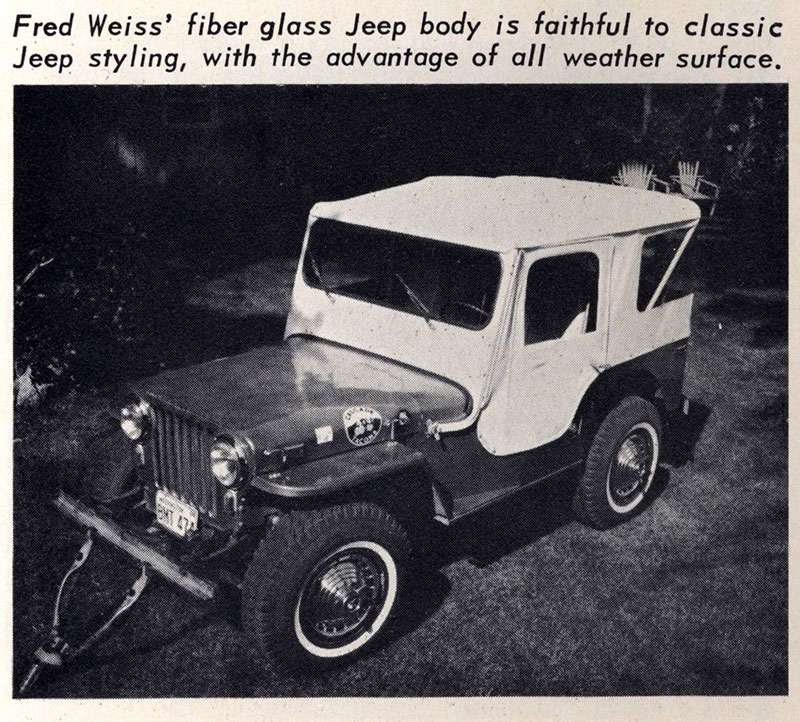
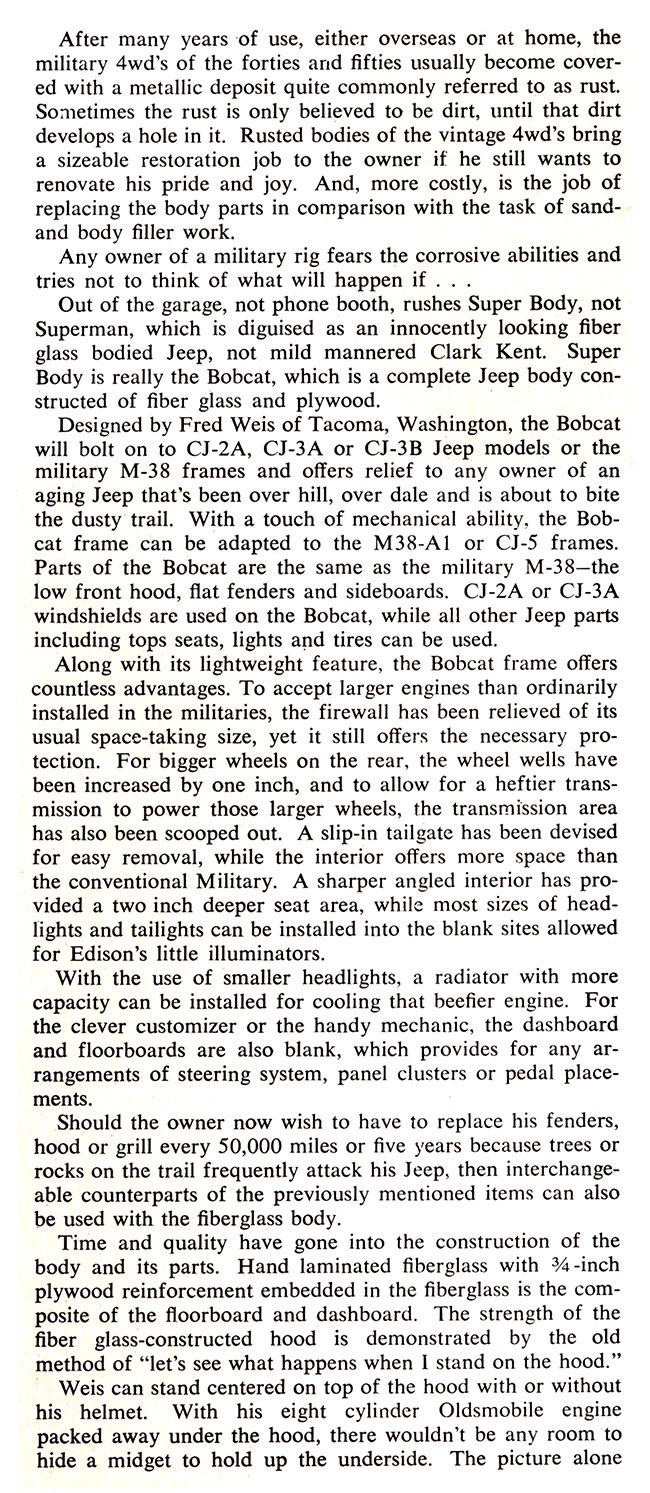
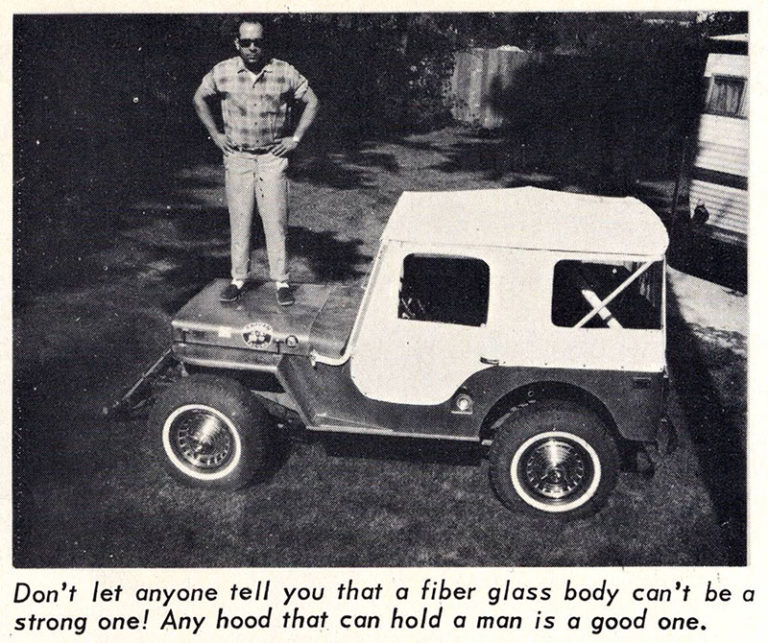
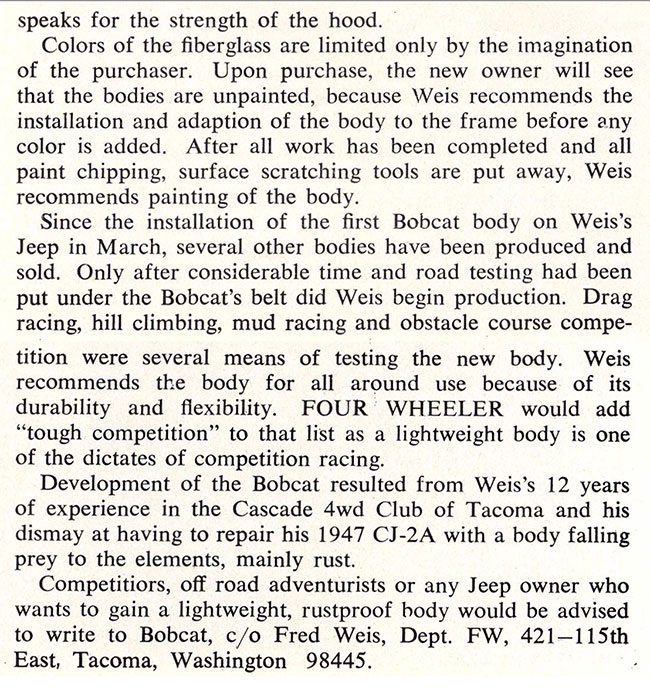
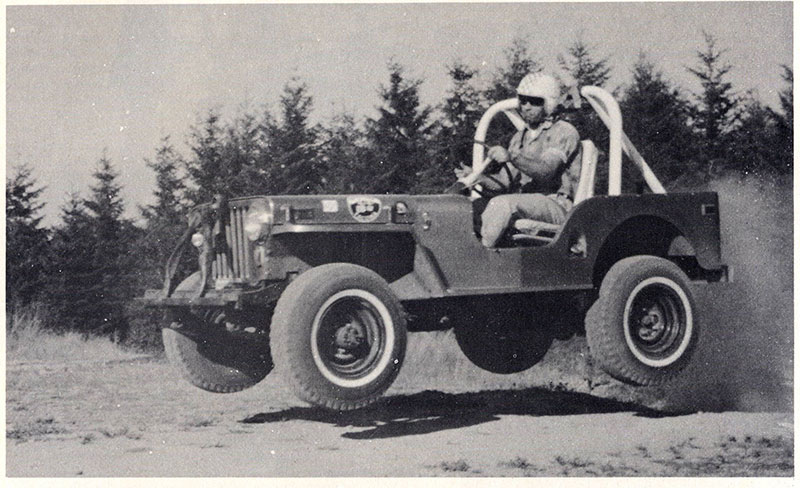
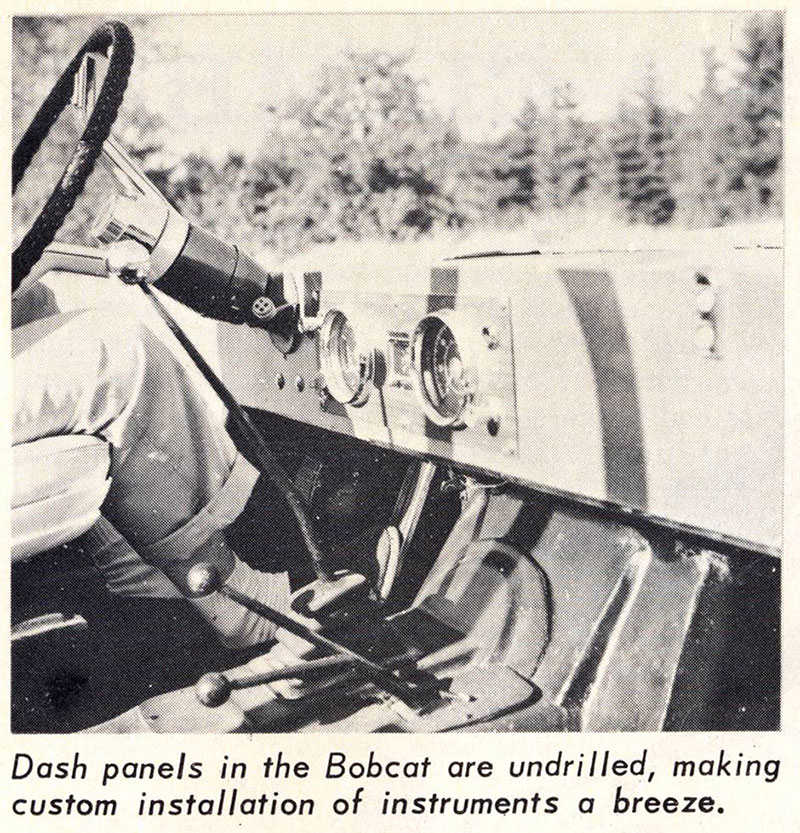
Yesterday morning, SteveK asked to know more about the Bobcat products. Were they race products or something else? The terminology is so second hand, that I thought everyone knew it by now. I decided to send him a link to an article I thought I had published about Fred Weis and the Bobcat body from the February 1970 issue of Four Wheeler Magazine. It turns out I never published that article!
So, I'd like to publish (perhaps I am republishing it) to better explain the Bobcat body and products. At the post's bottom I've included a number of additional examples and information about the Bobcat. Then, on the next post, I discuss the Bobcat & Parkette fiberglass body histories.
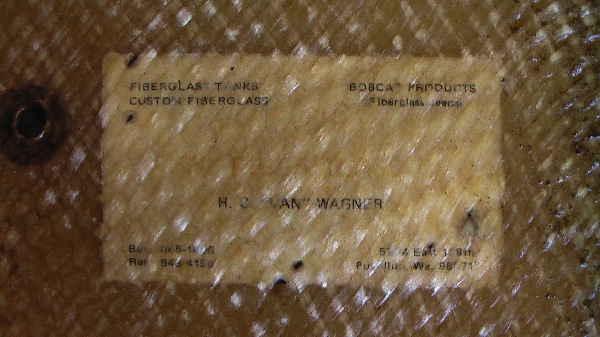
At some point, Fred Weis sold the business and H.C. Van Wagner got a hold of the it. He continued to produce bodies. It's his business card that remains embedded in one of the fenders on Lost Biscuit, which has a Bobcat Body.
The history of the Bobcat bodies gets murky after that. A few bodies may have been produced into the 1980s, but I have no documentation on that. What I can say for certain is that the molds were split into at least two groups. I co-own one group of molds (both Bobcat and Parkette molds). The other molds are in Rochester, Washington, the last I heard. See more photos of the molds, along with a few pics of fellow Alaska Or Rust'er Rob Stafford, here
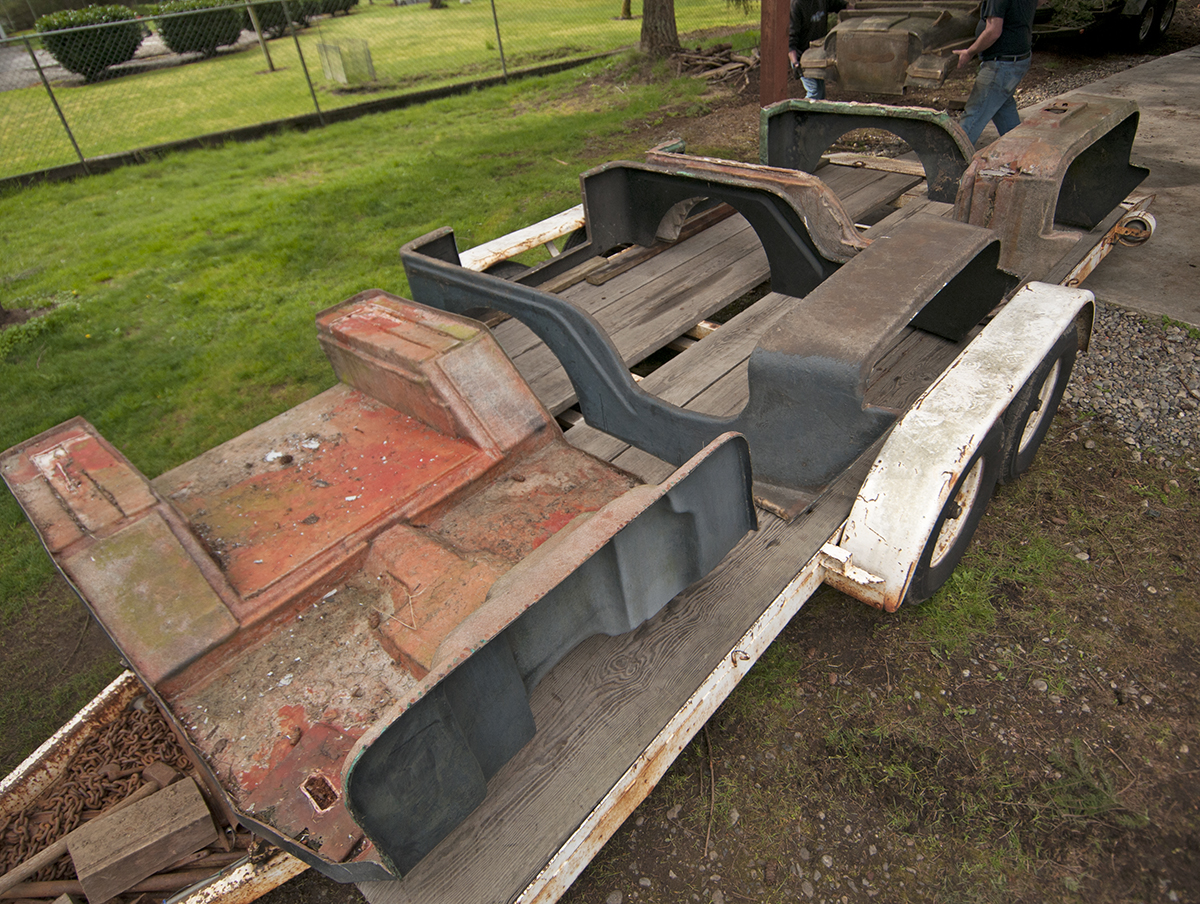
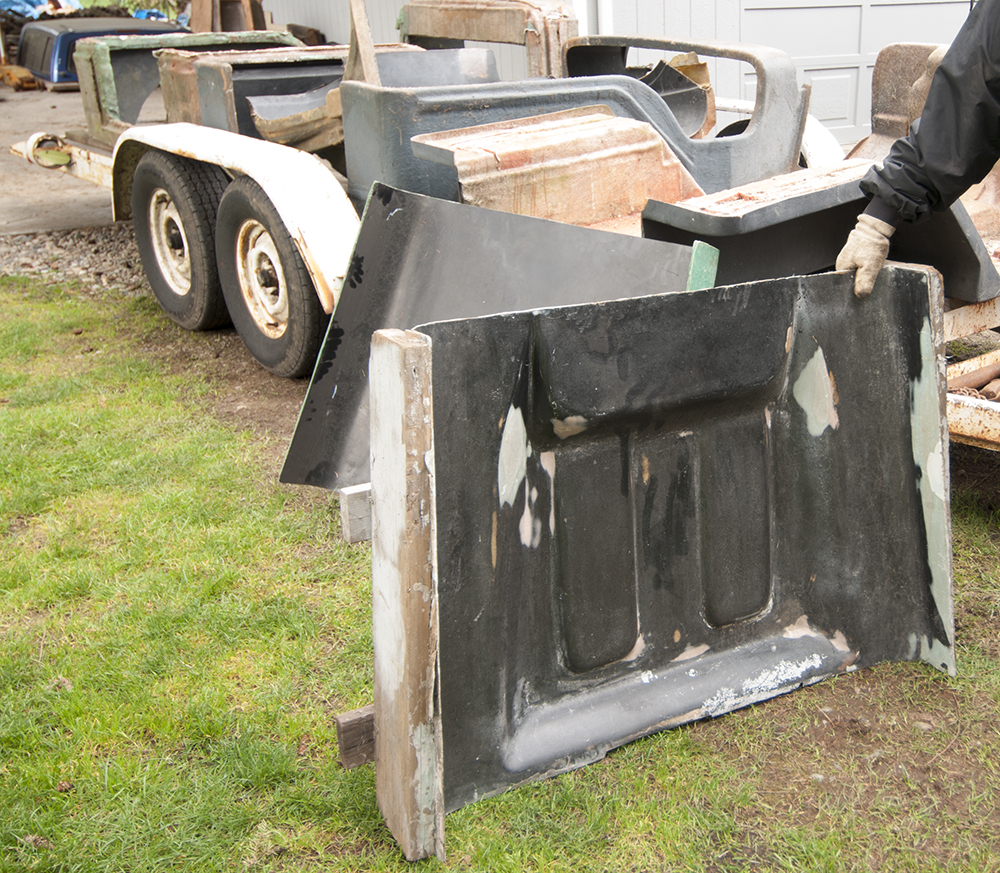
To the best of my knowledge, there's been no accounting on the number of Bobcat bodies sold and other parts sold. However, they are still raced and driven in the Pacific Northwest. The fiberglass design by Fred Weis has been proven to survive racing (crashes), trails damage, and street use. To see all examples of Bobcat hoods and bodies sold over the last decade, use this link.
EXAMPLES AND MORE INFO ON BOBCAT BODIES:
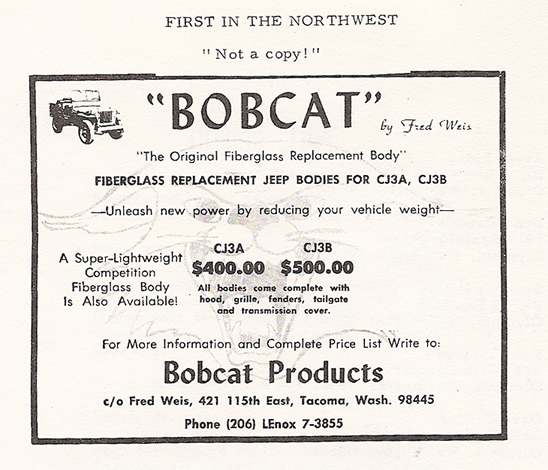
As I have mentioned a few times, I grew up in the Wandering Willys Jeep Club. In 1971, the club lead an effort to record all the members from Clubs in Region one of the PNW4WDA (there are 7 regions total encompassing Washington, Oregon, and Idaho), their names, addresses, phone number, jeep types, jeep names, their jobs, and assorted other info. As far as I know, this was the first and last directory of its type created.
One of the advertisers was Fred Weis with an ad for Bobcat Fiberglass bodies, complete with the watermark logo of a bobcat (which I didn't notice until I scanned the ad).
Here's the business card of H.C. "Van" Wagner that's embedded in my Bobcat body's fender. Wagner took over for Weis at some point.
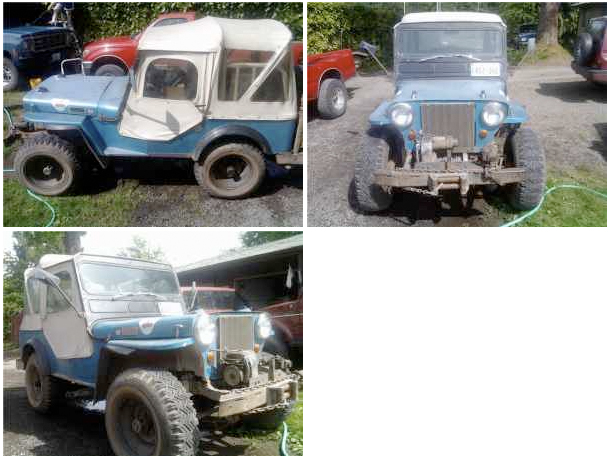
Here are some Bobcat Products:
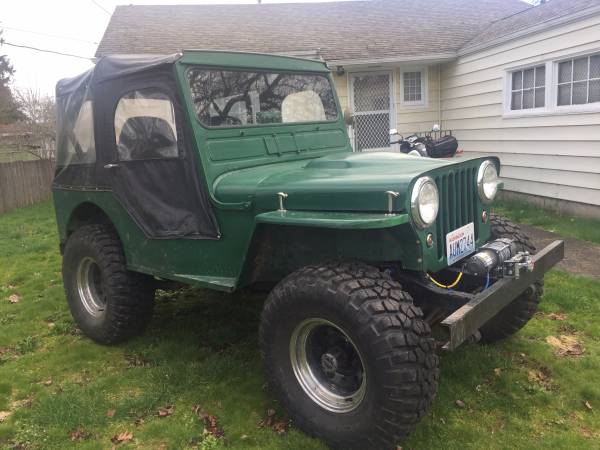
This is Fred Weis' Jeep when listed for sale around 2009. It's been sold a couple times since then.
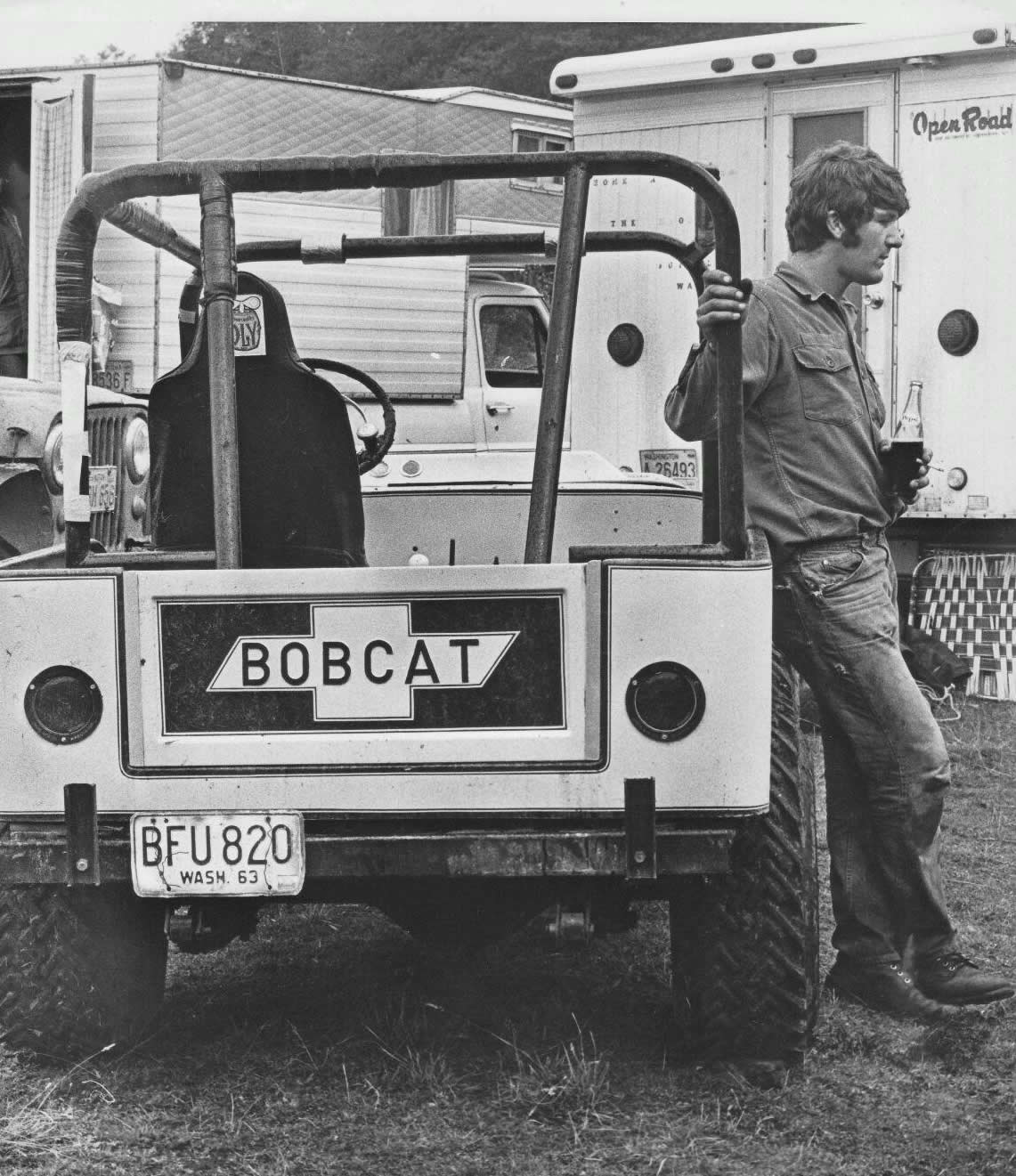
This picture shows a youthful Roy Williams. He worked with Fred on some of the bodies. Fred gave Roy the first lightweight racing body he produced, seen here on Roy's race jeep. Roy raced all over the northwest, Montana, and Canada during the 1970s,
One of the most readily identifiable Bobcat products are the Bobcat hoods. Besides the standard flat hood, Fred created the readily identifiable and unique Bobcat hood.
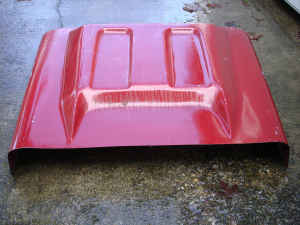
A 3B version was also made.
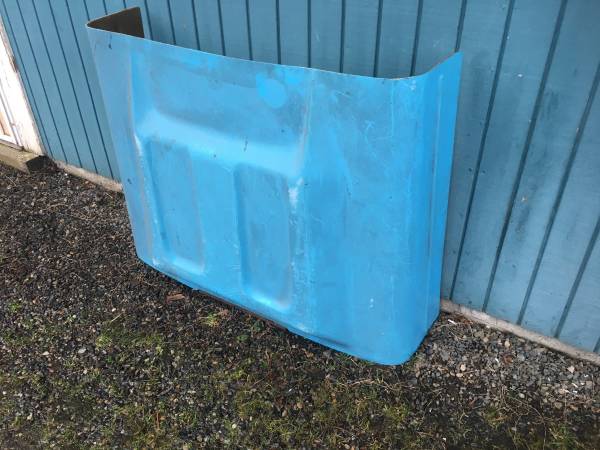
This hood sold in 2017
This photo shows what the rare Bobcat Tear Drop hood looks like. I've only have two examples. Rob Stafford has an original tear drop hood that I have seen, but apparently still need to photograph.
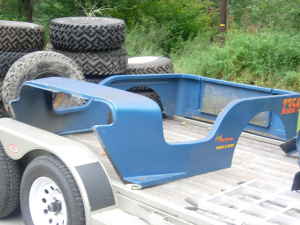
Below is an uninstalled body that was for sale years ago. Note the wide rim around the rear edge of the body. Also, the step doesn't cut in to the body at the end and there are no drain holes by the step. In the top right pic you may notice that the rear fender tops are attached to the rear of the body at slightly different heights. Mine are worse. And, I've seen worse than mine. The cowl also appears very flat, which causes problems when mounting a windshield. The gasket doesn't seat tight.
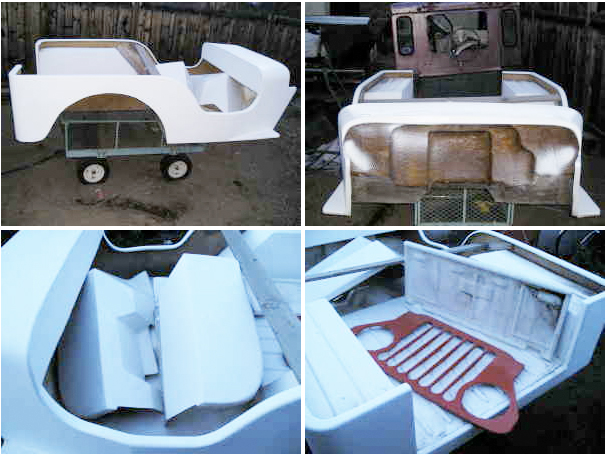
Bobcat outer shells were sold without the floors to some racers, as seen here on a body sold in 2008:
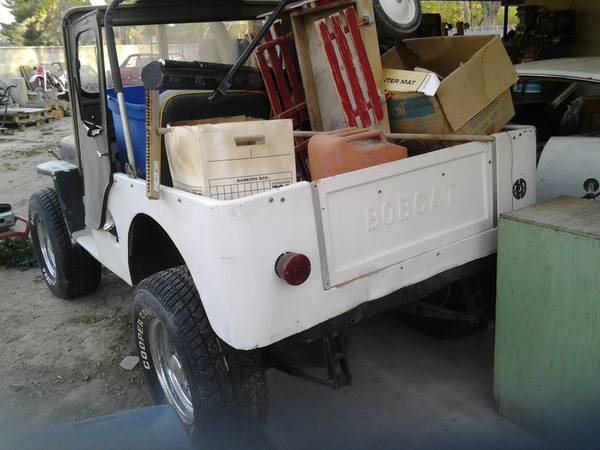
This photo shows a Bobcat tailgate on a jeep for sale in 2014:
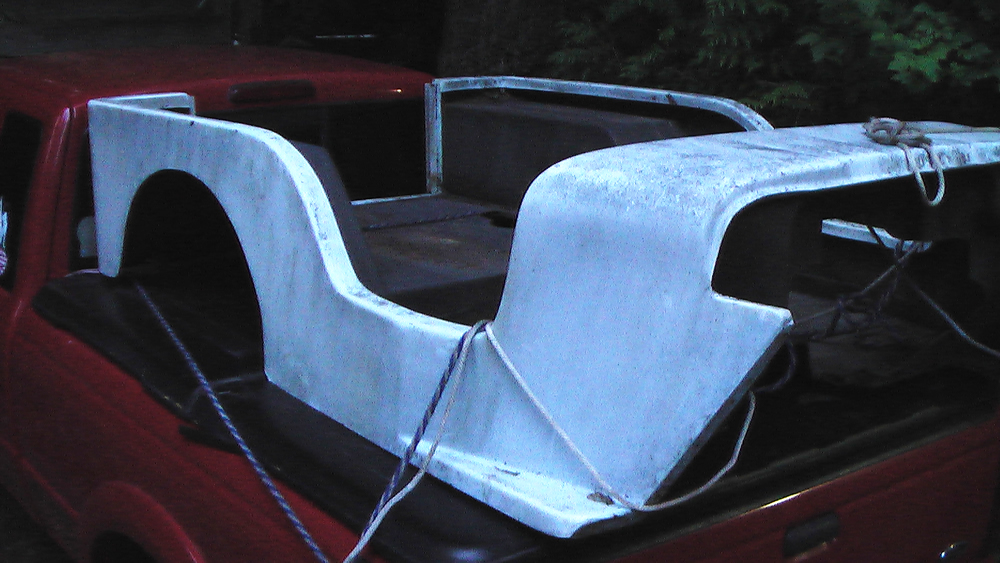
Here's an example of the body that I purchased in 2008 (just to get the fenders), which was a light body Bobcat racer. Note the much wider edge (maybe 2" wide). This body was hacked up a little bit, but repairable. (more pics here of it). I resold it.
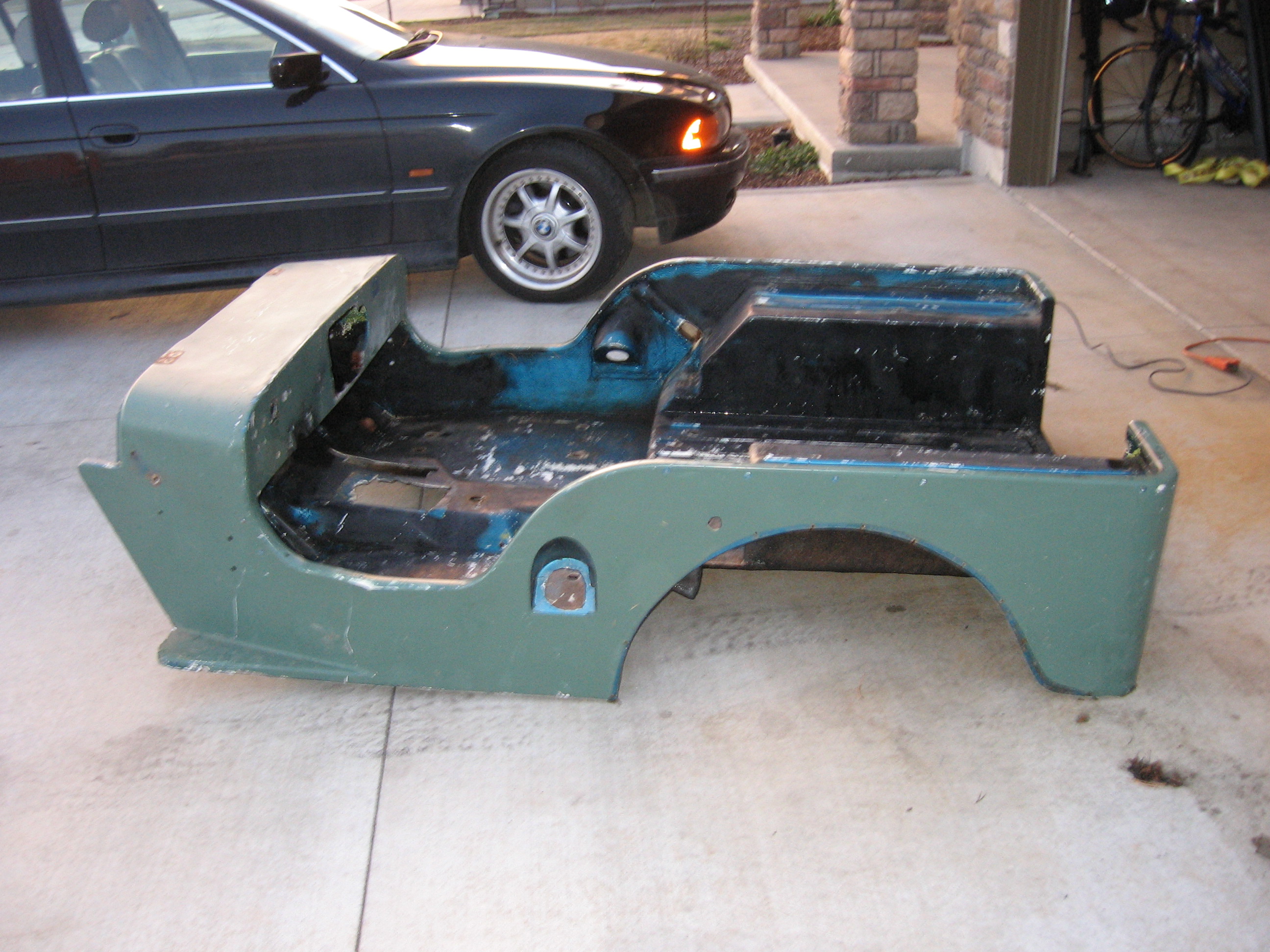
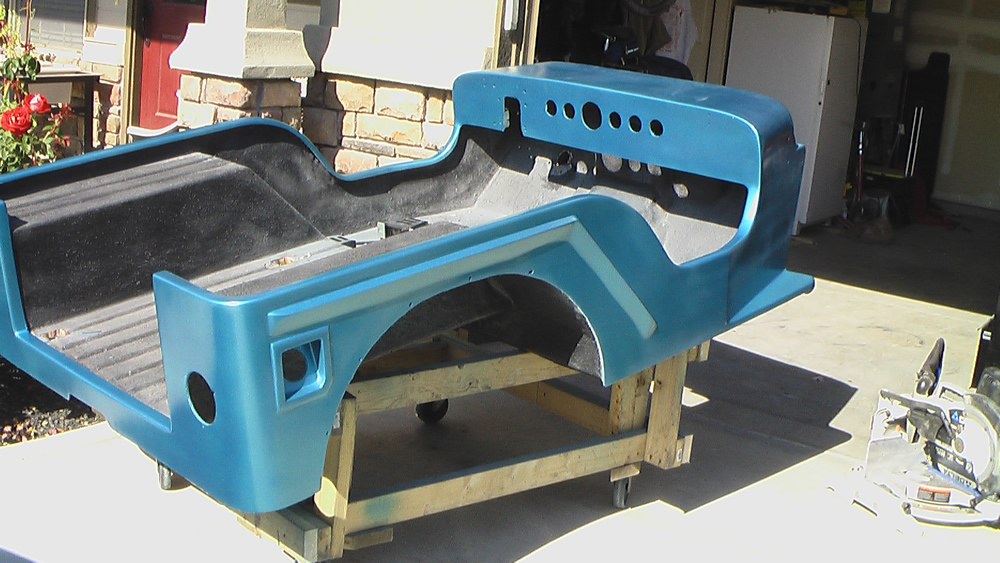
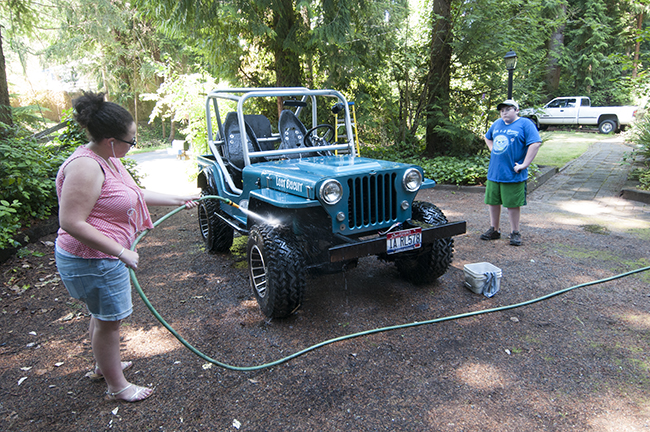
Finally, we have Lost Biscuit's body. I traded a set of axles for a beat up Bobcat body. It needed many repairs, so I decided to restyle it similar to a Parkette body with side stripes. You can see the entire rebuild process here.
Body before work:
Final body:
Biscuit together:
More pics here: http://www.ewillys.com/2013/07/01/biscuit-gets-a-bath/


15 Comments
Leave a Reply